


اخبار العرب-كندا 24: الجمعة 2 يناير 2026 07:45 صباحاً
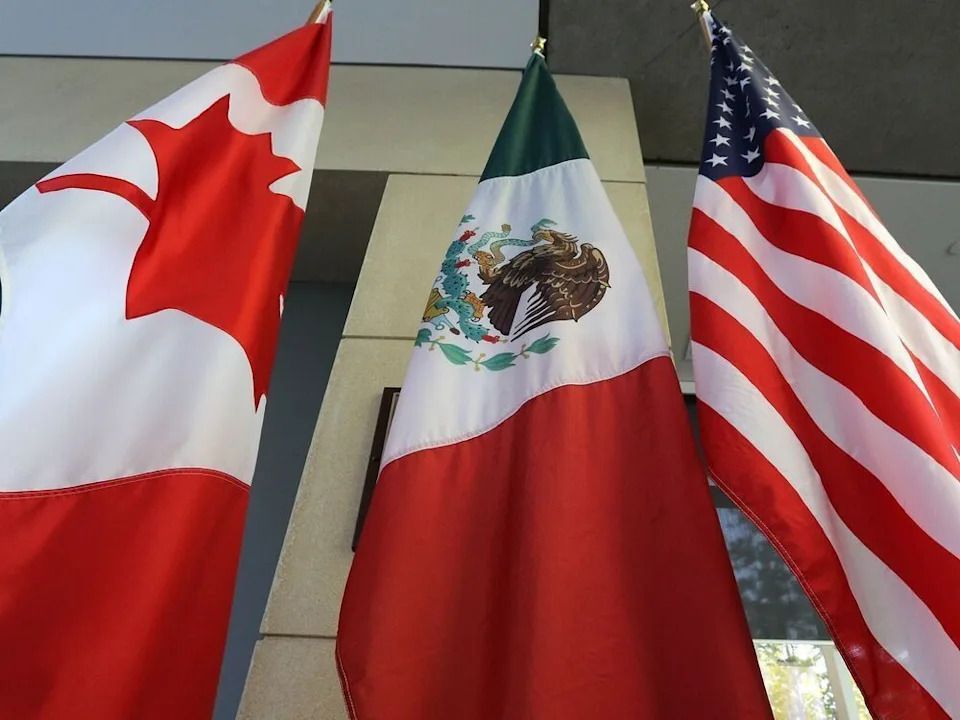
The U.S.-Canada relationship had a trying year in 2025, and 2026 promises more drama with a coming U.S. Supreme Court decision on President Donald Trump’s tariffs, the scheduled renegotiation of the Canada-U.S.-Mexico Agreement (CUSMA) and U.S. midterm elections in November.
To kick off the new year with some perspective, National Post spoke this week with Christopher Sands, director of the Center for Canadian Studies at the Johns Hopkins School of Advanced International Studies in Washington, D.C. to get his insights on the key bilateral issues to watch in the year ahead.
Sands is a leading expert on Canada-U.S. relations and a former director of the Wilson Center’s Canada Institute in Washington, D.C.
Advertisement
Advertisement
Advertisement
Advertisement
This interview has been edited and condensed for clarity.
Q. How might the 2026 CUSMA review unfold amid Trump’s trade war and tariffs on Canadian autos, steel, goods not covered by CUSMA, etc., and what concessions could Canada realistically offer on dairy quotas or digital taxes?
I think the challenging thing about the CUSMA review is that it is a good idea at its root. That was one of the things that we added in CUSMA that we didn’t have in the North American Free Trade Agreement (NAFTA), which is the opportunity to do a review and to fine tune and update various bits of it. So I think the idea of the review is a really solid one.
We’ve gone into it with a process that Congress mandated, at least on the U.S. side, that led to the private sector — including Canadian companies and trade associations — putting in their ideas for how the agreement could be better. And of course, Canada has a process like that, and so does Mexico. And what you heard from the business community overall is not what you have heard from President Trump. What the business community broadly said is there’s a huge economic opportunity here, this agreement provides a stable set of rules, and, in the main, we’d like it to stay the same.
The formal review of the Canada-U.S.-Mexico-Agreement is expected to begin on July 1, 2026.
Canada would need to address (its restrictions on imports of) dairy, the Online News Act, and the Online Streaming Act, I think. And then it would be important to take a look at provincial procurement. Those are the three big obstacles that the U.S. Trade Representative (USTR) identified, but there could be others.
Advertisement
Advertisement
Advertisement
Advertisement
On provincial procurement … it was never bound in USMCA, and when we negotiated NAFTA, the U.S. proposed putting all procurement, including U.S. state procurement, on the table. We got a majority of states, something like 38 states in the United States, that agreed to put their state procurement into NAFTA, so that Canadian and Mexican firms would have the right to bid on (those contracts).
But Canadian provinces in the ’90s said no. Later, during the Obama administration’s Recovery Act (amid the) post-2008 crisis, Canadians wanted to bid on U.S. infrastructure projects. The fix? The U.S. urged provinces to join Article II of the WTO Government Procurement Agreement — a voluntary plurilateral protocol the same 38 (U.S.) states already signed. Quebec led the way in saying yes. Not all the provinces did, but it did open up procurement to a set of international disciplines and to the participation of American firms.
That ended what was kind of a tough dispute, but it wasn’t a universal solution. So, now, if Canada addresses provincial procurement, it really just brings those few provinces back into line and creates a little more stability.
On the Online Streaming and Online News Acts, there’s a tougher case. Everyone’s trying to figure out how to regulate the media in the age of AI, and I think Canada’s come up with an approach that is defensible for sure: Trying to preserve Canadian voices, which is a different goal than the U.S., which is just trying to make sure the business is efficient and everything’s fair. Where the Trudeau government broke with OECD’s (Organization for Economic Co-operation and Development) consensus on how they were going to deal with taxing internet transactions and large tech firms, it muddied the waters. This led Canada to be kind of out on its own and, therefore, vulnerable.
Advertisement
Advertisement
Advertisement
Advertisement
Canada could address the USTR’s concerns by saying, “OK, we’re going to put a pause on these things. We’re going to try to align our policies more carefully with our OECD partners …” Or, Canada could take its approach and try to think about how it could make a proposal for CUSMA to include digital services in a way that was uniform across the region.
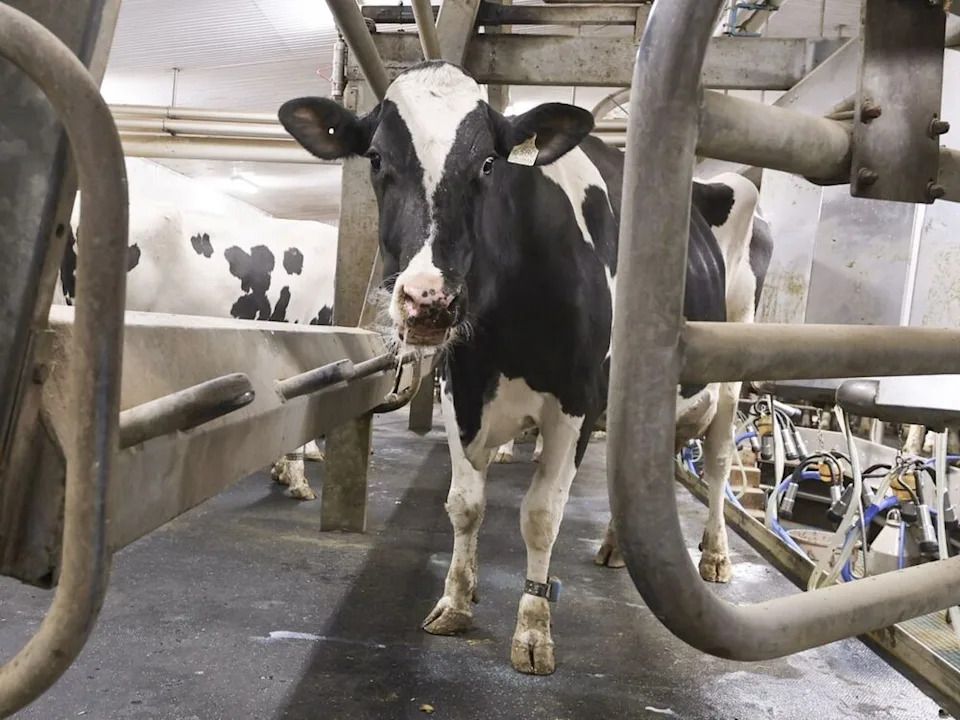
And the last one, which everybody says is the toughest one, is dairy. And if I were Ottawa, I would take this as the opportunity to reform the sector. It is going to be difficult to get rid of dairy supply management and move towards a more subsidy-oriented system. It’s going to be intensely politically unpopular in areas that actually matter for elections in Quebec and B.C., and parts of Ontario. But if Canada’s ever going to change the system, having the pressure of the Trump administration driving that change might lead to a way of making a reform that would be a reasonable compromise that would be beneficial to Canadians.
A cow leaves the milking parlour at a dairy farm in Howick, Quebec, Canada, on Tuesday, Jan. 11, 2022.
Q. Shifting to U.S. politics, what role might the 2026 midterms play in congressional or administration support for CUSMA revisions or tariffs? What can Canada do to mitigate exposure to tariffs via other laws like sections 232 or 301?
If you think about the Canadian economy in sort of broad swaths, I would make a distinction between primary products, commodity goods, in one basket; a second basket that’s manufacturing and integrated production; and then a third sector for services of all sorts. And if you look at those three, it’s manufacturing that’s in (the U.S. administration’s) crosshairs. Why? Because commodities are fungible, whether it’s a bushel of wheat or a steel beam … there are countries that will buy Canada’s commodities. Now, as the prime minister has pointed out, the biggest barrier to Canada shipping its commodities to other customers is a lack of infrastructure.
Advertisement
Advertisement
Advertisement
Advertisement
If the U.S. doesn’t want to avail itself of Canada’s high-quality, great commodities, then Canada does have options at least, to the extent they can address some of the port issues and the shipping issues.
Canada is quite a services superpower. Whether we’re talking about banking, financial services, or software, or even things that are kind of crossing over into entertainment, like video game production and design … Canada’s very good in this sector. Very good.
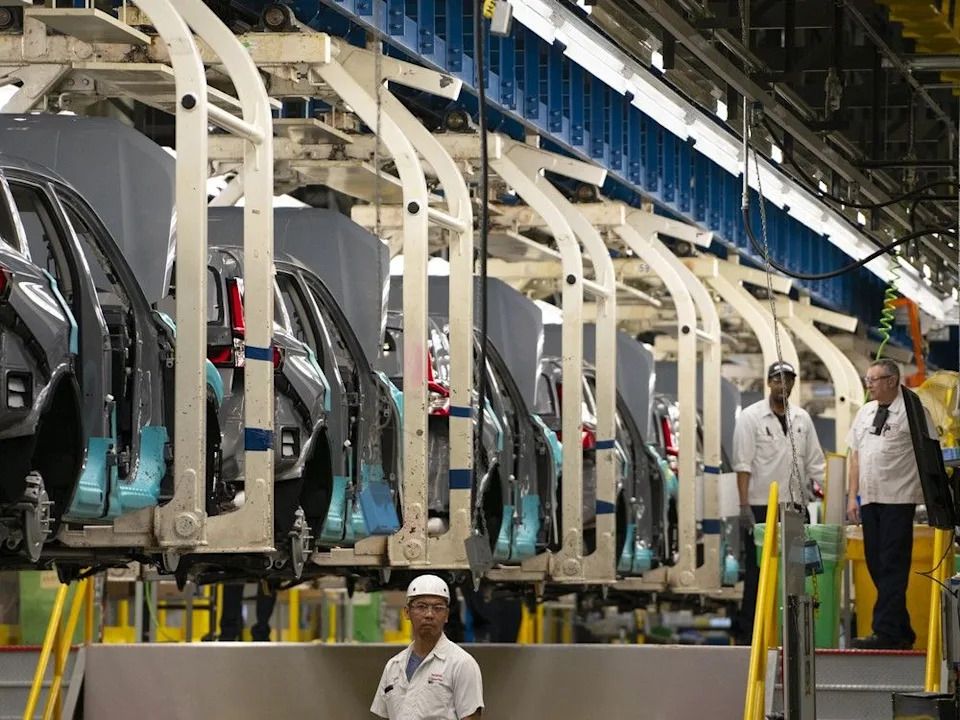
Manufacturing is the toughest because, thanks to trade signals, we have highly integrated manufacturing across North America, taking advantage of specialization and a larger market… Canada needs a solution that allows it to participate in those supply chains. One is that the focus on selling goods to Europe needs to be accompanied by looking at the advantage of CUSMA, NAFTA, and, before that, CUSFTA (the Canada–United States Free Trade Agreement), which is the rule of origin. And to the extent that the rule of origin, even when it’s 75 per cent (North American content) for auto, still allows 25 per cent non-compliant content, this is a way for companies in Europe to participate in North American manufacturing, because they can sell in that 25 per cent space. They can get into Canada — which isn’t gonna hit them with a tariff when they come in — get bolted into larger items that are CUSMA-compliant, and enter the U.S. market.

Workers continue vehicle assembly at the Honda of Canada Manufacturing Plant 2 in Alliston, Ontario, on April 25, 2024.
The rule of origin can be redefined that way. And if you look at the way CUSMA sort of spells out the terms of the review, adjustments to the rule of origin are one of the primary areas where the drafters anticipated the change would be allowed … Watching the rule of origin is going to be the one thing that has the greatest potential to either stabilize or massively reshape our manufacturing supply chains.
Q. The Supreme Court has expressed skepticism on Trump’s use of the International Emergency Economic Powers Act (IEEPA) for imposing tariffs based on national security justifications. How might a decision against the tariffs stabilize trade?
The Supreme Court has been very skeptical of the use of the IEEPA for issuing tariffs. The challenge to using IEEPA for issuing tariffs came quickly. They were first addressed by the Court of International Trade … It said, “No, there’s nothing on tariffs in IEEPA.” And then they went up to a federal appeals court level. Those appeals courts in the two different cases both agreed that there was no basis for using IEEPA for tariffs. And finally, it’s gone to the Supreme Court, and the justices showed a great deal of skepticism in their questioning, and promised an early ruling, perhaps early in 2026, which most of us who follow it are expecting will reject the use of the IEEPA for tariffs.
Advertisement
Advertisement
Advertisement
Advertisement
Almost everywhere where Congress has (delegated its tariff power), it has done so with a requirement that you do an investigation and you lay out an evidentiary basis for issuing tariffs. That’s what we have with Section 232 of the 1962 Trade Expansion Act, which has hit Canada on steel and aluminum. With IEEPA, there’s no requirement for anything. If the court is going to trim that back and force the administration to do its homework to make its case with evidence before it brings out tariffs, then it is a great stabilizer for international trade.
Q. With Trump’s dismissal of the need for Canadian oil, gas, or lumber, how can bilateral energy ties evolve amid shifting U.S. clean energy policies?
Trump says we don’t need (Canadian) energy. I think it’s because he wants to deny that anybody has an upper hand on him. But that isn’t the reality on the ground, and I think a lot of Canadian energy fits really well within the U.S. system.
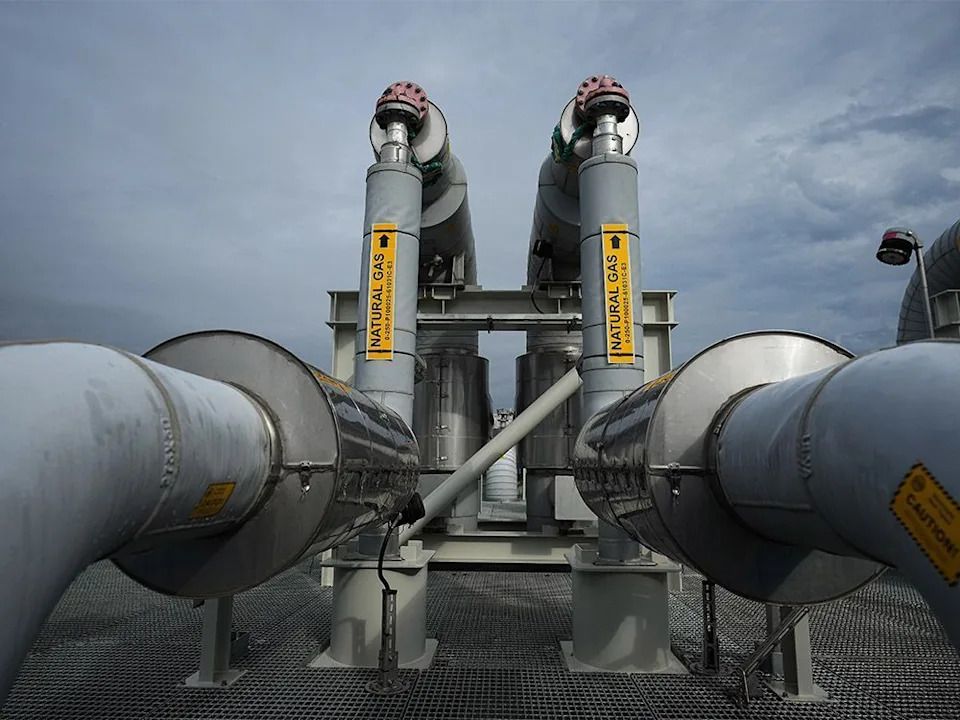
Piping is seen on the top of a receiving platform which will be connected to the Coastal GasLink natural gas pipeline terminus at the LNG Canada export terminal under construction, in Kitimat, B.C., Wednesday, Sept. 28, 2022.
The good side of Trump is that he says he wants everything on the table, which is a pretty traditional Republican position, to be much more open to fossil fuels, including LNG, whereas the Biden administration shifted us sharply to focusing on sustainable energy, green energy, and the energy transition. So Trump’s return has led to this kind of counter-revolution, where a lot of projects are now being regulated out of business, subsidies are being cut, and they can’t sustain themselves without subsidies.
Advertisement
Advertisement
Advertisement
Advertisement
And the thing that’s frustrating about the U.S. is it’s such a big economy that to the extent it moves in a direction, it can carry a lot of companies in other countries with it. And if we shift sharply in another direction, it affects the Canadian participants in the market equally.
Well, what (Prime Minister) Mark Carney’s decided, or seems to be deciding to do, is to try to say, “OK, well let’s not ban fossil fuels. We have some of the cleanest around. Let’s see what we can do … it’s probably a bad bet just to rely on the U.S. market … But let’s make sure that we can access global markets and that we’re part of that conversation so that we’re not seen as being ‘green’ only, and we have these resources, and the West really cares about them, etc.” He has looked at that as an infrastructure challenge, and that’s fine. But on energy, the U.S. has benefited tremendously from Canada, and I think it’s mutual, but it’s benefited from Canada because Canada’s done the hard work of building hydroelectric dams, etc. Canada has some R&D advantages here, which I think could make Canada a reliable innovator going forward.
I think one of the things that has emerged from the whipsaw (presidencies) of Trump-Biden-Trump is a kind of energy pragmatism … as long as we stay ecumenical, open to all, Canada’s got strengths in every one of those areas. The U.S. market is a huge one.
Q. What more should Canada do in defence production, border security, or collaborating on China threats? Any other 2026 issues to watch?
The defence sector in a lot of ways looks like ordinary manufacturing … Canada has a lot of expertise to contribute. Canada has (programmable machine tools and skilled labour), and I think it has a great deal of talent that is impossible or at least really risky for the U.S. just to not take advantage of. The additional money (allocated to defence) is going to mean that this is a booming sector.
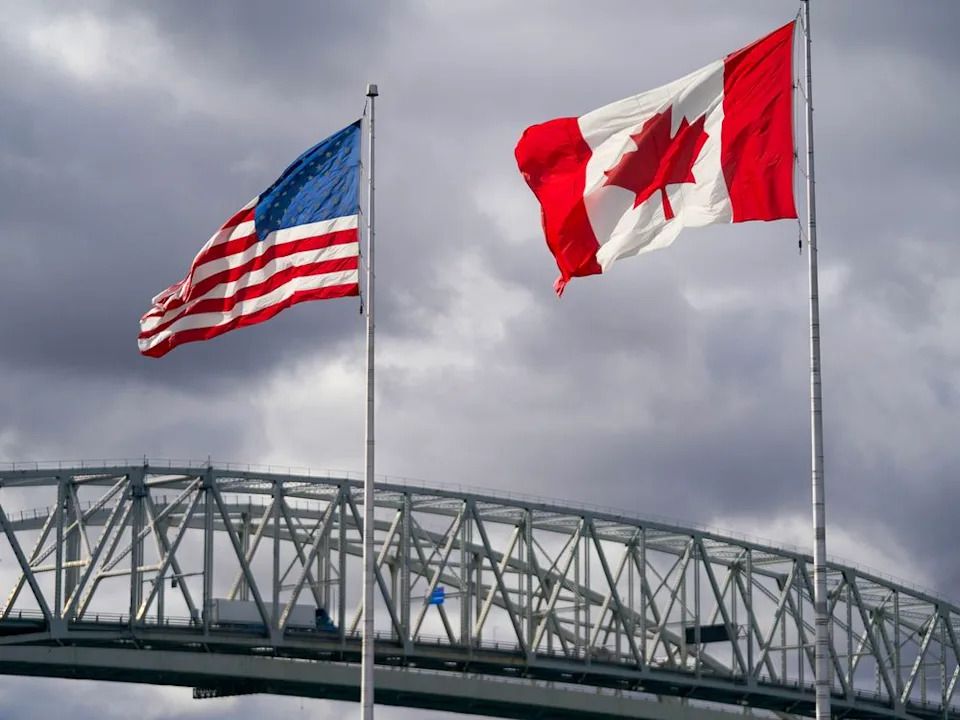
The U.S. and Canada flags flutter next to the Blue Water Bridge border crossing in Point Edward, Ont., on Oct. 24, 2025.
On the border … it’s becoming more and more important to the U.S. to have Canada inspecting against third countries. I’d love to see a de minimis (bare minimum) agreement built into the CUSMA that commits the countries to maintaining an inspection regimen. We could come up with mutual border commitments … co-operation on third-country nationals … a sanctions committee of the three governments could review sanctions proposals.
Advertisement
Advertisement
Advertisement
Advertisement
The U.S. has been dramatically more successful than I thought they would be in shifting away from China … The only way to really do the kind of forensic investigation to figure out where things really come from is to have markets that are aligned with you that also do the investigating … Canada should say, “Yeah, we’ll be happy to work with you because we’re more or less aligned with you on China.”
National Post
tmoran@postmedia.com
Our website is the place for the latest breaking news, exclusive scoops, longreads and provocative commentary. Please bookmark nationalpost.com and sign up for our newsletters here.
تم ادراج الخبر والعهده على المصدر، الرجاء الكتابة الينا لاي توضبح - برجاء اخبارنا بريديا عن خروقات لحقوق النشر للغير


