


اخبار العرب-كندا 24: الثلاثاء 16 ديسمبر 2025 04:08 مساءً
For anyone who has ever covered the sport of baseball, the ultimate tribute is to say that you were a good guy to have around in a rain delay.
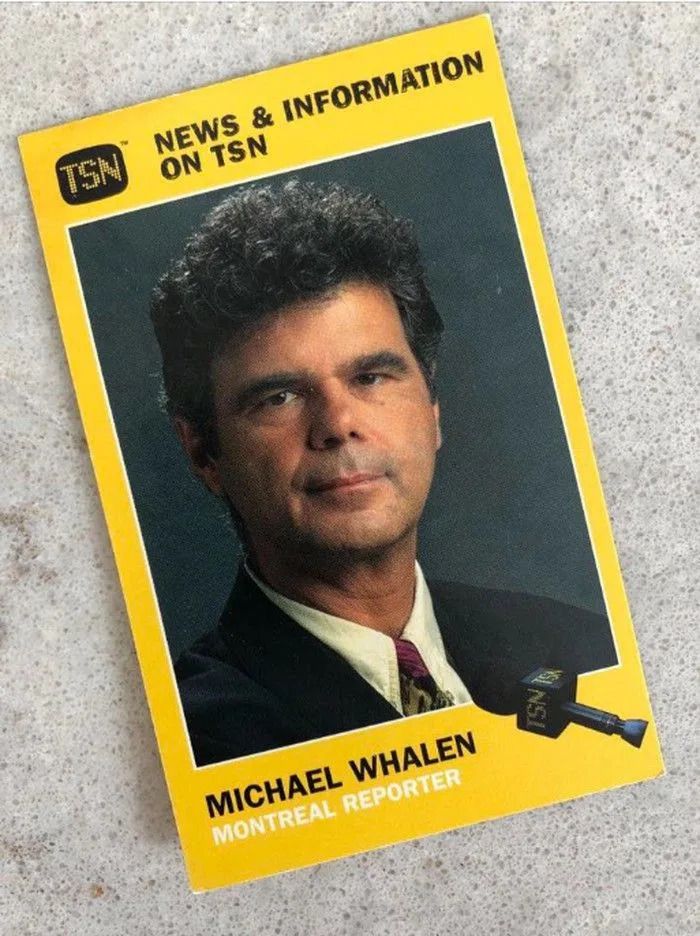
Veteran TSN broadcaster Michael Whalen, who died last week at 82, was one of those people. If you had to sit and shiver in the dugout while the rain poured over the state of Florida during spring training, you wanted to be around one of the storytellers — Whalen on the English side or Serge Touchette of Le Journal on the French side.
They couldn’t make the rain go away, but they could at least make you laugh and when it was time to go to work, they excelled.
Advertisement
Advertisement
Advertisement
Advertisement
Back in the day, many of the reporters were like Whalen, generalists with a background outside sports. As time went on, it seemed there were more and more who were immersed in the sports world from morning to night, who would spend the entire day at spring training and then seek out a sports bar to watch hockey games at night.
Such a round-the-clock obsession is almost a requirement for the job today, when we’re drowned in statistics, leagues are bigger than ever and sports “journalists” are required to act as shills for the gambling industry, up to and including offering their own picks for coming games.
I would like to think that if asked to offer betting advice, Whalen would have simply refused. He was an Acadian-Irishman whose people hailed from New Brunswick. Tall, dapper, gifted with a mellifluous voice and always the most tanned reporter on the field, the man we called Whales was a pro’s pro, a born sportscaster whose manner put players and coaches at ease while cleverly disguising the serious reporter underneath.
With his muscular cameraman Glen Koshurba, Whalen was TSN’s bureau reporter for Montreal and Quebec from 1986 to 2007 and the network’s first reporter outside Toronto. For Whalen, it was a career turn predicted by nothing in his previous experience.
Advertisement
Advertisement
Advertisement
Advertisement
During the late 1960s and early 1970s, he hosted a music program for CBC Radio and (in perhaps his proudest moment) was one of the few reporters who interviewed John Lennon and Yoko Ono during their “Bed-in for Peace” at the Queen E in 1969.
He later became a medical reporter at CFCF, where he first met Koshurba. The job entailed assignments, Koshurba recalls, that ranged from witnessing hair transplants to spinal surgery.
Former TSN reporter Michael Whalen was a born sportscaster whose manner put players and coaches at ease.
That background as a reporter was put to good use when Whalen became a sportscaster. It was a golden era in Montreal sports journalism, with reporters like Dick Irvin and Ron Reusch setting the standard on the English side. If they asked a question, whether it was in a scrum or a news conference, it was to elicit an answer, not to grab some camera time for themselves at the expense of the scant time allotted to the media every day.
Koshurba recalls the early years of TSN as a time when “it was an infant and we were like parents for the first time, carving out a path that hadn’t been done before.” The two covered 20 spring trainings together and became good friends with Moises Alou, Tim Raines and Larry Walker while covering everything from the 1994 baseball strike that put an end to the Expos’ drive for a World Series right up to the last bitter days when the Expos had become the Washington Nationals.
Advertisement
Advertisement
Advertisement
Advertisement
They also covered the painful departure of Patrick Roy, the closing of the old Forum, innumerable fight cards featuring the best and worst of the game — from the Grant brothers to the Hilton brothers — and the Formula One race every spring, although they shared a cordial dislike for the sport.
When I began covering sports in 1994, Whelan and I got along well. He was also deeply troubled by what he saw happening in the sports world — the runaway salaries, the absence of loyalty of teams toward their players or players toward their teams, the steroid cheats, and the bland denials of the risks concussions posed to the health and well-being of athletes.
As a dedicated music aficionado who loved almost all genres, Whalen felt he was putting it all at risk when the building that was called the Molson Centre first opened. Our perch high in the press box put us underneath Volkswagen-sized speakers that made your sternum vibrate. Whalen felt he was risking his hearing at every game — but still he was there, night after night, enduring torture by sound to cover the story.
Whalen’s career, like so many others that involve Bell Media, ended when he was forced out at age 65 and at the height of his powers as a reporter. The professionalism he embodied could not be replaced.
Advertisement
Advertisement
Advertisement
Advertisement
Whalen is survived by his wife Michèle, their daughter Leah and son Nicko.
“I’ve had a good run and I’m good with that,” Whalen told Koshurba before his death.
Indeed he did.
@jacktodd.bsky.social
jacktodd46@yahoo.com
Related
تم ادراج الخبر والعهده على المصدر، الرجاء الكتابة الينا لاي توضبح - برجاء اخبارنا بريديا عن خروقات لحقوق النشر للغير


