




اخبار العرب-كندا 24: الأحد 14 ديسمبر 2025 07:20 صباحاً
It’s the middle of the night when the doughnut makers at Falafel St. Jacques first straggle in.
On the first day of Hanukkah — beginning Sunday at sundown — the first doughnuts have to hit the fryer before 3 a.m., and then stuffed with flavoured filling, to be ready for the impending tsunami of customers.
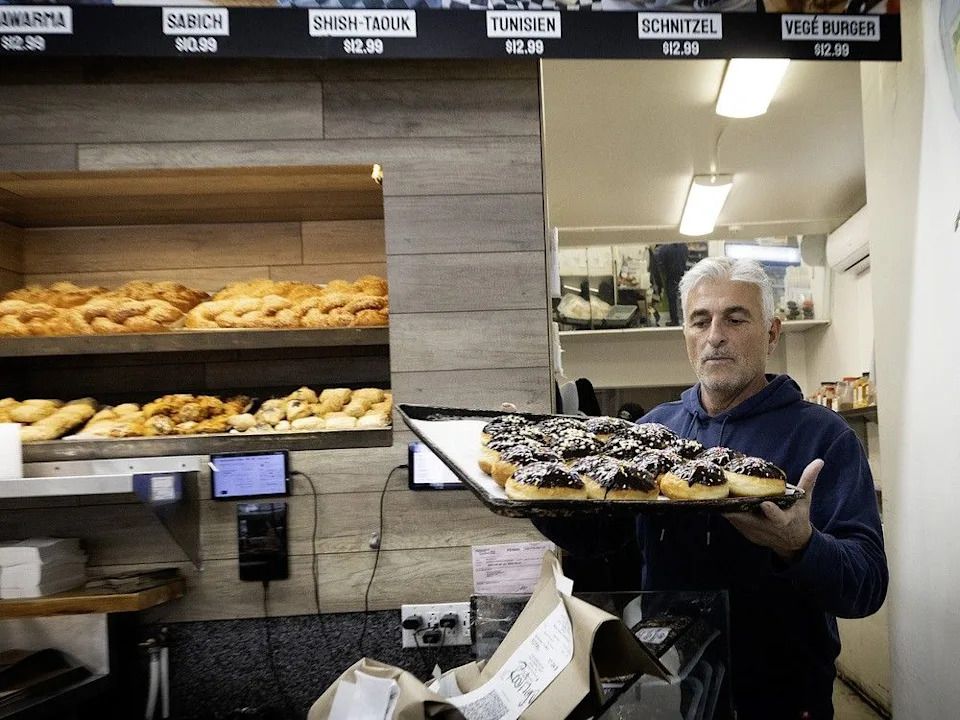
“Sunday, it’s going to be an all-nighter,” says Ronen Baruch, the Israeli shop owner who runs Falafel St. Jacques alongside Palestinian manager Saleh She. They’re planning to make 4,000 on Sunday alone. “From 8 a.m. all the way to the sunset, when they light the Hanukkah candles,” he says there will be a line out the door.
Advertisement
Advertisement
Advertisement
Advertisement
In the kitchen of the Lachine falafel shop, one corner is dedicated to Hanukkah doughnuts, called sufganiyot, for the month surrounding the holiday. Each holiday season, Baruch says they sell about 50,000 of the popular Hanukkah treat, which they only make at this time of year.
Falafel St. Jacques owner Ronen Baruch brings out a tray of sufganiyot.
Hanukkah is considered a minor Jewish holiday with less religious significance than the Jewish New Year or Passover, but has become widely celebrated in North America due to its proximity to Christmas. It celebrates the reclamation of the Second Temple in Jerusalem in the second century BCE.
The Hanukkah story goes: after defeating the Greek army and reclaiming the Holy Temple, Jewish rebels found a jug of oil that seemed enough to light the Temple lamp for only one night. Miraculously, it lasted for eight.
The holiday is celebrated by lighting candles, singing traditional songs and eating food fried in oil.
Advertisement
Advertisement
Advertisement
Advertisement
Fried potato pancakes, called latkes, are nearly synonymous with Hanukkah itself. While sufganiyot are lesser-known among non-Jews, they are a popular Hanukkah staple throughout North America, Europe, and Israel.
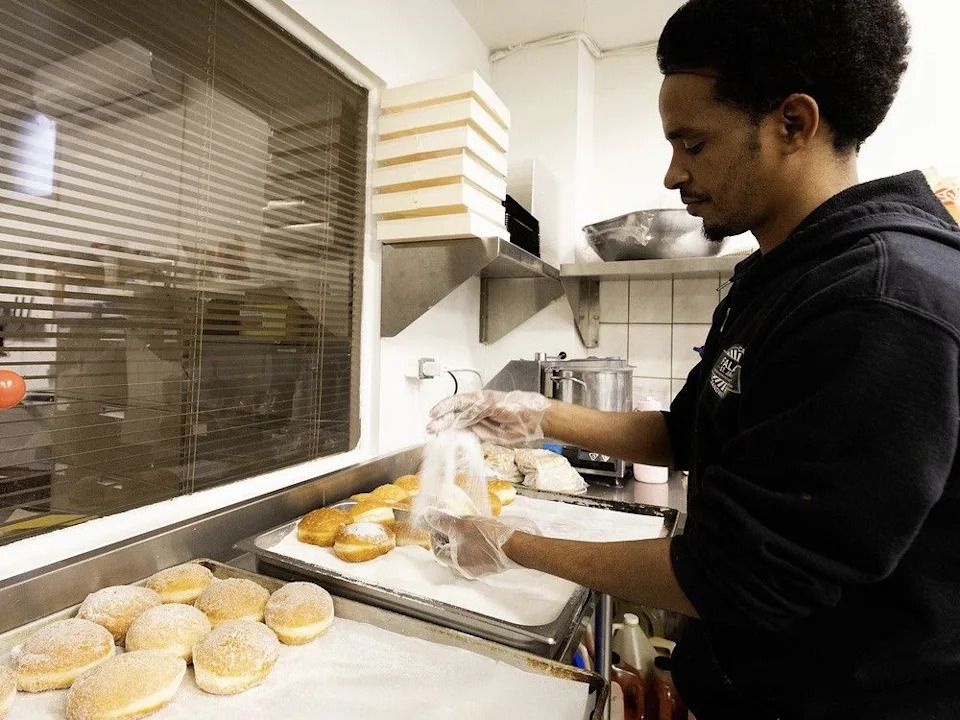
Kidus Michael adds sugar icing to sufganiyot (Hanukkah doughnuts) at Falafel St. Jacques.
Sufganiyot, the Hebrew word for the doughnuts, are traditionally filled with raspberry or strawberry jam and dusted with powdered sugar. At Falafel St. Jacques, they also fill them with chocolate custard or whipped cream. Some are topped with glaze and sprinkles.
While latkes are labour-intensive to fry, they’re relatively foolproof and easy enough to make at home. For sufganiyot on the other hand, customers are more reliant on bakeries, said the production manager of Montreal Kosher Bakery, Avi Rosenfeld.
“The latke doesn’t need to be so delicate with growing and temperatures. A latke is just mixing the potato and putting it inside,” he said. “The dough needs to be manipulated well, and needs to be grown well” at the right temperature. “It took us a long time to figure out.”
Advertisement
Advertisement
Advertisement
Advertisement
The industrial bakery on Victoria Ave. is a third-generation family business founded by Jacob Bineth, who moved to Montreal from Hungary. Today, Montreal Kosher Bakery is run by Bineth’s grandson Abraham, and distributes packaged sufganiyot to major grocery stores like Super C and Metro, and to Orthodox Jewish establishments in New York City.
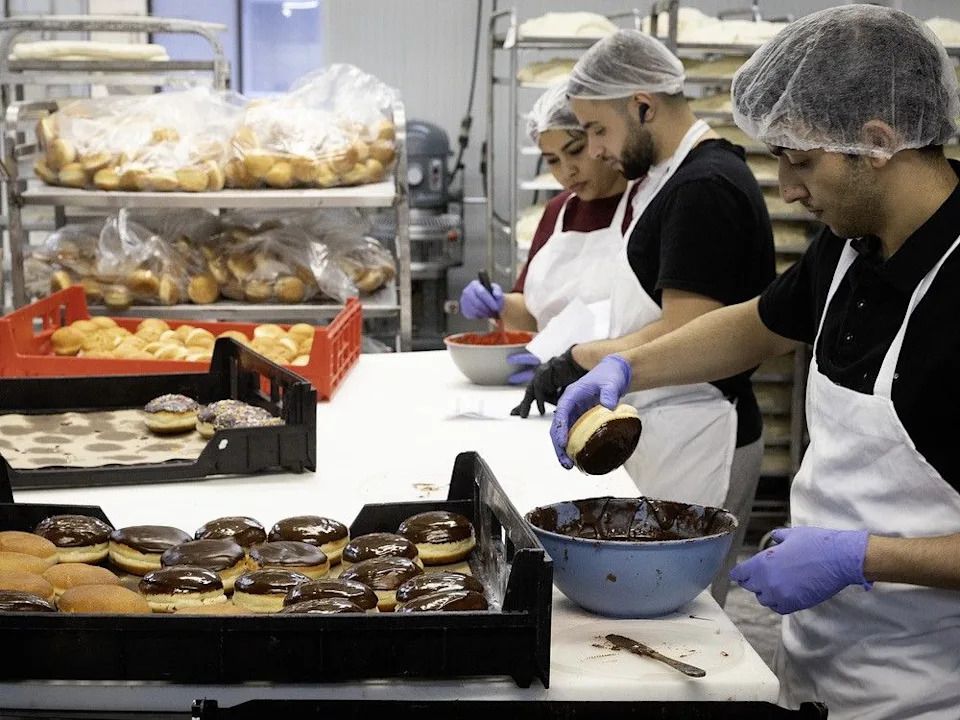
Pouria Karari, front, coats sufganiyot with chocolate at Montreal Kosher Bakery.
They made 11,000 sufganiyot on Wednesday alone, already five days before the start of the holiday. Rosenfeld said it used nearly 1,000 kg of flour.
“It’s pre-Hanukkah,” Rosenfeld said, and universities and schools are already celebrating with their students.
The earliest mention of fried Hanukkah pastry dates back to the 12th century and is attributed to the father of revered scholar Maimonedes, Rabbi Maimon ben Joseph of Spain.
Advertisement
Advertisement
Advertisement
Advertisement
“It has become customary to make “sufganin,” known in Arabic as “alsfingh” … This is an ancient custom, because they are fried in oil, in remembrance of His blessing,” Rabbi Maimon ben Joseph wrote, according to Chabad.org.
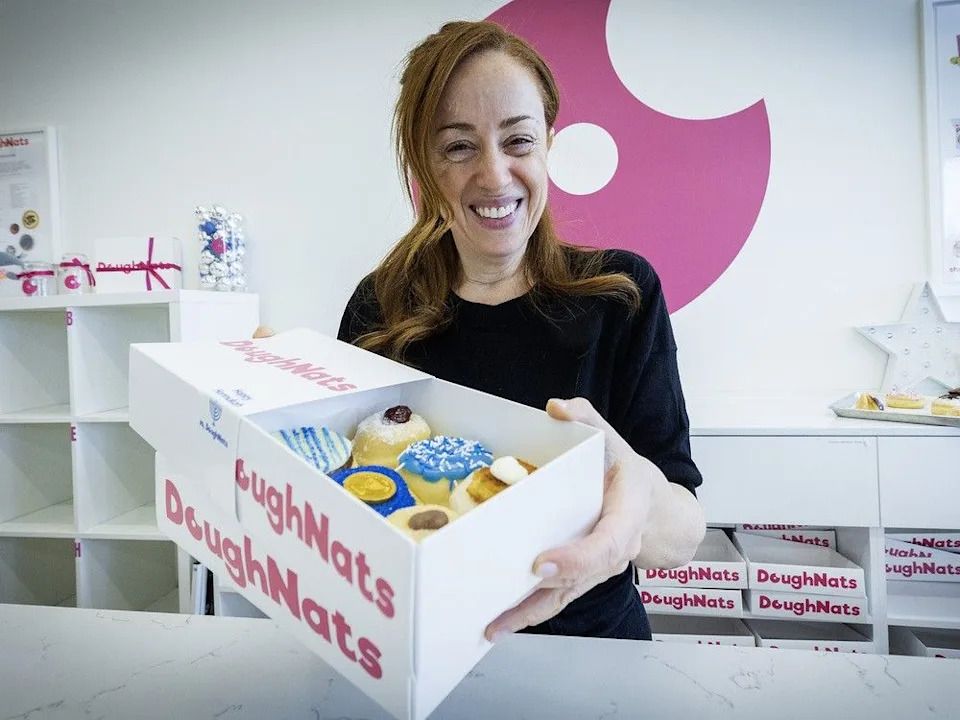
Nathalie Shtern displays a box of sufganiyot at DoughNats.
At DoughNats in Snowdon, owner Nathalie Shtern grew up in a Sephardic Jewish household in Montreal. Her mother made Moroccan doughnuts, called Sfinge, to celebrate the miracle of oil. These have no filling, and are instead dipped in sugar or honey.
Hanukkah is one of the busiest times of year for Jewish bakeries and doughnut shops throughout Montreal. The same-day holiday rush for the Hanukkah doughnut is particularly intense, says Shtern, because if they’re cooked too far in advance, they turn hard.
“It’s as if you left a slice of bread on the counter,” she says. “Any doughnut that’s sitting for two to three days in a package has a preservative in it to keep it soft.”
Advertisement
Advertisement
Advertisement
Advertisement
A former criminologist with a PhD who pivoted to the bakery business after having five children, Shtern describes herself as an “organized person” and focuses on advance orders to minimize long lines. “We kind of trained our customers,” she said, but still makes plenty of extra for what she calls the “last minute-ers.”
The order slip, which schedules every half-hour of the workday, is printed and pasted above the work station in the clean, white-walled shop with pink furniture.
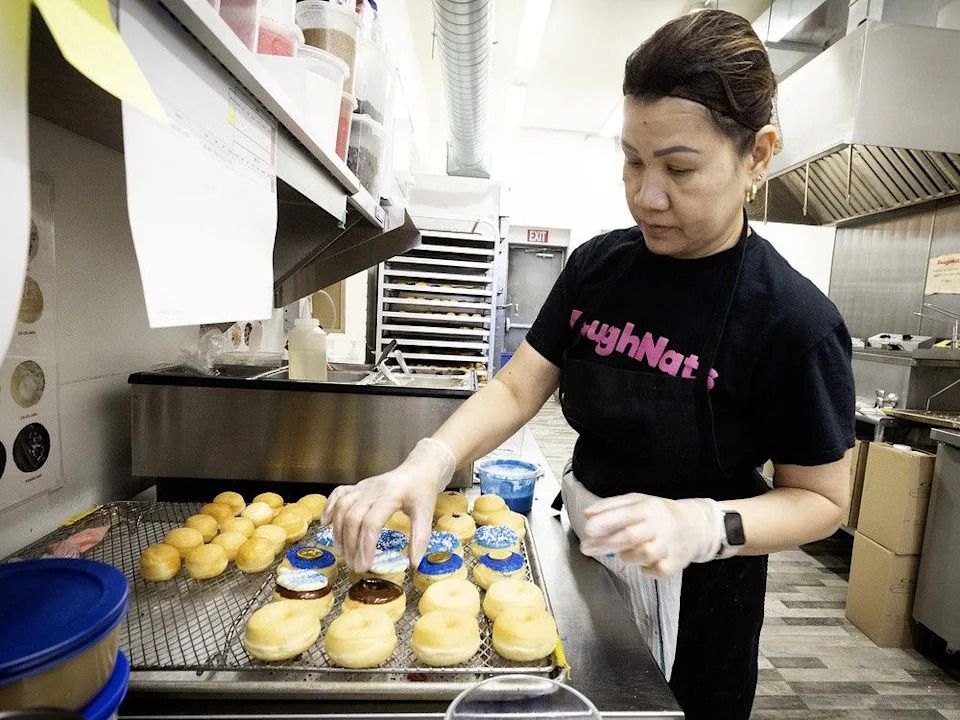
Mary Jane Munoz puts the finishing touches on sufganiyot at DoughNats.
Many of the customers coming in, Shtern says, are families and regulars. Her manager Lauren Moyse remembers one Hanukkah years ago, when one regular customer was accidentally given a box of Christmas doughnuts instead of Hanukkah ones.
“I remember calling Elodie (the customer) because they had left by then, and I was like, I want your address, I’m gonna deliver to you,” Moyse said. “They were like, ‘are you joking, Lauren? To me, a doughnut is a doughnut! How gorgeous are they?’”
Advertisement
Advertisement
Advertisement
Advertisement
While DoughNats make the traditional hand-sized raspberry jam and powdered sugar sufganiyot that they call “big baddies,” their specialty are intricately decorated doughnuts, as well as gluten-free and vegan baked doughnuts for those with dietary restrictions. One of their Hanukkah doughnuts is topped with a miniature latke and a tiny dollop of sweetened sour cream, another with a chocolate coin.

Chloe Rodrigue displays box of sufganiyot at DoughNats, including a variety, top left, that’s topped with a miniature latke, and another, bottom left, topped with a dreidel cookie.
The secret to perfectly soft sufganiyot, all three shops say, is in the proportions of the dough, made of flour, sugar and eggs. Montreal Kosher Bakery stores its proofed dough balls on metal screens fit to their fryers, so that they don’t need to dust them with extra flour to prevent them from sticking.
“The flour absorbs all the moisture,” says Montreal Kosher’s evening production manager, Gagan Deep Kumar. The two managers say the bakery has tested nine different recipes over the years to get it right.
At Falafel St. Jacques, the front-of-house manager of 10 years, Shani, swears theirs are the best in the city.
Advertisement
Advertisement
Advertisement
Advertisement
“I don’t think so. I know it,” she said, smiling.
And it’s not just Jewish customers that come for the doughnuts, according to Baruch.
“We have Arabs, and we have Jewish people coming in here, and we have French people coming in, lots and lots and lots of Indians,” he said, adding that the diversity of his clientele is one of the best parts of his business.
“We always believed, you know, that was the most beautiful part of Montreal.”
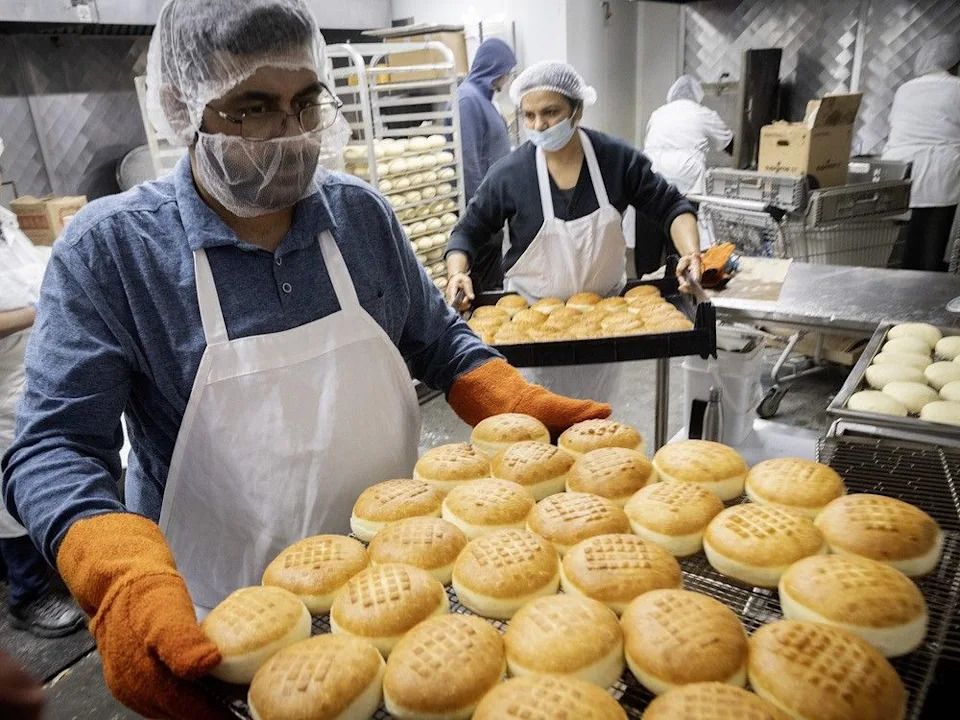
Dharm Sindh, left, handles hot sufganiyot after frying at Montreal Kosher Bakery. Its dough balls are stored on metal screens that go into the fryers so they don’t have to dust with extra flour.
lschertzer@postmedia.com
Related
تم ادراج الخبر والعهده على المصدر، الرجاء الكتابة الينا لاي توضبح - برجاء اخبارنا بريديا عن خروقات لحقوق النشر للغير


