


اخبار العرب-كندا 24: السبت 10 يناير 2026 06:56 صباحاً
Sprawling training sites. Huge oil storage areas. Countless anti-aircraft missile launchers. Ponds for testing amphibious vehicles. And nuclear-tipped missiles that could reach Western European capitals in mere minutes.
A group of private intelligence analysts using commercial satellite images and other evidence has put together a graphic illustration of the Russian military buildup on NATO’s Eastern flank, a threat that has most of Europe scrambling to bolster its defences.
In a video stitching together that evidence and presented to the Toronto-based Mackenzie Institute think tank last month, the group provides a sobering overview of the heavily armed Russian presence near the borders of Poland, Lithuania and Finland.
Advertisement
Advertisement
Advertisement
Advertisement
They hope their research will turn some heads in North America, where attention has focused on Russia’s war against Ukraine but largely missed what President Vladimir Putin’s forces have done elsewhere in Eastern Europe.
“I think people need to know Russia is not this benign thing,” said Jeff Nyquist, a writer and blogger on geopolitics who presented the group’s findings in Toronto. “They want to dominate Europe, they want the United States to not be a great power any more … America can’t survive losing its allies in Europe. People need to understand what this means.”
The group’s analysis is “pretty good,” said Frédéric Labarre, a professor at the Royal Military College and an expert on NATO-Russia relations. The research serves the important function of letting Moscow know it is not operating in secrecy, he said.
“Their work is extremely, extremely useful if it gets published because it’s a way of telling the Russians ‘We see you. And whenever you move, we know where you’re going.’ ”
Advertisement
Advertisement
Advertisement
Advertisement
That said, Labarre is not convinced that the preponderance of Russian military equipment close to NATO countries — much of which he said is of poor quality — indicates an imminent plan to invade. It is more likely defensive, based on misconceptions about countries to its west.
NATO does not pose a military threat to Moscow but, said Labarre, “you cannot express this to a Russian, who has an ingrained paranoia about encirclement. This is not new. This is centuries-old, this fear of being encircled.”
Nyquist’s concern is linked to what he sees as a troubling turn by conservatives in the United States, who once were hawkish about confronting the Russian threat. Nyquist says he voted for Donald Trump in last year’s U.S. election, but now says the MAGA movement Trump leads is “obviously penetrated by the Russians.”
Trump himself has courted Putin as the White House tries to broker an end to the Ukraine war, halting direct U.S. military aid to Kyiv, hosting the Russian president in Alaska and at times harshly criticizing Ukrainian President Volodymyr Zelenskyy. Trump’s capture this month of Venezuelan President Nicolas Maduro and assertions about U.S. dominion over the Western hemisphere have triggered concerns that he is willing to see Russia and China hold sway in their respective domains of Europe and East Asia.
Advertisement
Advertisement
Advertisement
Advertisement
But if the U.S. is sanguine about Moscow’s martial ambitions, Europe is waking up to the threat.
“We are Russia’s next target,” Mark Rutte, NATO’s secretary general, said in a speech last month, one of several cautions he has issued lately. “Conflict is at our door. Russia has brought war back to Europe. And we must be prepared.”
German Defence Minister Boris Pistorius warned that Russia’s readiness to invade other European countries is accelerating. “Some military historians even believe we have already had our last summer of peace,” he said.
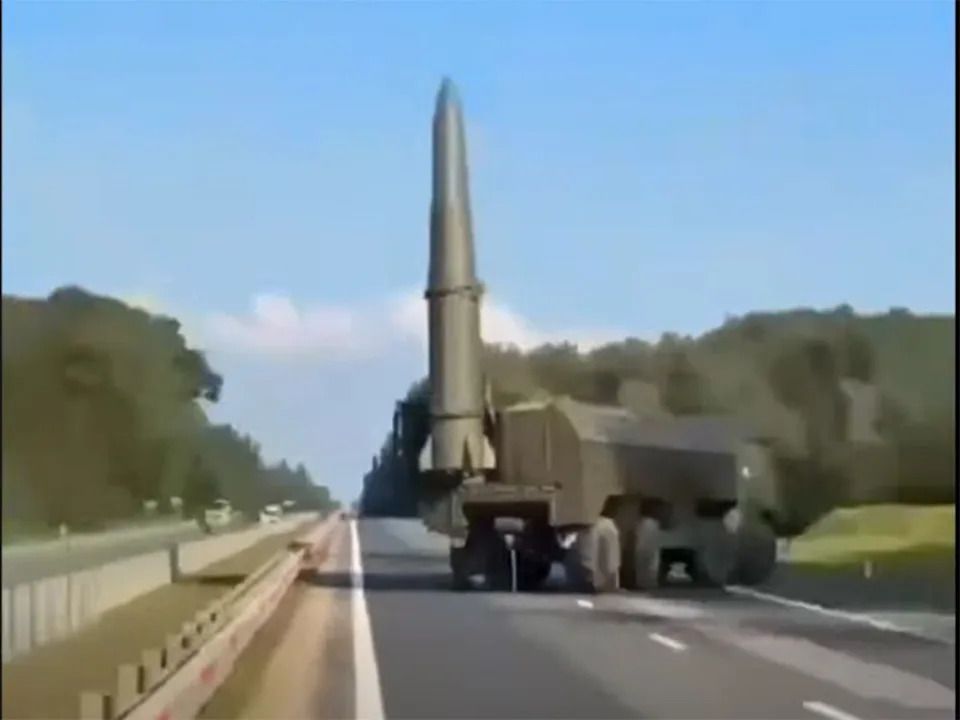
Photo taken by bystanders of Iskander intermediate-range ballistic missiles on a highway 19 kilometres from the Polish border during a Russian military exercise in Kaliningrad last year. The Iskander is capable of carrying conventional or nuclear warheads. The photo was obtained by a group of private analysts documenting Russian military buildup in Eastern Europe.
Polish Prime Minister Donald Tusk has also raised the alarm, as his country blamed a rail-line sabotage, drone incursions and the burning of a shopping mall on Russian agents. To prepare for more aggression, “we will accelerate the building of the strongest army in Europe,” Tusk vowed.
Advertisement
Advertisement
Advertisement
Advertisement
The group that put together the information on Russian forces is led by Lee Wheelbarger, who developed night-vision devices, communications equipment and a ground-breaking telemedicine system as a “senior technologist” with the U.S. Army.
He and his colleagues are not professional intelligence analysts. But he said he’s been studying Russian and other military movements for a decade – posting results on his KLW News online video channels – and has done work for the Ukrainian forces. Wheelbarger said he collects publicly available images from 28 commercial satellites operated by several companies. He and colleagues also access images from ground cameras – sometimes by hacking into them. He employs another video method he declined to discuss on the record, gleans information from human sources around the world and follows aircraft movements with flight-tracking sites.
To help identify what can look to the untrained eye like undefined blobs on the ground, he’s obtained three-dimensional renderings of various military hardware. Those renderings are then placed over the objects revealed by satellite images to see if they match in shape and size, helping identify the equipment. Other objects – like fighter jets and tanks – are clearly recognizable.
His group’s conclusions based on that evidence include:
Advertisement
Advertisement
Advertisement
Advertisement
-
There has been major expansion in recent months of military installations in Kaliningrad, the tiny Russian “exclave” sandwiched between Poland and Lithuania, including an enlarged command centre, several huge new missile storage facilities and a reconstructed nuclear-weapons depot, an assertion backed up by other reports.
-
A runway at an airfield in Kaliningrad was recently lengthened and is lined with fighter jets and supersonic bombers. Nearby is a storage facility for SS-27s, nuclear-armed inter-continental ballistic missiles. A photograph taken and posted by a cell-phone user – and published by other sites, too – shows a queue of truck-borne “Iskander” missiles, which can carry both conventional and nuclear warheads, on a highway 19 kilometres from Poland. Nyquist said it’s odd to station ballistic missiles – which roar into space then hurtle down to targets up to thousands of kilometres away – so close to the borders where they are more vulnerable. But he said they could also be fired in “low-trajectory” mode and reach NATO headquarters in Belgium, for instance, in five minutes. Nyquist suggested the Russian nuclear weapons stationed near borders would serve as a kind of blackmail to deter NATO.
-
Poland has recently added defences along its border with Kaliningrad, including concrete “dragon’s teeth” and tank ditches for thwarting armoured vehicles. Flight tracking this past summer revealed numerous trips by airliners into Kaliningrad from the Russian far-east at all hours of the night and day, while beaches were empty of tourists, suggesting an influx of troops.
-
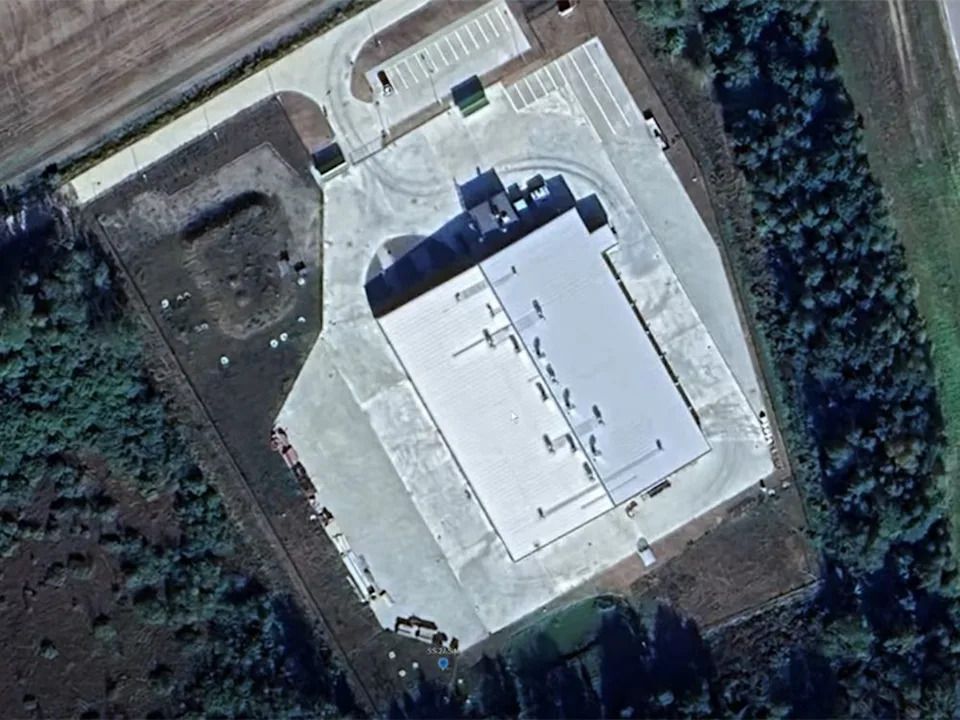
As in Kaliningrad, scores of S-400 anti-aircraft missiles and launchers are stationed in Belarus, a close Russian ally. A train that the group tracked from its start point in China delivered military hardware to a Russian base in Belarus, Wheelbarger says. He and his group also spotted more SS-27s, stored just 64 kilometres from the Latvian border.
-
Belarus contains huge military training grounds near Poland, including “fording ponds” where amphibious vehicles are tested.
A storage facility for what a group of private military analysts say are Russian SS-27s, nuclear-armed intercontinental ballistic missiles. The satellite image was part of a presentation by a group of private analysts documenting Russian military buildup near the borders of NATO countries.
Nyquist argued that the most likely move by Russia, if it were to invade NATO territory, would be to capture the so-called Suwalki Gap along the Polish-Lithuania border, both cutting off the Baltic states from the rest of NATO and linking Kaliningrad with Belarus.
Labarre called Russia a ”very nasty neighbour” with imperialist ambitions, but he downplayed the significance of its positioning of military hardware close to NATO-country borders. In Kaliningrad, for instance, the area is so small, it would be difficult not to do so, he said.
Our website is the place for the latest breaking news, exclusive scoops, longreads and provocative commentary. Please bookmark nationalpost.com and sign up for our daily newsletter, Posted, here.
تم ادراج الخبر والعهده على المصدر، الرجاء الكتابة الينا لاي توضبح - برجاء اخبارنا بريديا عن خروقات لحقوق النشر للغير


