


اخبار العرب-كندا 24: الأحد 28 ديسمبر 2025 07:44 صباحاً
If it’s Dec. 30 and you’re still contemplating Christmas leftovers, it’s time to move on. When properly handled, leftovers last for four days in the refrigerator, says Lawrence Goodridge, a professor in the Department of Food Science and the director of the Canadian Research Institute for Food Safety at the University of Guelph.
So, Dec. 29 is the last day you should enjoy leftovers from your Christmas feast (unless you freeze them, which should be done right away), but this guidance comes with caveats. Whether your leftovers are safe to eat or not depends on how they were stored and heated.
How quickly do you need to put your Christmas dinner away?
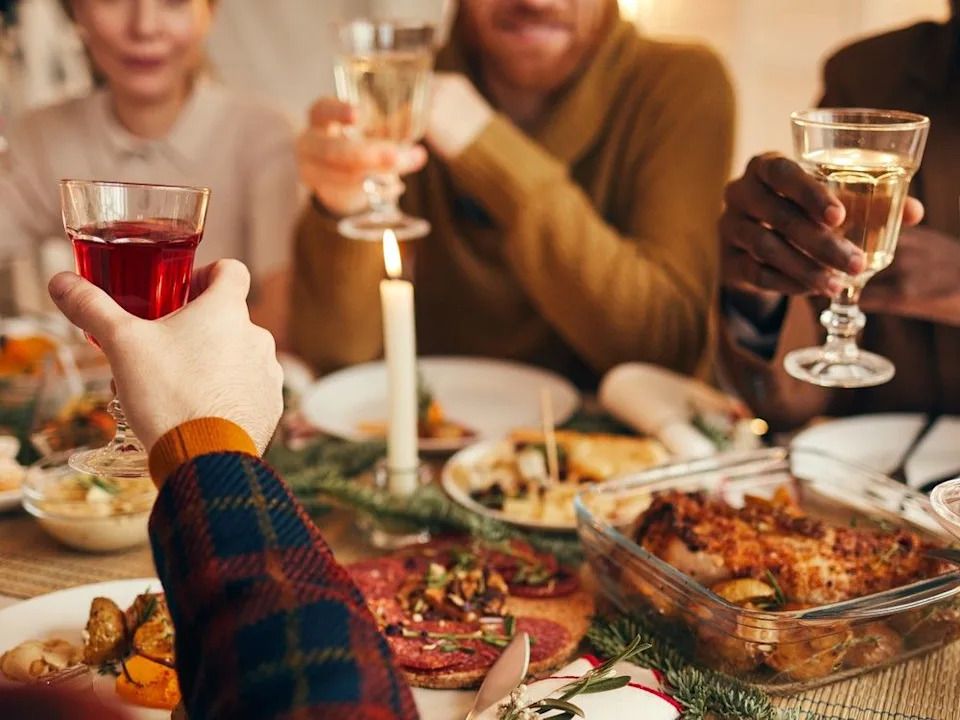
“Christmas dinner is always a problem, because you have this big dinner, there’s all this food, and it’s left out at room temperature,” says Goodridge. “People fall asleep, or they go to open presents.”
Advertisement
Advertisement
Advertisement
Advertisement
The issue with food sitting at room temperature, typically 20 degrees Celsius to 22 C, is that it’s within the “danger zone.” The range in which foodborne illness-causing bacteria, such as Salmonella, Listeria and E. coli, grow is between 4 C and 60 C.
Let’s say dinner is ready at 7 p.m. Leftovers should be in the fridge (or freezer) by 9 p.m. “Christmas dinner should only be left out for two hours. Then you have to put it away,” says Goodridge. “Assuming that’s done properly, four days in the refrigerator, and then after that, you should throw it out.”
Christmas dinner should only be left out for two hours after serving.
How should you store Christmas leftovers?
Portion your Christmas feast for safe storage. Pour stews, soups and gravies into shallow containers to increase the surface area as they cool. For solid foods, such as roasted turkey, cut them into pieces. Most of the meat will likely be off the bone after carving. Goodridge says it’s fine to store bone-in cuts, such as legs and wings, as is.
“We see this all the time, where people make a big pot of something, like stew or gravy or something like that, and they just put the pot right in the fridge. That’s a major problem because it’s hot. So, you put it in the fridge, and it’s going to take a long time to cool down because there’s so much volume. So it’s actually still in the danger zone.”
Advertisement
Advertisement
Advertisement
Advertisement
Leave room in your fridge for the air to circulate — it shouldn’t be chock-a-block. Goodridge recommends using a fridge thermometer, which you can get for under $10. “The fridge should be between 1 C and 4 C. Any warmer than that, and you start to have problems.”
If you’re planning to make stock with the cooked turkey carcass, store it in the fridge. If you’re not going to make it within a couple of days, freeze the carcass. And when you have made it, pour the stock into smaller containers to cool before refrigerating or freezing.
To reduce food waste, freeze your leftovers
The holidays are often a time of bounty, when cooks make more food than they need. If you have doubts that you’ll get through your leftovers in four days, freeze them. Once frozen, they’ll keep indefinitely — but you should freeze them within two hours of cooking. “Don’t get into this. ‘Well, we put the leftovers in the fridge for two days, now we’re going to freeze them.’ Freeze them right away. The only disadvantage of freezing right away is that it’ll take longer for you to heat them up,” says Goodridge. “If in doubt, if you think you’re not going to use it in the next four days, freeze it.”
What’s the best way to thaw frozen leftovers?
Just like a Christmas turkey, which should never be thawed at room temperature because of the danger zone, thaw your leftovers at the bottom of the fridge. “You can take out the leftovers, and put them right in the microwave or oven or whatever, that’s OK. But if you’re going to thaw them first, not at room temperature. In the fridge.”
Advertisement
Advertisement
Advertisement
Advertisement
(For more on how to thaw a frozen turkey, see these best practices. And for an explanation of why you shouldn’t rinse poultry, see this article.)
How should you reheat Christmas leftovers?
To safely heat Christmas leftovers, bring gravies or stews to a boil on the stove. If you’re using a microwave, stir the dish at the halfway mark — or a couple of times while heating, depending on the food — and let it sit for a minute or two before eating. Use a thermometer to ensure the internal temperature reaches 74 C.
Heating foods on the stovetop or in the oven is generally safer than in microwaves, which Goodridge notes are notorious for warming unevenly and having variable wattages that decrease over time. But some people may not have ovens or prefer the speed of the microwave.
“You can do it safely in the microwave, but you have to follow the rules,” says Goodridge. “There have been instances over the years where microwaves have caused a lot of foodborne illness. And we’ve all done that, where you heat something, and then you eat it, and half of it’s cold, and half of it’s warm. That’s not good.”
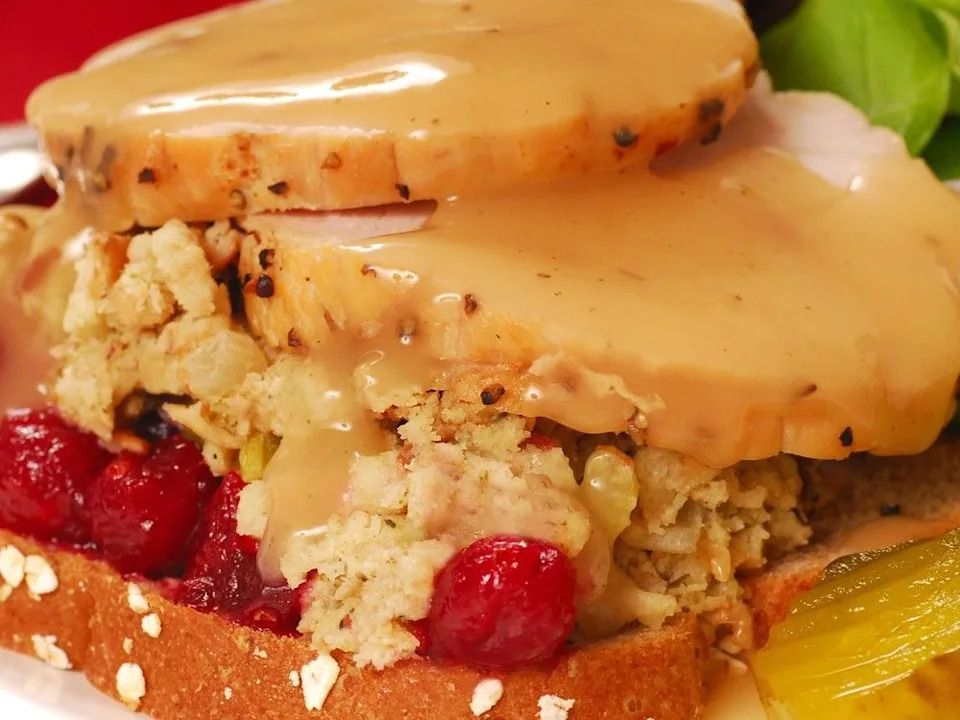
Open faced turkey sandwiches with dressing and cranberries are a common use for Christmas dinner leftovers.
4 principles of food safety
Most foodborne illness is caused by what happens in the home kitchen, says Goodridge. To reduce the risk, cook, clean, separate and chill.
Advertisement
Advertisement
Advertisement
Advertisement
-
Cook: Cook meat, seafood and other foods of animal origin to the proper temperature using a thermometer, and reheat leftovers to 74 C.
-
Clean: Wash your hands (including the wrists and under fingernails) with soap and hot water after using the bathroom, before handling any food, and after handling meat and other animal foods. Don’t wear watches or jewelry on your hands or wrists.
-
Separate: Avoid cross-contamination by never using the same utensils, plates, cutting boards or countertops for raw products of animal origin as foods that are consumed raw, such as fruits or vegetables, or ready-to-eat foods, such as bread, unless you’ve cleaned them first.
-
Chill: Keep hot foods hot and cold foods cold. ”Hot food should be kept hotter than 60 degrees Celsius. Cold food should be kept colder than 4 C and chilled properly.”
And watch for pistachios in baked goods and candy
On top of avoiding risky foods, such as eggnog made with raw eggs, raw seafood, such as oysters, and other raw animal products during the holidays, Goodridge recommends steering clear of pistachios if you don’t know their origin.
An ongoing Canadian Food Inspection Agency investigation into an outbreak of Salmonella infections began in July. To date, 155 illnesses and 24 hospitalizations have been reported. The Public Health Agency of Canada warns against consuming recalled items and suggests considering alternatives to Iranian pistachios and any products made with them.
Pistachios are often available in bulk, and it can be difficult to tell where they’re from. They also have a long shelf life of one to two years, depending on how they’re stored.
Advertisement
Advertisement
Advertisement
Advertisement
“If you don’t know where they came from, don’t consume them,” says Goodridge. “People say, ‘Well, but I’m going to cook with them, and heating kills (the bacteria).’ And that’s true, but we know that in dry foods, Salmonella is much more heat-resistant. So, it’s better to just throw it out.”
Our website is the place for the latest breaking news, exclusive scoops, longreads and provocative commentary. Please bookmark nationalpost.com and sign up for our cookbook and recipe newsletter, Cook This, here.
تم ادراج الخبر والعهده على المصدر، الرجاء الكتابة الينا لاي توضبح - برجاء اخبارنا بريديا عن خروقات لحقوق النشر للغير


