

اخبار العرب-كندا 24: الاثنين 22 ديسمبر 2025 04:32 مساءً
Thousands of metres above sea level, in the coastal mountains in southeast Alaska, one animal ventures higher than most others dare to climb.
Mountain goats, their thick white coats blending in with snow-covered slopes, navigate thin ledges and steep inclines with ease.
Their ability to survive in alpine environments helps protect them from predators, but it also comes with risks.
The frequency and intensity of avalanches in Southeast Alaska is increasing with climate change, and even the most well-adapted alpine species — mountain goats — are not immune to the effects.
Advertisement
Advertisement
Advertisement
Advertisement
A recent study in the Global Change Biology journal found that mountain goats in the region are being killed by avalanches, resulting in population declines that take a long time to recover from.
“Up to 22 per cent of the population could be removed by avalanches in a given year … and we had several instances where greater than 15 per cent of the population was removed by avalanches,” said Kevin White, one of the paper’s authors.
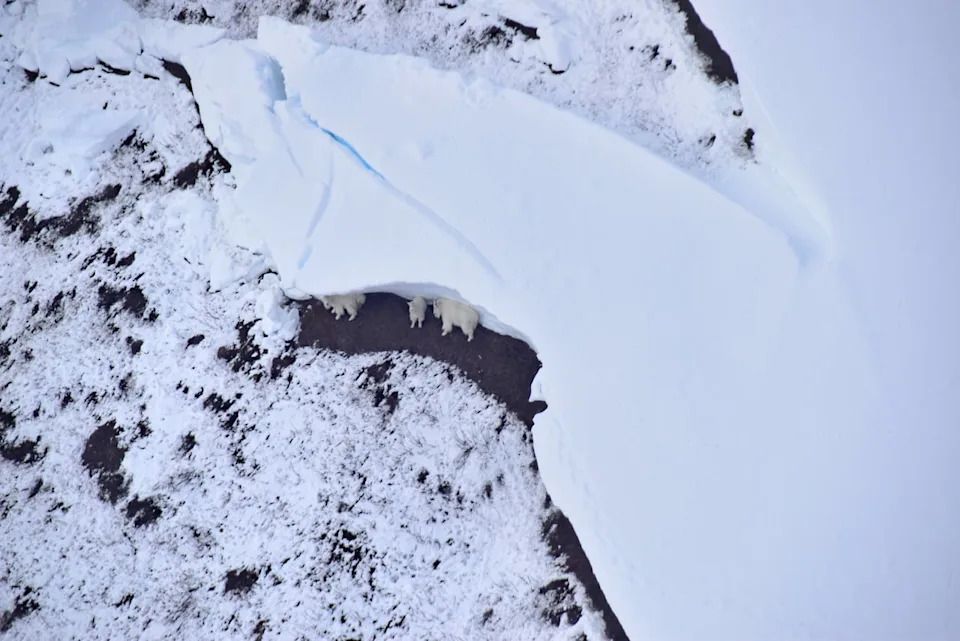
Mountain goats shelter beneath the fracture line of an avalanche in Summit Creek, Klukwan, Alaska. Wildlife ecologist Kevin White says avalanches can wipe out 22 per cent of the mountain goat population in a year. (Kevin White)
White, a wildlife ecologist with the University of Alaska Southeast, says mountain goats have low reproductive rates, so when a few individuals are killed by an avalanche, it can have a significant impact.
“Populations can generally only increase by like one to four per cent a year,” he said. “So if you have up to 22 per cent of a population being removed, it sort of raises red flags about the extent that might be having long-term impacts on mountain goat populations.”
Advertisement
Advertisement
Advertisement
Advertisement
“It can take up to 11 plus years for populations to recover from the most severe impacts … that’s more than a generation and a half for a mountain goat.”
The decline in mountain goat populations has both cultural and ecological effects, White said.
“Indigenous people have had relationships with mountain goats for millennia and for food and for using wool to weave Chilkat and Ravenstail blankets,” he said.
Wolverines also rely on mountain goats as a source of food and often search avalanche paths to scavenge for mountain goats, White said.
“A bad avalanche year for mountain goats might actually translate into being a good year for a species like wolverines.”
Risk of avalanches unclear for Yukon mountain goats
Just north of the border, mountain goats in the Yukon are facing a less dire situation, says Yukon government biologist, Meghan Larivee.
Advertisement
Advertisement
Advertisement
Advertisement
“Both coastal and interior mountain goats live in environments and have habitats that of course are going to put them at risk for avalanches,” she said. “The difference is really that coastal environments are prone to having higher volumes of snow.”
Larivee says with less wet heavy snow in the Yukon’s interior mountains, the risk of avalanches killing mountain goats is likely lower. However, there is no data on how many mountain goats are killed by avalanches in the territory, said Larivee. So it’s unclear if the risk of avalanches is increasing for mountain goats in the territory.
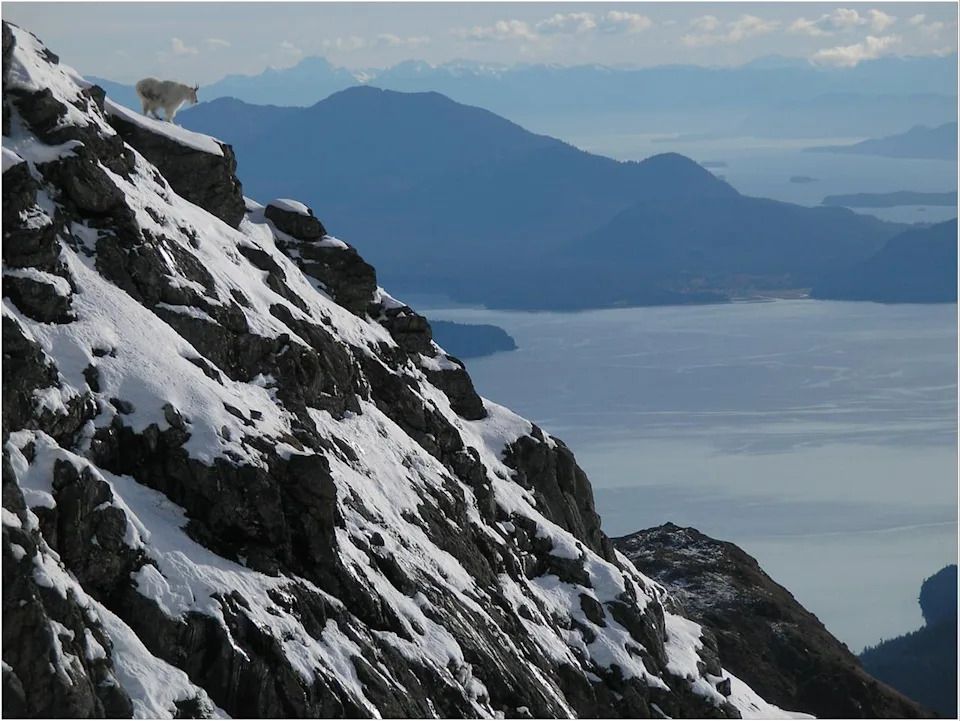
A mountain goat on a steep slope on Lions Head Mountain in Lynn Canal, Alaska. The steepest part of the slope is ideal for avoiding predation, but puts goats at risk of getting caught in avalanches. (Kevin White)
Mountain goats in the Yukon are at the very northern end of their range, so their population is more sparse in the territory compared to B.C. and southeast Alaska, said Larivee. She says that’s one reason why most of the territory’s ungulate data is not focused on mountain goats.
“We have most of our information and data focused on Thinhorn sheep in the territory, mostly because there's interest in harvest,” she said.
Advertisement
Advertisement
Advertisement
Advertisement
Laviree says past surveys suggest that the mountain goat population in the territory is stable and sits at about 1,500 individuals.
Michelle Dawson-Beattie, chair of the Fish and Wildlife Management Board says the lack of data on mountain goats in the territory comes down to the cost of doing population surveys.
“I wish we had enough money to survey these populations every year. Unfortunately, when [the Yukon government] is doing their budget they’re saying X, Y and Z species are species of concern…. And then those will be the priority.”
Mark Nassiopoulos with the Alsek Renewable Resources Council says as winter conditions become more variable with climate change, there is reason to be concerned about mountain goats. He says he would like to see more data collected on the species in the Yukon.
Advertisement
Advertisement
Advertisement
Advertisement
“I wouldn’t be able to tell you the last time they did an actual survey on goat numbers,” he said. “It’s all estimates from what I’ve seen.”
Dawson-Beattie says with so many climate change related risks to mountain ungulates, research on avalanche risk is not the priority right now, but that doesn’t mean more data won’t help.
“I can definitely see how an avalanche could severely impact a healthy population, taking out prime breeding animals, as well,” she said. “So I'm definitely keen to learn more.”
تم ادراج الخبر والعهده على المصدر، الرجاء الكتابة الينا لاي توضبح - برجاء اخبارنا بريديا عن خروقات لحقوق النشر للغير


