


اخبار العرب-كندا 24: الأحد 14 ديسمبر 2025 06:20 صباحاً
A new study suggests that a colony of sea birds nesting on Cape Parry in the N.W.T. could face increasing threats related to increased Arctic shipping traffic and environmental change.
The Cape Parry thick-billed murres, also referred to as the "penguins of the North," are one of the most isolated and the least-studied colony of the species in the world, says the report published earlier this year in the Marine Ecology Progress Series.
The research was led by co-principal investigators Stephen Insley and Rosana Paredes with the Wildlife Conservation Society Canada. It outlines the locations of the Cape Parry colony’s molting area and nursery, information that was previously undocumented.
Advertisement
Advertisement
Advertisement
Advertisement
While thick-billed murres are not unique to Cape Parry, the fact that this particular colony is so far north is rare. Cape Parry is on the northern tip of the Parry Peninsula, near Paulatuk, N.W.T.
Most thick-billed murres are found in the eastern Arctic, north of Hudson Bay, but those in Cape Parry are the only ones that live in Canada’s western Arctic, said Insley.
There are currently only around 1,300 of the birds nesting on Cape Parry.
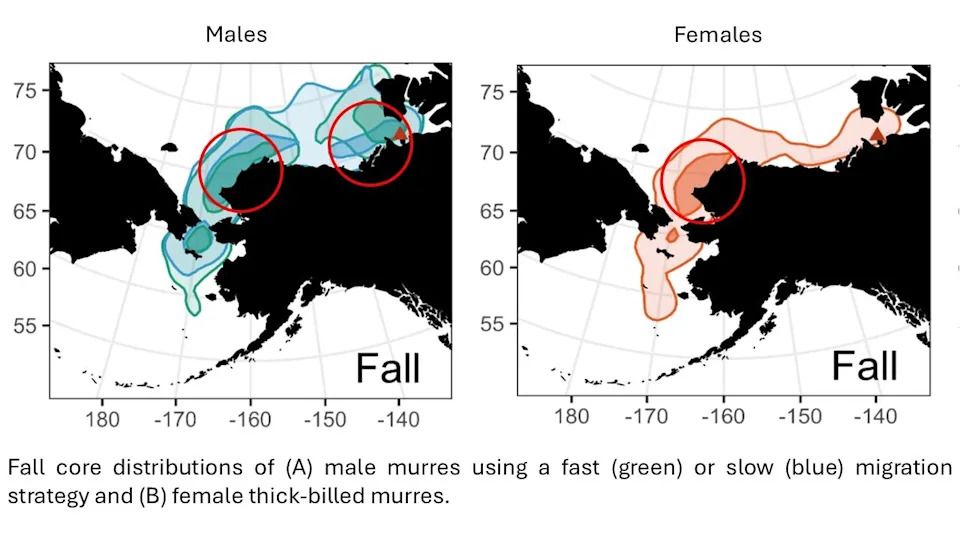
Research to pinpoint the exact location of the colony’s migration path is still ongoing, but Insley said they are confident that the paths, where the chicks and males swim during the molting period as well as the different ones taken by females, intersect with marine shipping routes.
Advertisement
Advertisement
Advertisement
Advertisement
“If you draw all the ship tracks there's a basic corridor that's been delineated. If you look at where all the ship tracks are, they definitely overlap with both those areas,” Insley said.
A map shows migration paths of thick-billed murres in the western Arctic. (Stephen Insley )
According to the Arctic Council's latest Arctic Shipping Status Report, shipping in the region is on a steady increase, with a 37 per cent climb between 2013 and 2024.
This trend corresponds with Arctic warming, where ice-free seasons are occurring for longer periods of time.
For murres, it means their molting area is being increasing affected by ship traffic. The birds spend all their life at sea except during the breeding period.
Advertisement
Advertisement
Advertisement
Advertisement
“With climate change, these shipping areas are going to be more used because the melting of the ice will be earlier. So there is a threat for this colony to be affected by shipping traffic," said Paredes.
One way this effect could be seen is through ship strikes. During the thick-billed murre’s molting period they are unable to fly as they shed their primary feathers.
“If they've molted all of their primary flight feathers, then they might be completely flightless for a bit, in which case they would not easily be able to get out of the way of a fast-moving ship,” said Insley. “So really both adults and chicks are at risk. "
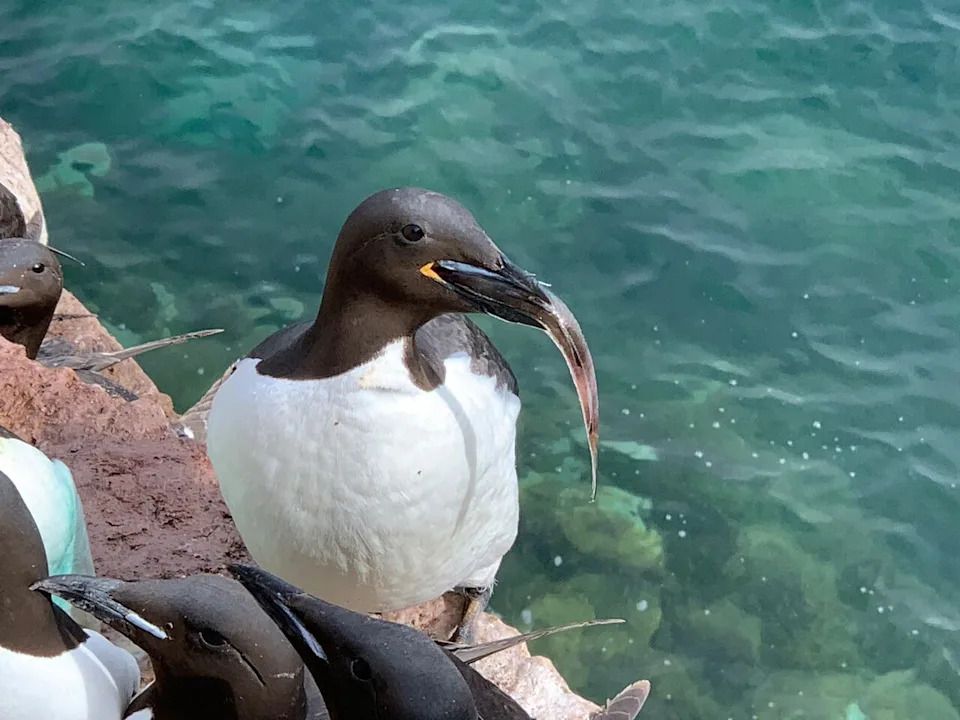
The colony of Cape Parry thick-billed murres has only around 1,300 birds. (Stephen Insley )
The researchers also suggest that oil spills and noise pollution associated with ship traffic, which could scare off potential food sources, threaten the colony’s livelihood.
Advertisement
Advertisement
Advertisement
Advertisement
“Climate change in the Arctic is happening a lot faster than the rest of the planet,” Insley said.
“How these species are doing gives you a better indication of what's happening there in terms of climate change — and that then impacts all of us."
تم ادراج الخبر والعهده على المصدر، الرجاء الكتابة الينا لاي توضبح - برجاء اخبارنا بريديا عن خروقات لحقوق النشر للغير


