




اخبار العرب-كندا 24: الجمعة 5 ديسمبر 2025 10:56 مساءً
B.C. Premier David Eby says he is open to revising the province's Declaration on the Rights of Indigenous Peoples Act (DRIPA).
His comments come after the B.C. Court of Appeal found that the legislation is incompatible with the province's current system used to grant mineral rights.
The ruling, released Friday, was in response to a legal challenge from the Gitxaała and Ehaattesaht First Nations against the province.
Advertisement
Advertisement
Advertisement
Advertisement
The nations have argued the current system of allowing mineral claims to be registered automatically for a small fee online violates the duty to consult impacted First Nations, as laid out by the United Nations Declaration on the Rights of Indigenous Peoples (UNDRIP).
The provincial DRIPA legislation, which was intended to incorporate UNDRIP, was adopted by the province with unanimous support from all parties in the B.C. legislature in 2019.
Gitxaała Chief Coun. Linda Innis said her nation has long advocated for the province to update its mineral rights regime, saying the current system results in people staking claim to their territory without the nation's knowledge.
"There is absolutely no consultation with the nation, no notification," she said. "Anybody with a few dollars can stake a claim online," she said, calling it an "antiquated" system.
Advertisement
Advertisement
Advertisement
Advertisement
She added she'd rather work directly with the province but said her nation had to resort to the courts because the province was "dragging its feet," on modernizing laws.
A duty to consult
While all three judges in Friday's ruling agreed that the province had a duty to consult First Nations, they differed in their interpretation of the legislation and how that would impact the province's ability to manage mineral rights.
Two of the judges, Justice Dickson and Justice Iyer, wrote that allowing the current mineral rights regime to continue meant "adopting an unduly narrow approach to the legal effect of the Declaration Act and UNDRIP."
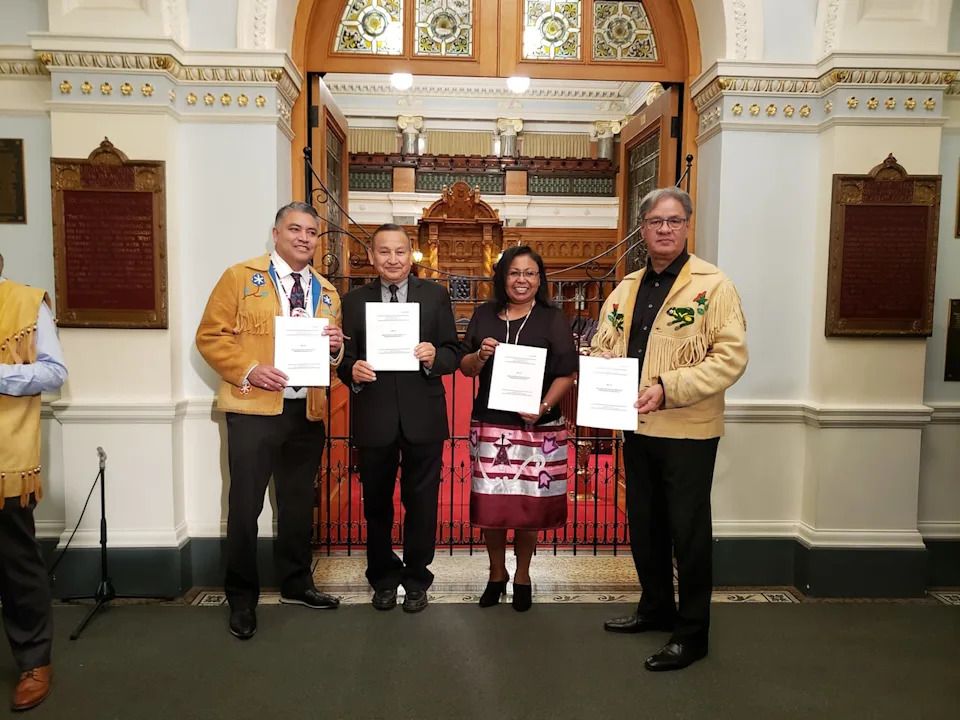
First Nations Leadership Council representatives hold up printed copies of the UN Declaration bill tabled in Victoria in November 2019. (Chantelle Bellrichard/CBC )
"Properly interpreted," they wrote, the adoption of the declaration has an immediate impact on all laws in B.C., and that in cases where there are inconsistencies, it is incumbent on the province to immediately resolve them to bring them in line with UNDRIP, and for the court to intervene when they fail to do so.
Advertisement
Advertisement
Advertisement
Advertisement
UNDRIP and the current mineral claims rules in the province, the justices said, "are inconsistent."
The dissenting opinion, Justice Riley, disagreed, arguing that while the executive branch of government — meaning elected leaders — has a duty to bring laws in line with UNDRIP, it is not the court's place to get involved in areas where there are inconsistencies between existing laws and the new legislation.
"Nowhere in the Declaration Act is the judicial branch invited or called upon to adjudicate claims of inconsistency between UNDRIP and British Columbia’s laws, and doing so would take the court outside of its proper role in our constitutional democracy," he said.
Eby worried court 'in driver's seat'
Speaking to reporters at an unrelated news conference in Surrey, B.C., Eby said he had similar worries.
Advertisement
Advertisement
Advertisement
Advertisement
"[The decision] potentially puts courts in the driver's seat, instead of British Columbians," he said. He added the government would be reviewing the decision and "if necessary, amend the Declaration Act to ensure that our original intention when we introduced it is clear."
"It is absolutely crucial that it is British Columbians, through their elected representatives, that remain in control of this process, not the courts," he said of implementing UNDRIP, noting that the province's work with First Nations has delivered "billions of dollars" in the form of economic projects and he didn't want to see that undone by backlash to court rulings.
The opposition B.C. Conservatives, meanwhile, responded to the ruling by again calling on the governing NDP to repeal the DRIPA legislation altogether.
"This ruling highlights exactly what happens when government tries to legislate reconciliation through vague and undefined promises,” said MLA Scott McInnis, deputy critic for Indigenous relations and reconciliation in a written statement. "Uncertainty helps nobody."
Government to government
Eby, though, said he remains committed to working with First Nations, and the most likely outcome would be that the government amends the DRIPA legislation to put more explicit power back in the hands of elected officials.
Advertisement
Advertisement
Advertisement
Advertisement
"Too much rides on it, in terms of our province's prosperity and certainty going forward," Eby said, adding the courts "seem to have some confusion" around "what was clearly intended when we introduced this legislation."
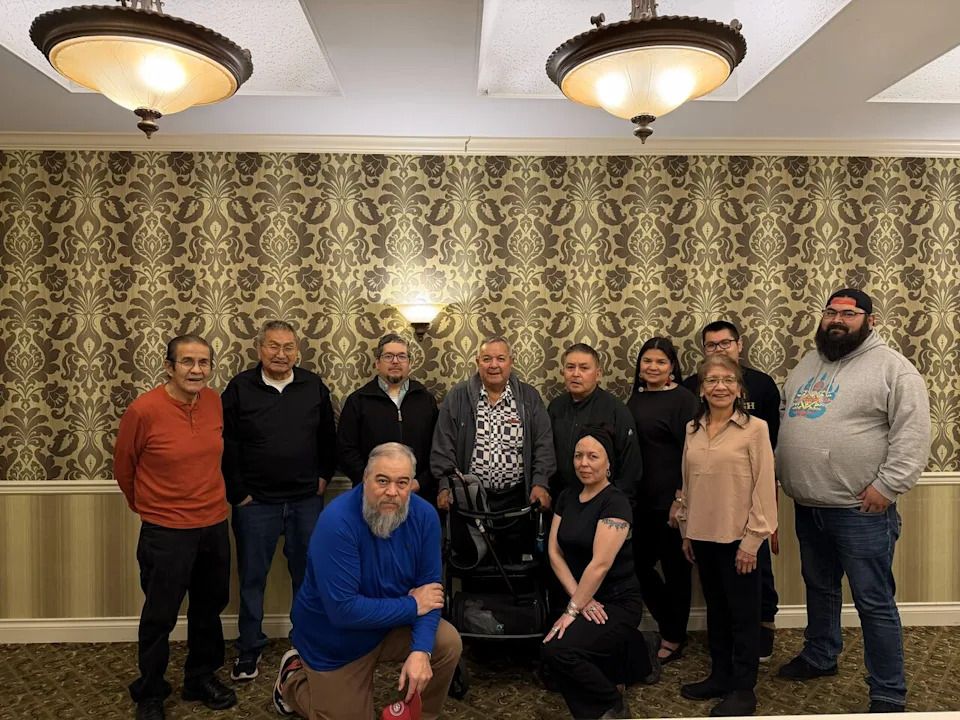
(Gitxaała Nation)
For her part, Chief Coun. Innis said she would much rather work with the province outside of the court system in a government-to-government relationship.
"I hope that they're ready to roll up their sleeves and work with us," she said. "We are here and we're looking forward to working with B.C. and all parties to implement today's precedent-setting decision."
تم ادراج الخبر والعهده على المصدر، الرجاء الكتابة الينا لاي توضبح - برجاء اخبارنا بريديا عن خروقات لحقوق النشر للغير


