

اخبار العرب-كندا 24: الاثنين 12 يناير 2026 12:20 مساءً
The broker told his client he had a relative in the “little red party” with links to the “famous Suns” who, for an up-front fee, would guarantee safe passage of the container with the cocaine onto the ship docked at the Venezuelan port.
The cocaine — a batch of 32 kilograms hidden inside two electrical generators — was destined for Libya.
The broker, alias Luisito, was trying to assure the client, alias Julio, that Venezuelan military officers would not steal his money or his load, according to wiretap recordings obtained by CBC News.
Advertisement
Advertisement
Advertisement
Advertisement
“Someone has to be the guarantee,” said Julio, according to the cellphone recording.
“They’re military, there is no need for a guarantee with them … they work there. The day the truck arrives, they receive it and they put it [on the ship],” said Luisito.
CBC News obtained more than a dozen wiretap recordings from an ultimately successful two-year Colombian federal police investigation into a multinational drug-smuggling organization based out of Colombia.
The organization moved cocaine to the U.S., Europe, Asia and northern Africa by air using human drug mules and by sea through shipping containers.
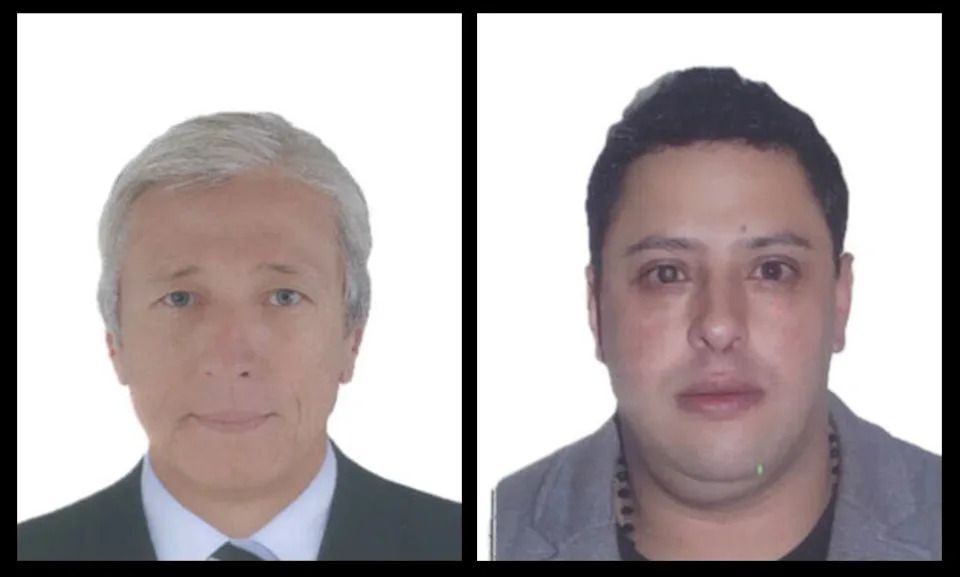
Luis Ernesto Galvis Martinez, alias Luisito, left, and Luis Fernando Martinez, alias Julio, were captured on cellphone wiretaps planning to send cocaine to Libya with the help of the Venezuelan military. (CBC )
The two-year investigation, which culminated in 2016, was initiated by the U.S. Drug Enforcement Administration (DEA). Cellphone interceptions captured members of the group discussing dealings with Venezuelan military officials who oversaw the Guarano International Port in the state of Falcón.
Advertisement
Advertisement
Advertisement
Advertisement
The Venezuelan government has denied it has any links to drug trafficking and no government party or military officials were captured on the wiretaps obtained by CBC News.
In the wiretapped conversations, the broker Luisito repeatedly used the nickname “the Suns” whenever he mentioned senior Venezuelan military officers. The nickname refers to the insignias high-ranking Venezuelan military officers wear on their uniforms to denote their rank.
He would also mention the colour red whenever he referred to the ruling party, the United Socialist Party of Venezuela (PSUV).
“These conversations help us understand that, effectively, the ‘Cartel of the Suns’ exists…. They are high-ranking officers, generals, who had the power to control all the shipments of cocaine from their country,” said a former federal Colombian anti-narcotics agent who worked on the case.
Advertisement
Advertisement
Advertisement
Advertisement
CBC News is not revealing the former agent’s identity, because he was not authorized to release internal details of police investigations.
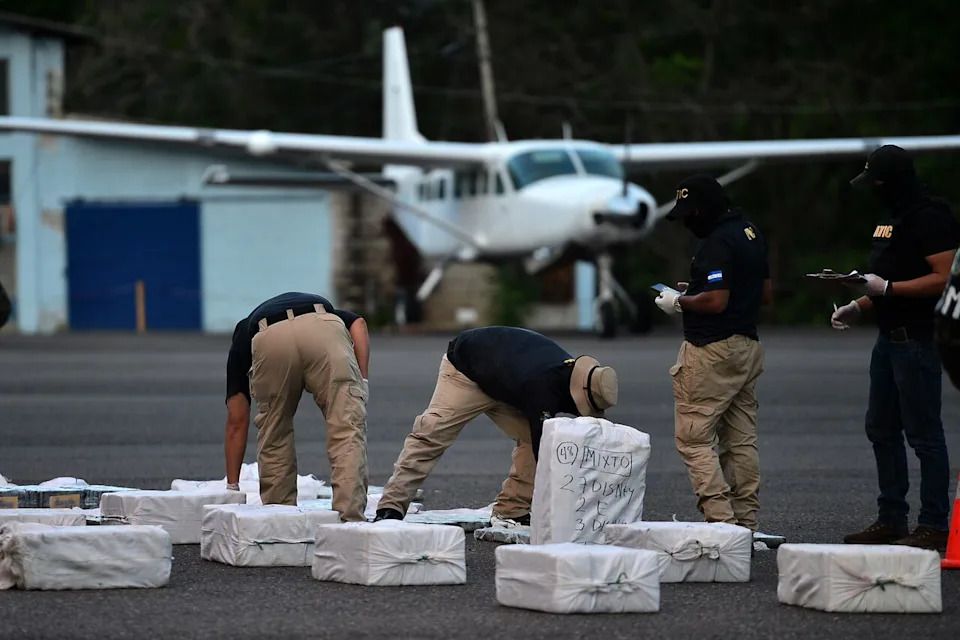
More than 800 kilograms of cocaine were seized inside an aircraft coming from Venezuela in Brus Laguna, Gracias a Dios department, Honduras, in 2020. (AFP via Getty Images)
The former agent said he came across the term “Cartel of the Suns” in other investigations through conversations with confidential informants. He said the Venezuelan regime had deep ties to the drug trade.
“Sources told us about secret runways where they sent planes loaded with substances and about the power that they had to control everything that had to do with narco-trafficking,” the agent said.
He said that the U.S. federal criminal case against captured Venezuelan president Nicolás Maduro and his wife, Cilia Flores, was likely built from similar cases.
Advertisement
Advertisement
Advertisement
Advertisement
Maduro was captured along with Flores during a U.S. military strike on Jan. 3. They are facing charges before the U.S. Federal Court in New York City of conspiracy to commit narco-terrorism and conspiracy to import cocaine, among other charges.
The U.S. indictment against Maduro and Flores describes the Cartel of the Suns as "a patronage system" where "Venezuelan elites enrich themselves through drug trafficking and the protection of their partner drug traffickers."
The wiretaps obtained by CBC News, all recorded in April 2016, revealed how Julio planned to use fake Venezuelan identification cards and a local company to move cocaine in a container packed with the two generators and other, similar equipment, so it would weigh at least a tonne.
Julio wanted to move the container by sea from Venezuela to Brazil and then to Libya. He had been burned by another contact before he turned to Luisito, a broker who said he had recently moved 50 kg of cocaine to Portugal hidden inside a shipment of several tonnes of charcoal, according to the wiretaps.
Advertisement
Advertisement
Advertisement
Advertisement
Luisito said he had a relative who was part of the United Socialist Party of Venezuela.
“He has done some little things there and he has a little power there in Punto Fijo,” said Luisito, according to a wiretap intercepted at 6:10 p.m. on April 4, 2016.
Punto Fijo is the city next to Guarano International Port, which sits on a peninsula about 548 km northwest of the Venezuelan capital, Caracas.
“And working with these people that you mention, it’s not dangerous?” said Julio, in a second phone call intercepted that same day at 6:43 p.m.
“The little red ones? No, they are the ones in charge of the ports … there’s no more DEA [U.S. Drug Enforcement Administration], there’s nothing,” said Luisito.
Advertisement
Advertisement
Advertisement
Advertisement
“I don’t want them to steal [the product],” said Julio.
“They don’t need to, they are the ones who are doing this with the famous Suns, they are linked to the Suns who are sending out loads,” said Luisito. “They have their own ways of sending things.”
Luisito said that his relative was dealing with a high-ranking officer and three subordinates who worked together.
He said the military completely controlled the port and each shift operated its own side business, charging a baseline amount of $8,000 US and up, based on quantity, to allow containers through to be loaded on ships.
“They have been doing this for a long time … and when I told [my relative] that it was only 16 kg of cocaine [per generator], he said that’s not a lot, if you only knew how much [cocaine] they’re sending out of here,” said Luisito, in the same phone call.
Advertisement
Advertisement
Advertisement
Advertisement
Julio was still worried about getting ripped off.
“How do I know the police won’t steal the money or steal the [generators]?” he said, during a third phone call intercepted at 7 p.m. the same day.
“They are sending product out daily … by turns through the airport and by turns by ship because what interests them is money, they are not interested in bolivars [the Venezuelan currency], they are interested in [U.S.] dollars, because they are sending them to offshore tax havens,” said Luisito.
Luisito told Julio he just needed to make sure his papers were in order to get through the customs process, because the military officers were only in charge of “anti-narcotics screening.”
The former Colombian federal police drug agent told CBC News that the shipment made it to Libya but that authorities eventually charged Luisito and Julio, who were then convicted and jailed.
تم ادراج الخبر والعهده على المصدر، الرجاء الكتابة الينا لاي توضبح - برجاء اخبارنا بريديا عن خروقات لحقوق النشر للغير


