

اخبار العرب-كندا 24: الثلاثاء 6 يناير 2026 04:44 مساءً
Is Venezuela the "most dangerous threat on the world stage?" According to U.S. spy Jack Ryan, it just might be.
Ryan is, of course, not real. He's the creation of author Tom Clancy and the hero of his bestselling novels, several movie adaptations and an eponymous TV series that streamed on Amazon Prime for four seasons.
But on the heels of the U.S. military attacks on Venezuela's capital over the weekend and the capture of president Nicolás Maduro, millions of people on social media have been sharing the fictional CIA analyst's six-year-old insights on the South American petrostate and the "threat" it poses.
Advertisement
Advertisement
Advertisement
Advertisement
An Instagram reel titled "Venezuela explained," which features a short clip from the series, has been viewed nearly 40 million times in the past two days, though it has also been copied and shared widely across other social media accounts.
The scene — from the first episode of Jack Ryan's second season in 2019 — depicts the famed spy, portrayed by John Krasinski (a.k.a. Jim from The Office), telling an audience of university students why a faltering Venezuela may be more of a security risk to the U.S. than Russia, China or North Korea.
The scripting of Ryan's lecture is based somewhat on what was happening in Venezuela at the time. But it now has people wondering if it perhaps foretold the current, real-world situation.
It's something even the show's co-creator recognizes.
Advertisement
Advertisement
Advertisement
Advertisement
"The goal of that season wasn’t prophecy — it was plausibility," Carlton Cuse told Deadline in an interview published on Sunday.
A viral prophecy?
During his lecture, Ryan says Venezuela is "arguably the single greatest resource of oil and minerals on the planet" but that's it's also "in the midst of one of the greatest humanitarian crises in modern history."
He points to fictional leader Nicolás Reyes (played by Jordi Mollà), whom Ryan describes as having "crippled the national economy by half" and quadrupling poverty rates in the six years since he rose to power in "a wave of nationalist pride."
Advertisement
Advertisement
Advertisement
Advertisement
Reyes appears to be hybrid of Maduro and his predecessor, the late Hugo Chávez, the charismatic socialist leader who was popularly elected in 1998 and led Venezuela until his death from cancer in 2013.
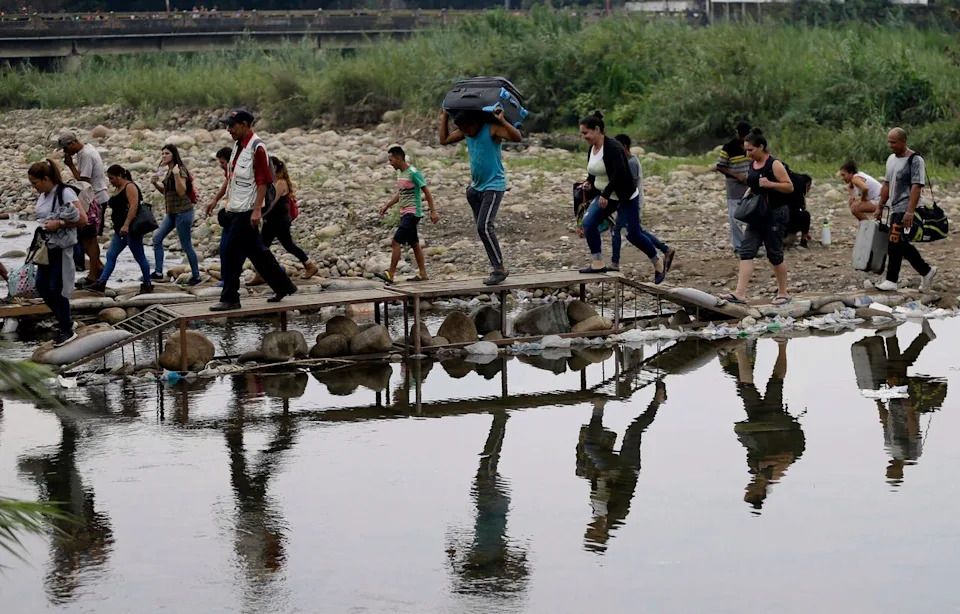
Maduro exerted much more of an iron fist, turning Venezuela into a pariah state and leading the economy into such ruin that nearly eight million people left Venezuela between 2014 and the end of 2025, according to the UN's refugee agency.
Venezuelans cross into Colombia near the Simon Bolivar International Bridge, close to Cucuta, Colombia in April 2019. The UN refugee agency estimates nearly 8 million Venezuelans have left their country in recent years amid economic and political turmoil. (Fernando Vergara/The Associated Press)
Ryan goes on to say Venezuela has become a "failed state" that can be easily exploited by adversaries.
"Unstable governments are nothing more than the greatest of opportunities," he pronounces. So Russia, China can never be the most major threat "until countries like Venezuela stop leaving the door open."
Advertisement
Advertisement
Advertisement
Advertisement
Ryan's lecture doesn't imply the U.S. should intervene in Venezuela — as it just did in real life — but rather sets up a season-long storyline in which he investigates a supposed shipment of arms to the Venezuelan jungle and uncovers a conspiracy connected to the mining of a rare metal.
Stranger than fiction
U.S. President Donald Trump said on Sunday that the U.S. will run Venezuela in the interim — a comment Secretary of State Marco Rubio attempted to dial back — as well as take control of the country's oil sector, which was nationalized under Chavez and Maduro.
This isn't lost on the those sharing and commenting on the snippet from Jack Ryan and its description of Venezuela's wealth of oil and mineral resources, which is largely accurate.
Advertisement
Advertisement
Advertisement
Advertisement
Venezuela has the world's largest oil reserves, ahead of Saudi Arabia, Iran and Canada — which produces a similar bitumen heavy crude product — as well as the most significant gold reserves in Latin America, and is a producer of other critical minerals.
Former Chilean ambassador to China Jorge Heine told CBC News on Sunday that he believes "the oil issue is central" to what has unfolded in recent days.
Heine says that is evidenced by Trump's shifting justifications for the spectacular raid on Caracas.
Trump said the U.S. needed to take action to stop the flow of drugs from Venezuela but switched his focus to discussions of redeveloping the country's oil sector after Maduro's capture.
Advertisement
Advertisement
Advertisement
Advertisement
Maduro has long accused Washington of wanting to take control of Venezuela's oil reserves.
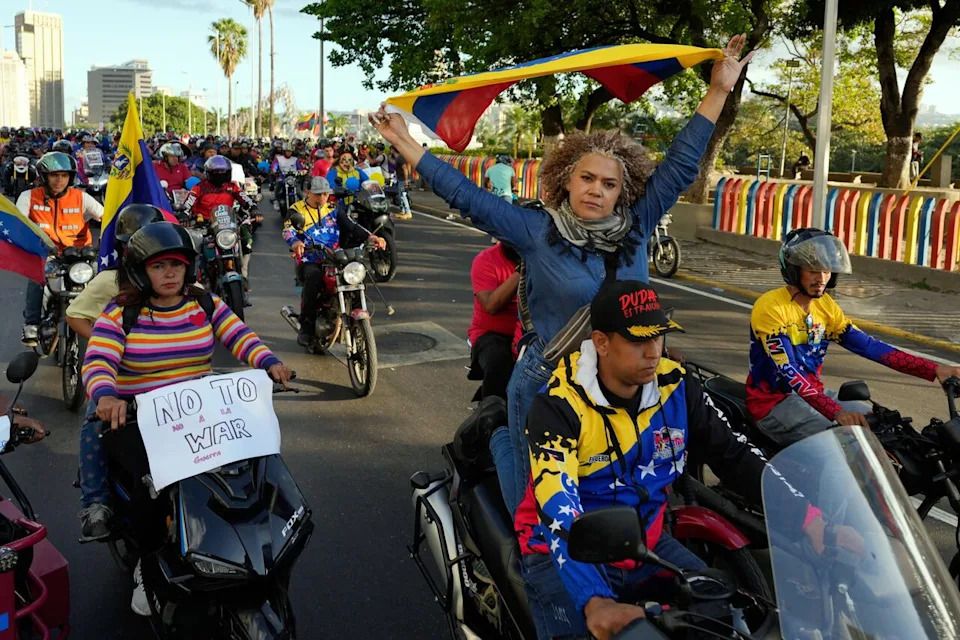
Government supporters ride motorbikes through Caracas, Venezuela, on Dec. 22, 2025, to protest U.S. interference. (Matias Delacroix/The Associated Press)
Also central to the virality of the Jack Ryan clip is the idea of the U.S. controlling countries of strategic interest.
In the scene, Ryan explains that U.S. adversaries like Russia and China have an opportunity to gain a toehold in the region when a country like Venezuela becomes a "failed state."
In reality, Venezuela had moved closer to Russia and China many years ago as it became increasingly isolated from Western powers.
Bob Rae, Canada's former ambassador to the United Nations, says Russia and China are now "privately just rubbing their hands" at the fact that the U.S. carried out this invasion, because it will weaken any opposition to their aggression against other territories, such as Ukraine and Taiwan, respectively.
Advertisement
Advertisement
Advertisement
Advertisement
"If one regional power says, 'Well, here's my doctrine and this is what we're going to do,' what stops the other regional powers from saying the exact same thing?" Rae told David Cochrane, host of CBC's Power and Politics, on Monday.
Unimagined outcome
Maduro's fate is yet to be determined, unlike that of his fictional counterpart in Jack Ryan. (Spoiler: it doesn't end well for Reyes.)
While show co-creator Cuse is aware that it seems like this is a case of fiction preceding reality, he says the story originated seven years ago from a "desire to tell a fictional story about the forces at play, not from imagining an outcome."
Advertisement
Advertisement
Advertisement
Advertisement
“Our job was to make the situation feel credible. We approached Venezuela as a country where democratic ideals, economic reality and geopolitical interests have been in tension for a long time — and where choices are never simple," he said.
But Cuse believes it's important for people to be discussing the current situation.
“Any time the United States uses force abroad, it’s a moment that deserves reflection,” Cuse said.
“The consequences are borne most significantly by people who have very little control over events. I can only hope things move toward stability and peace for the people living [in Venezuela].”
تم ادراج الخبر والعهده على المصدر، الرجاء الكتابة الينا لاي توضبح - برجاء اخبارنا بريديا عن خروقات لحقوق النشر للغير


