


اخبار العرب-كندا 24: الأحد 4 يناير 2026 06:08 صباحاً
Abel Charles throws on a pair of headphones and pulls his radio studio microphone closer to his face.
He’s seconds away from beginning another episode of Missinipi Achimowin — a daily, hour-long Cree-language show on Missinipi Broadcasting Corporation, or MBC, out of its studios in La Ronge.
It’s something he loves doing.
“In broadcasting, I’m supposed to be here, I think,” said Charles. “I get to listen to elders, visit elders and my cultural knowledge is enriched.”
Advertisement
Advertisement
Advertisement
Advertisement
Charles, 67, found his love for radio growing up on the trapline in northern Saskatchewan and listening to radio broadcasts about the Vietnam War.
He was eventually recruited to work for Northern News — a service of what was then the Department of Northern Saskatchewan — which broadcast news, events and messages to people in the province’s north.
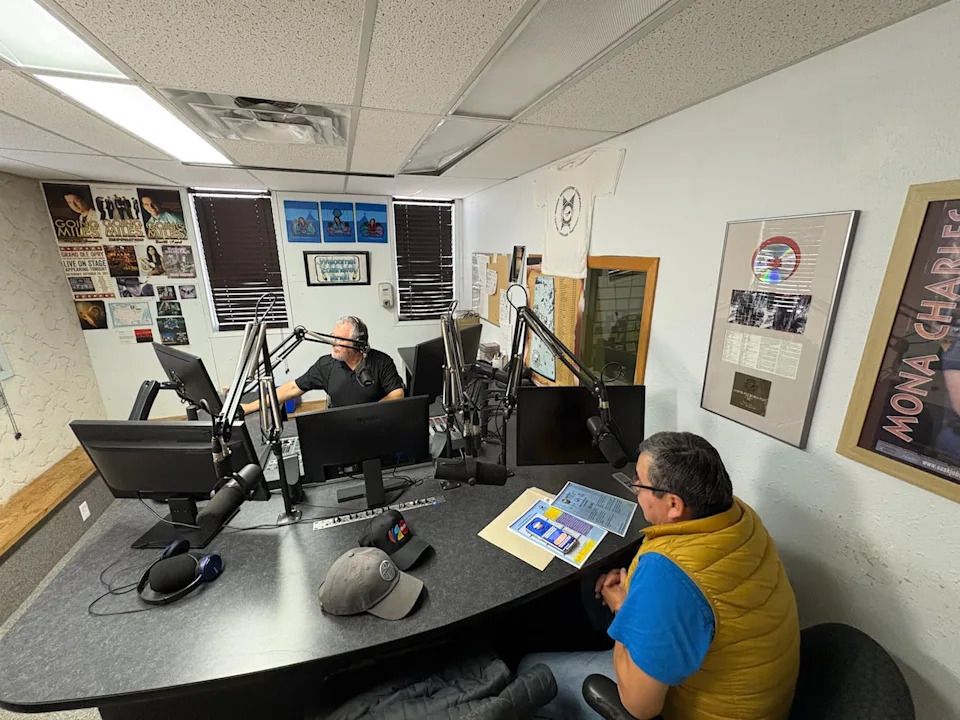
Abel Charles interviews Morris Cook of the Northern Saskatchewan Indigenous Teacher Education Program in MBC’s La Ronge studio. (Ethan Williams/CBC)
After the service was shuttered in the early 1980s, he joined MBC and has spent the better part of the last 15 years as host of Missinipi Achimowin.
These days, he spends his mornings getting caught up on the news. Then he gets to work finding people he can interview in Cree.
Advertisement
Advertisement
Advertisement
Advertisement
“It’s time we tell our stories,” said Charles. “We’re not anti-non-Indigenous. We’re just telling you the oral tradition from their perspective, how we see things.”
Charles is one of dozens of hosts on radio stations dotting northern Saskatchewan. Often small, low-powered FM outlets, the stations serve as a critical link in remote areas.
It’s something Tom Roberts knows well. A former CBC and MBC radio broadcaster, he calls radio “a lifeline to the land and to the people" of the north.
Before FM signals reached northern communities, two-way radios were a common way to transfer information and stories — an integral part of the Cree culture he grew up in.
Advertisement
Advertisement
Advertisement
Advertisement
“This gentleman in one part would tell an Indian legend; not a crackle on the two-way radio,” he said. “It was two-way radio, but it was radio and people listened and enjoyed that.”
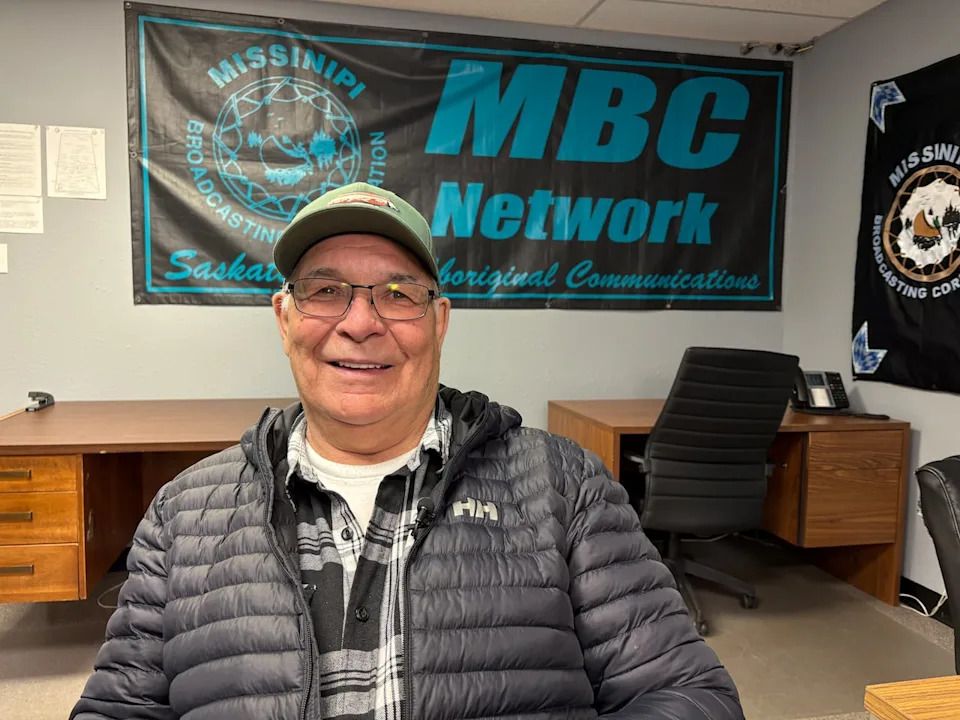
Tom Roberts spent more than 30 years in radio in La Ronge. He says two-way radios provided a crucial link to people in remote areas of Saskatchewan’s north before local, FM radio stations became more widespread. (Ethan Williams/CBC)
He said radio and the Cree language often share similarities.
"Whatever you're talking about, you describe what you're talking about,” said Roberts. “And it makes it much more personal."
Radio, he said, is also a link between people and important information, such as updates on forest fires.
Lac La Ronge Indian Band Chief Tammy Cook-Searson relies heavily on radio during forest fire season. She often calls MBC directly to speak to her community, especially during the forest fires that burned within La Ronge this past spring.
Advertisement
Advertisement
Advertisement
Advertisement
“Many of our members are first-language Cree, first-language Dene,” said Cook-Searson. “And when you give a message out there that's in Cree, then our community members are able to understand it.
“I’ve seen elders sit there with their radio on their lap listening to the Cree show. They’re very emotionally connected. It’s who we are.”
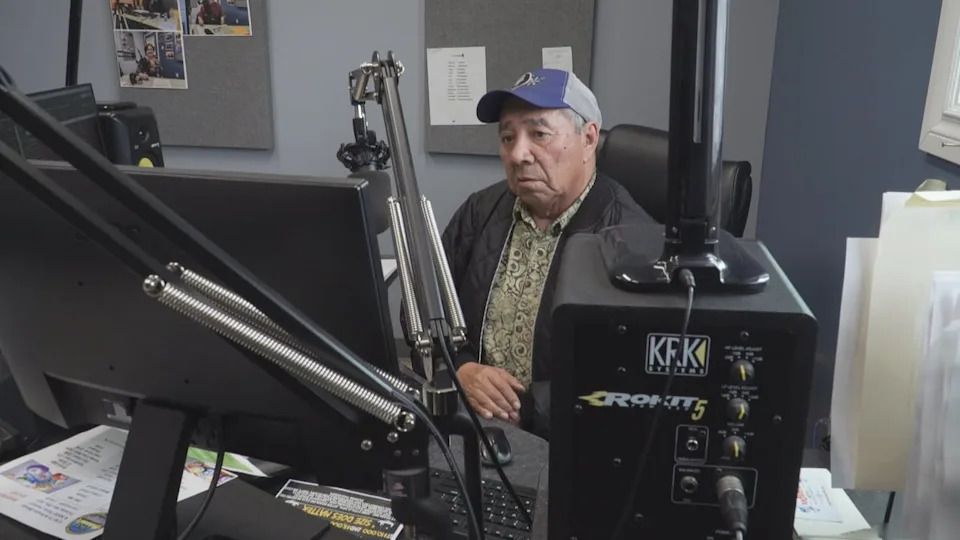
Robert Merasty broadcasts in Cree and Michif each weekday between 7 a.m. and 3 p.m. CST on CILX-FM in Île-à-la-Crosse. (Cory Herperger/CBC)
Robert Merasty also connects with his community of Île-à-la-Crosse by broadcasting in Cree and Michif on local station CILX-FM.
“Very little English is done here,” said Merasty.
“The elders love it, because they can understand us. And plus they've become a little bit more learned about what's going on out there."
Advertisement
Advertisement
Advertisement
Advertisement
Just like Roberts and Charles, Merasty got his start in radio in the 1970s with Northern News. After it closed down, he travelled across the province’s north to get a sense of what people wanted and needed in terms of radio broadcasts.
That work — along with federal funding — eventually helped create MBC, with Merasty becoming the broadcaster’s first CEO.
After his time at MBC, he found his way back home to Île-à-la-Crosse and CILX-FM. He’s now on the air between 7 a.m. and 3 p.m. CST weekdays, between the times when the station is taking programming provided by MBC.
“Then I called Patuanak,” he said. “The other radio announcer there, he’s also pretty informed [and] up to date on sports. So we try to connect, we try to interface.”
Advertisement
Advertisement
Advertisement
Advertisement
Merelda Fiddler-Potter, an associate professor at First Nations University of Canada (FNUC) in Regina, is familiar with this type of culture at northern radio stations and the content they provide to listeners.
Fiddler-Potter is helping to re-establish CFNU radio – a station created by the Indigenous Communication Arts (INCA) program at FNUC in 1994. After years of dormancy, the station relaunched in 2023 streaming online.
In addition to hosting Indigenous languages spoken on the station’s programs, it has also launched an online Indigenous language platform called pîkiskwêwin, which means “language” in Cree.
Fiddler-Potter said northern radio stations are unique in that they provide an opportunity for people to retain their language.
Advertisement
Advertisement
Advertisement
Advertisement
“As time goes on, we lose language speakers literally every other week, every other month,” she said. “Being able to broadcast in those languages just gives it another space where we continue to keep those things up.”
Amanda Leader is hopeful she can be part of the next generation of Indigenous language speakers.
The INCA student is part of CFNU’s daily news and information program Waná and also works on a language podcast for her home nation of Carry the Kettle Nakoda Nation.
She fell in love with radio and podcasting through the INCA program, which has given her opportunities to help learn Nakoda.
Advertisement
Advertisement
Advertisement
Advertisement
“I’ve been able to go and livestream Indigenous language conferences,” said Leader.
“So I get to sit there and listen to these speakers all day. It doesn’t just teach me the language; it also feels good with your spirit to sit in those rooms, to learn from people.”
Lori Deets is also learning about language and culture as a presenter on Waná. A Sixties Scoop survivor, the Cree-Métis woman has begun to spend time with her biological family in Pinehouse to reconnect with her identity.
Along the way, she’s had the chance to see a broadcast in action at CFNK-FM — the radio station in Pinehouse — and meet its longtime broadcaster Vince Natomagan.
Advertisement
Advertisement
Advertisement
Advertisement
“He interviewed me and then kind of dedicated his show and did a song for me,” said Deets.
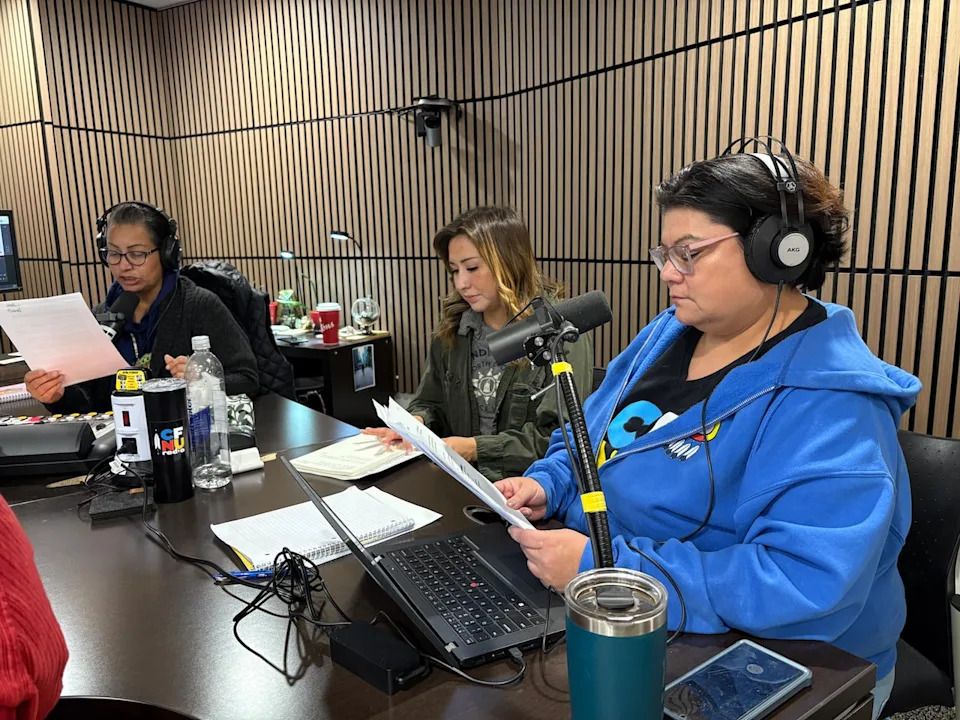
Lori Deets, right, presents the news on CFNU Radio’s Waná program. She’s hoping to use her radio skills in her career now that she has a degree in Indigenous journalism. (Ethan Williams/CBC)
Reconnecting with her Indigenous identity has helped shape her radio career at CFNU. Now, having recently completed a bachelor’s degree in Indigenous journalism and communication arts, Deets hopes to inspire future Indigenous journalists and radio broadcasters — some of whom may go on to work up north one day.
“There was a few people within news [who were] Indigenous that I really looked up to growing up,” she said. “I never really thought that I could do that. Then I start coming here and I get these opportunities and then those things that you don’t believe all of a sudden become a reality.
“And then you share that and then other people say, ‘Hey, I can do that.’”
تم ادراج الخبر والعهده على المصدر، الرجاء الكتابة الينا لاي توضبح - برجاء اخبارنا بريديا عن خروقات لحقوق النشر للغير


