


اخبار العرب-كندا 24: الجمعة 2 يناير 2026 06:44 صباحاً
The Hudson's Bay Company vanished in June, when the last of its stores ceased operations, but its presence in Winnipeg might never be fully erased.
The 355-year-old retailer was fundamental to Winnipeg's founding and its ghosts endure, scattered about the city in street names, buildings cloaked in new veneer, road designs, and a cache of archives.
"The Bay will never be gone — ever — because there's just too many signs of its existence," said Gordon Goldsborough, acting executive director of the Manitoba Historical Society. "We'll never be beyond their influence."
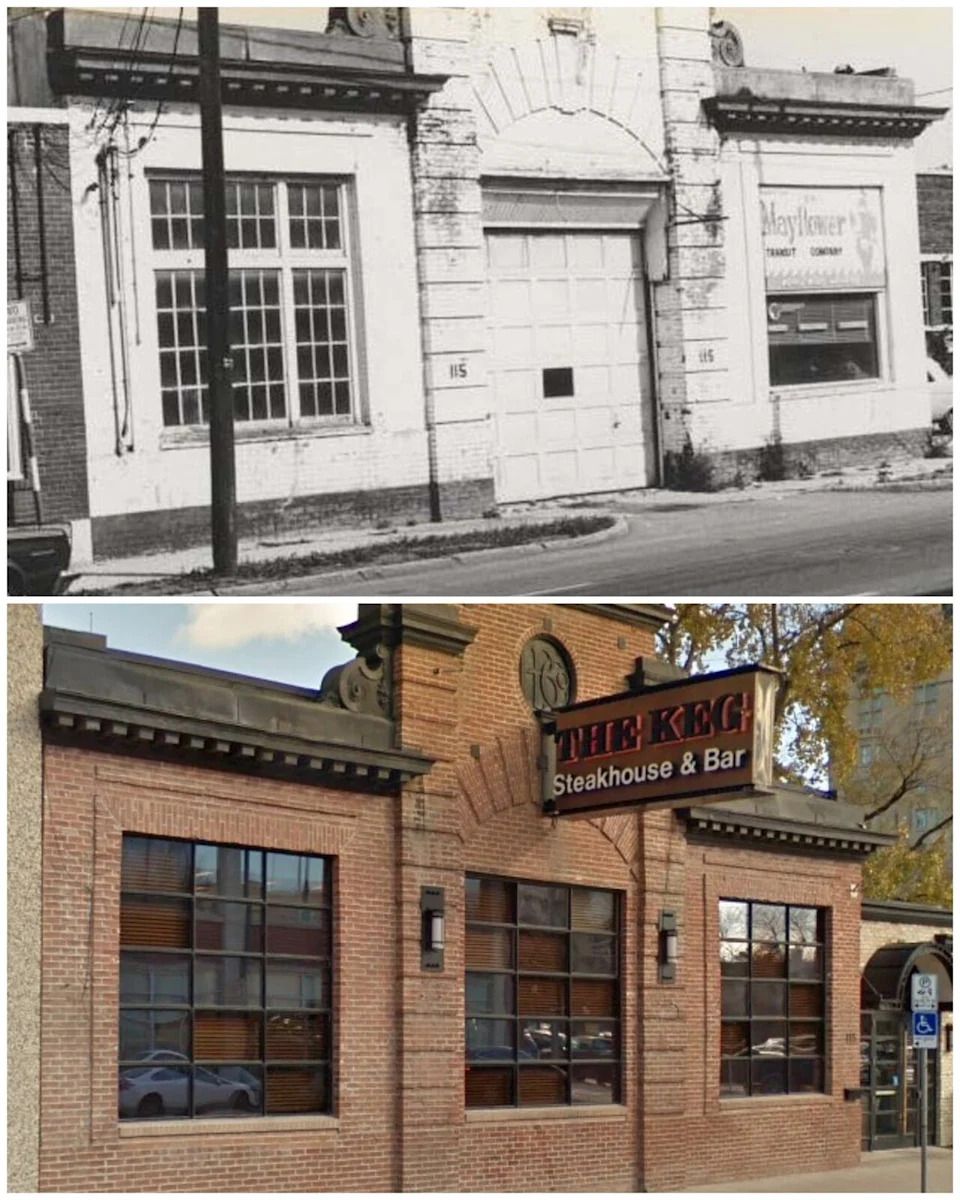
The former HBC garage on Garry Street. In 1970, top, it was an auto repair shop; now, bottom, it's The Keg restaurant, with the HBC crest still visible above the sign. (City of Winnipeg/Google Street View)
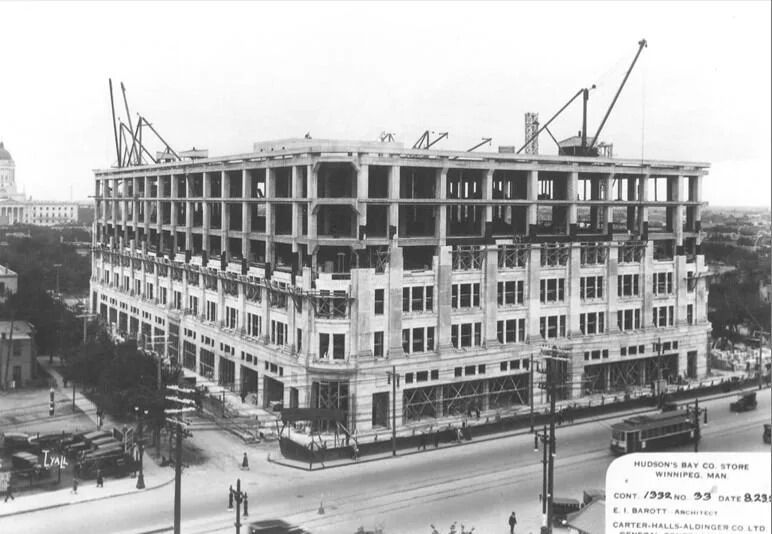
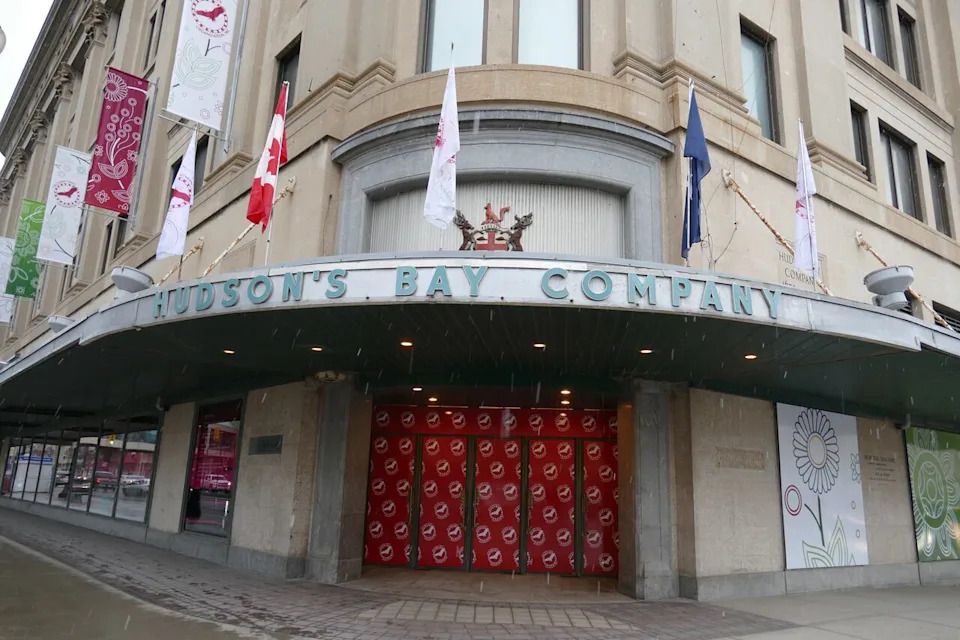
The six-storey, 650,000-square-foot former HBC department store at Portage Avenue and Memorial Street — the largest poured concrete building in Canada when built in 1926 — is the most obvious piece of the once-mighty empire, but there are more hidden in plain view.
Advertisement
Advertisement
Advertisement
Advertisement
Most were built around HBC's first department store, which opened in 1881 at Main Street and York Avenue after the company left the confines of Upper Fort Garry, a block away.
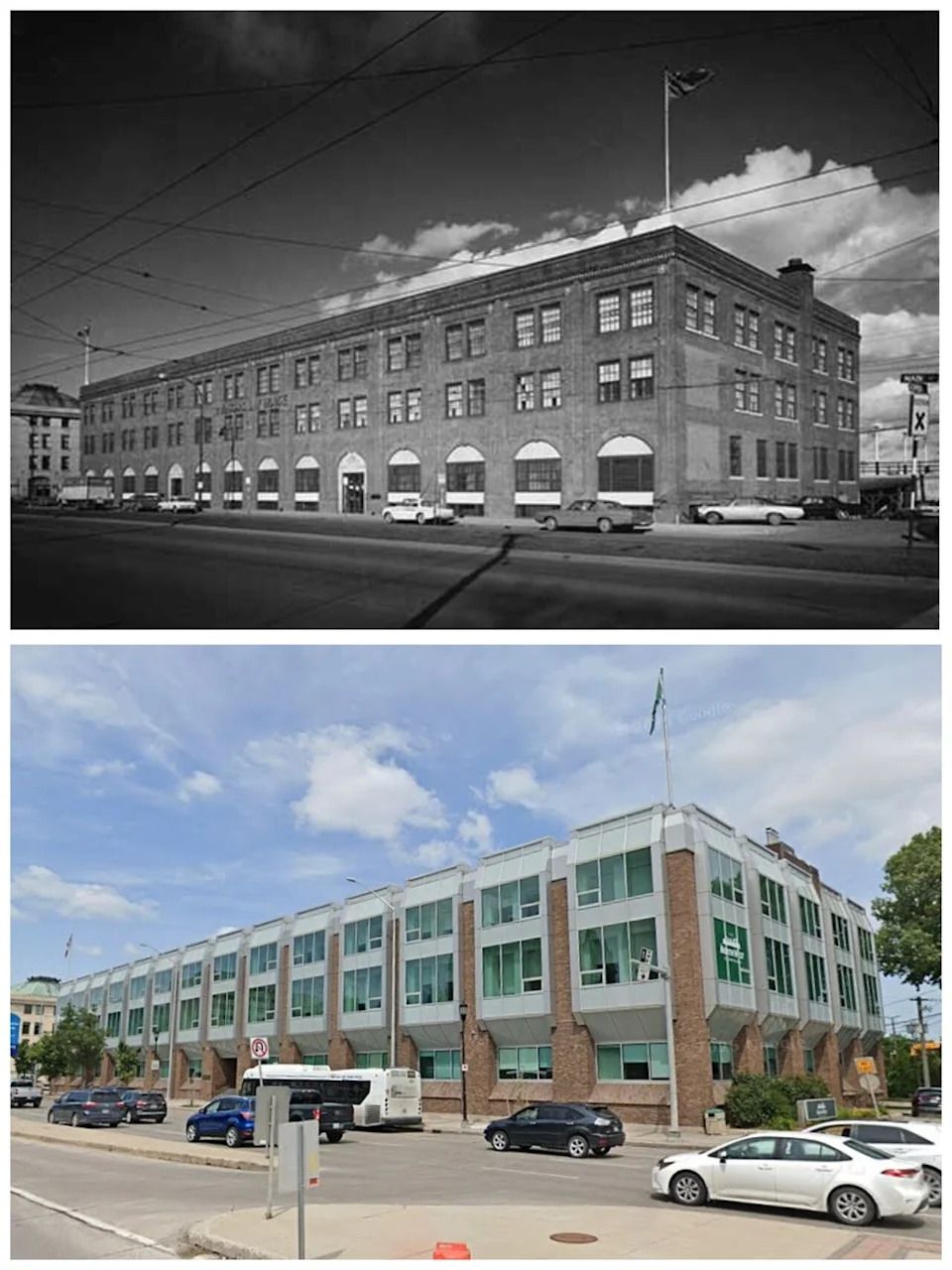
The former HBC wholesale building in 1968, top, and in 2023, above. ( University of Manitoba Archives and Special Collections/Henry Kalen fonds)
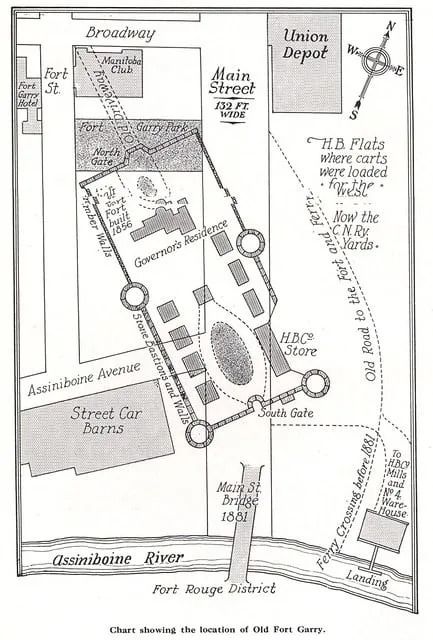
The fort, considered Winnipeg's birthplace, was demolished between 1881 and 1888, leaving only the historic governor's gate in what is now Upper Fort Garry Provincial Park.
The store at York and Main met the wrecking ball in 1931 after the one on Portage opened, but many ancillary buildings the company built nearby remain.
They include:
"They don't call out like The Bay building on Portage but they were still really important parts of the Hudson Bay downtown complex," said Murray Peterson, the City of Winnipeg's historian.
Advertisement
Advertisement
Advertisement
Advertisement
The HBC, founded in 1670, was granted a royal charter by the British Crown for a fur-trading monopoly in Rupert's Land, a vast swath of British North America territory.
Named for the HBC's first governor, Prince Rupert, the expanse included what is now northern Quebec, northern Ontario and Nunavut, most of the Prairies and parts of Minnesota, North Dakota, South Dakota and Montana.
It encompassed the watershed of rivers flowing into Hudson Bay — hence the company name (formally: The Governor and Company of Adventurers of England Trading into Hudson's Bay).
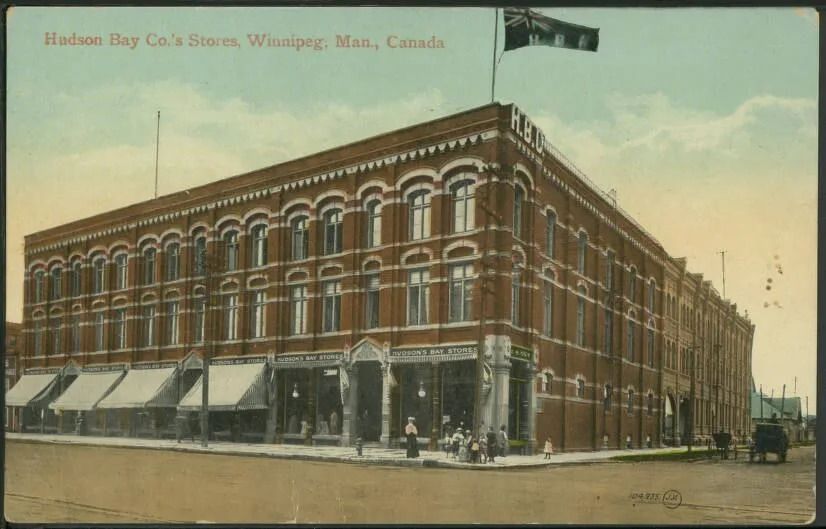
HBC's first department store in Canada, a three-storey building on the southeast corner of Main Street and York Avenue in Winnipeg, seen in a postcard, circa 1909. (Martin Berman Postcard Collection/Winnipeg Public Library)
During the fur-trading era, HBC established hundreds of trading posts, from small ones to major centres. As that era withered, it shifted more to retail and sold Rupert's Land to the Dominion of Canada in 1869.
Advertisement
Advertisement
Advertisement
Advertisement
The deed of surrender permitted HBC to retain large blocks of land around its active trading posts.
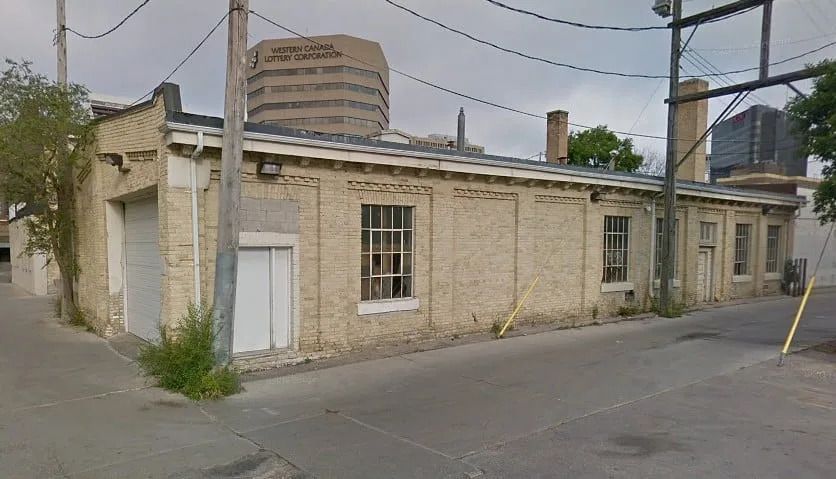
The old HBC powerhouse is in an alley between Fort and Main streets. (Google Street View)
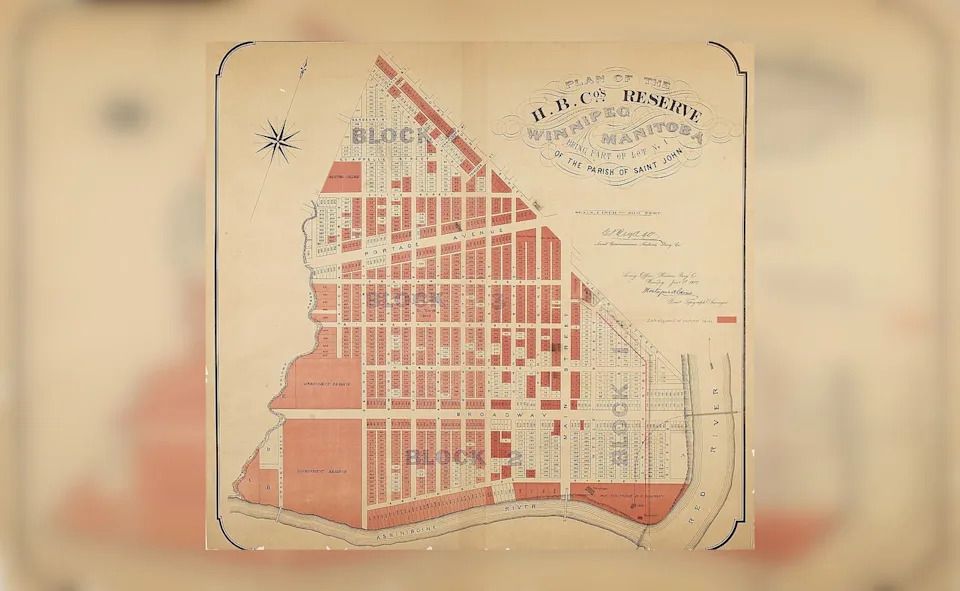
At Upper Fort Garry, it retained a triangular-shaped reserve of 188 hectares bounded by the Red and Assiniboine rivers, Colony Creek and Notre Dame Avenue.
As the Winnipeg settlement grew, the HBC ventured into real estate. It laid out a plan for its reserve with wider streets and larger blocks than other areas of the young city and sold lots.
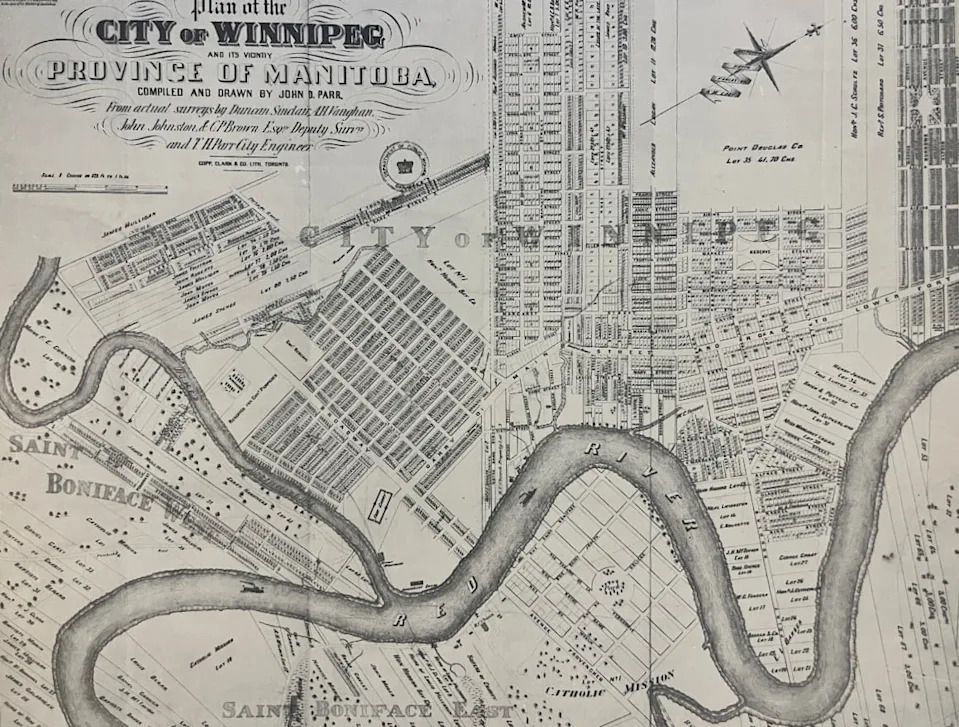
An 1874 map for the plan of Winnipeg shows the distinct orientation of the HBC reserve at centre. (Winnipeg in Maps/Alan FJ Artibise and Edward H. Dahl/ Public Archives of Canada)
It applied a grid system of roads that angled almost perpendicular to the traditional river lot system that ran in long, narrow rectangles.
The awkward convergence created a distinct boundary that still defines the old reserve.
Advertisement
Advertisement
Advertisement
Advertisement
"There’s all kinds of signs [of HBC's imprint], you just look for them. Even the streets themselves remind us of The Bay," Goldsborough said.

An 1887 map shows the layout plan for the HBC reserve in downtown Winnipeg. (Library and Archives Canada)
Fort, Garry, Ellice, York, Edmonton and Carlton are named for HBC posts, while several streets honour former employees and trade merchants: Kennedy, Graham, Vaughan, Bannatyne, McDermot, and Hargrave. Donald and Smith are for the HBC governor.
The Canadian Pacific Railway arrived 1886, solidifying Winnipeg as a major hub and spurring massive growth. Development began rapidly but many developers scoffed at the HBC's high asking prices for land.
Commerce instead sprouted on the reserve's outskirts, such as the Exchange District at the northern edge and along Main Street to the east.
Advertisement
Advertisement
Advertisement
Advertisement
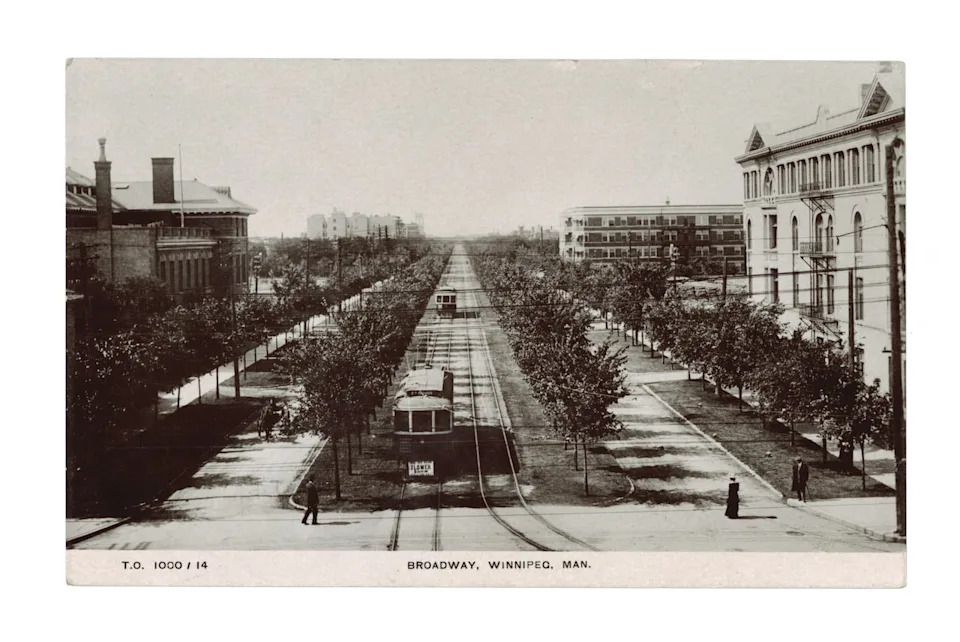
The HBC designed Broadway, the old trading trail to Edmonton, as a grand central boulevard and main to try to compete. To this day, it serves as the Trans-Canada route through downtown.
Default Caption: A 1939 map from the Manitoba public works department showsthe footprint of Upper Fort Garry, which was demolished between 1881 and 1888, allowing Main Street to be straightened to the bridge. Only the historic governor's gate remains. (University of Manitoba Archives and Special Collections)
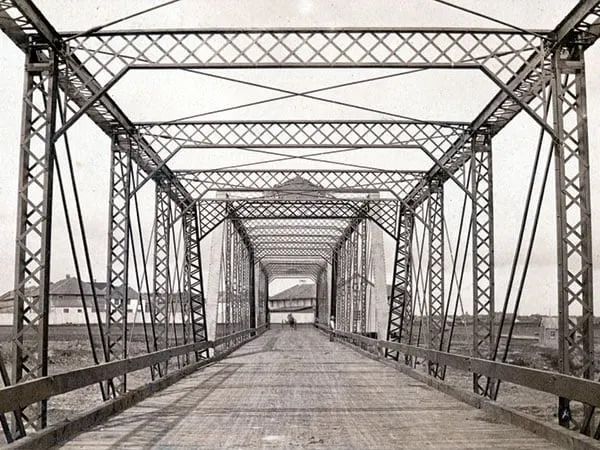
To encourage development on its land, HBC built two bridges in the Forks area.
The first, in 1881, crossed the Assiniboine at Main (today's Norwood Bridge), which also aided in the development of Fort Rouge and the first instances of urban sprawl.
The second, in 1882, crossed the Red River, connecting Broadway with Provencher Boulevard in St. Boniface.
A postcard shows Broadway in Winnipeg in 1910. (Pugh Manufacturing Co., Ltd./public domain)
It was destroyed by ice four days later but rebuilt. That link was removed in 1908 when Union Station was built and the bridge path reconfigured.
Advertisement
Advertisement
Advertisement
Advertisement
Broadway did become a high-end residential district for a while — "the vast majority of Winnipeg's pre-1900 luxury homes were found in the reserve," Peterson said — but the grand plans ultimately fell short when HBC's biggest competitor arrived.
(Hudson’s Bay Company Archives)
In 1905 Eaton's bought a block of houses and small shops on Portage Avenue land the HBC had previously sold and built the largest department store in western Canada.
Its presence shifted the city's commercial focus from Main to Portage and the HBC joined it there in 1926, where a promenade bustling with shoppers flourished between them.
As more structures went up, builders took inspiration from The Bay, copying its façade of Manitoba limestone. The Power Building, Bank of Montreal, Civic Auditorium, Winnipeg Clinic and Manitoba Building are the best examples, Peterson said.
Advertisement
Advertisement
Advertisement
Advertisement
"That's a remarkable story. They supported a local business and made other developers do the same thing," he said.
"I don't know of another building that did that. That's pretty amazing actually. It was so iconic and it so central to Winnipeg's development."
(City of Winnipeg Archives)
The landmark store thrived for decades but by the late 1970s, suburban malls stole its glory. Financial issues grew worse through the 1990s until it was closed in 2020.
The jewel of HBC's Winnipeg legacy, for Goldsborough and Peterson, is the hundreds of thousands of items in the Manitoba Museum and Manitoba Archives.
Advertisement
Advertisement
Advertisement
Advertisement
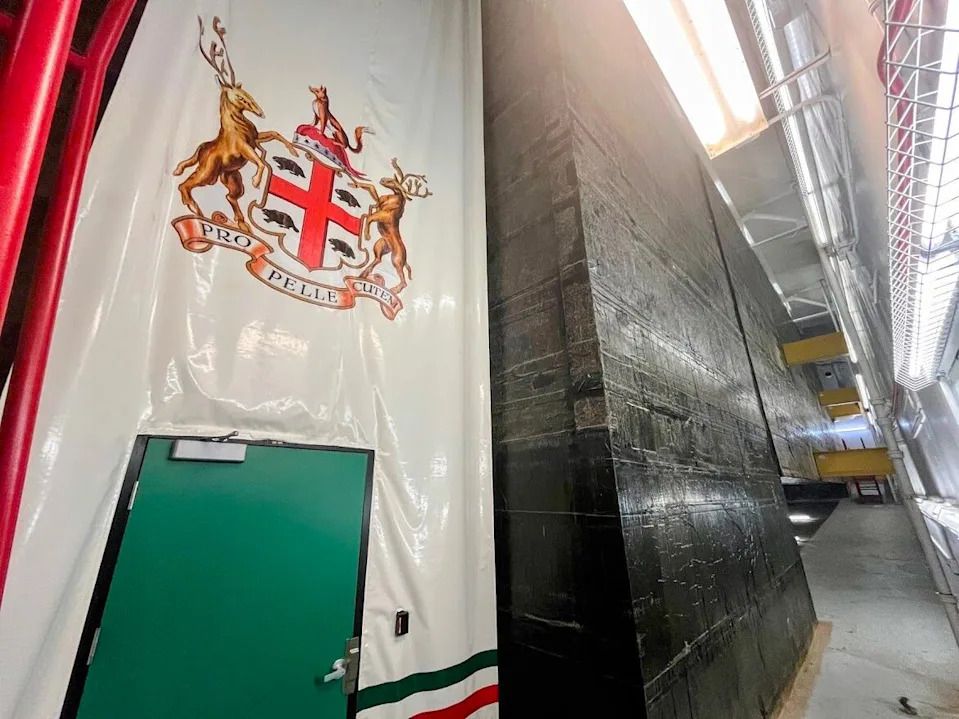
The museum holds 28,000 artifacts while the archives, behind the old Portage store, has the official HBC archival collection — images, reports, maps business transactions, medical records, personal journals and inventories — recognized by UNESCO for its global significance.
"It's got information going back to the 1600s … and they were exceptional record keepers," Goldsborough said. "We hear a lot lately about the royal charter and how it's coming home, and that's wonderful, but there's so much more."
The collection was acquired in 1974 when the HBC transferred its head office functions to Winnipeg from London, England.
"It's immense, really second to none. [It offers] a snapshot of everyday life," Peterson said.
Default Caption: The HBC's archives are kept in a climate-controlled vault inside the Manitoba Archives building. (Darren Bernhardt/CBC)
The HBC is worthy of recognition but that must also come with an awareness of its harms, particularly for Indigenous people. Peterson said.
Advertisement
Advertisement
Advertisement
Advertisement
"You can't use the word ‘development’ and just think of it as positive. It was really the start of what became Western Canada in terms of European culture and economy … the opening of the door to the replacement of Indigenous culture," he said.
In addition to its colonial practices, the company also inflicted exploitative trading practices and deadly diseases on the Indigenous people.
But in a full-circle moment in April 2022, the HBC handed ownership of the Portage Avenue store to the Southern Chiefs' Organization, which is redeveloping it as Wehwehneh Bahgahkinahgohn, a mixed-use development.
The powerful symbolism of having a colonial store in the hands of Indigenous peoples will stand as a "beacon of hope," SCO Grand Chief Jerry Daniels said at the time.
He called it a "historic and monumental" step toward reconciliation.
(Jeff Stapleton/CBC)
تم ادراج الخبر والعهده على المصدر، الرجاء الكتابة الينا لاي توضبح - برجاء اخبارنا بريديا عن خروقات لحقوق النشر للغير


