






اخبار العرب-كندا 24: الخميس 1 يناير 2026 03:08 مساءً
When the Liberals first took power in 2015, one of their first legislative actions was an all-out drive to reverse seemingly everything that carried the stamp of the prior Conservative government.
But particularly in the last year, a lot of these Stephen Harper-era policies have started to come back, in part because the Liberal-prescribed alternative eventually became an untenable disaster.
The Carney approach to government is still very different than the Harper approach. But below, find a quick guide to the Conservative ideas that have been seeping back into federal policy.

Former prime minister Stephen Harper delivers the keynote address at a conference on Wednesday, March 22, 2023 in Ottawa.
Price carbon behind the scenes, where nobody notices
As prime minister, Stephen Harper resisted any notion of a federally mandated consumer carbon price. Canada at the time did have provincial-level carbon taxes (B.C. introduced one of the world’s first in 2008), but the Conservative federal government always rejected the idea of a GST-style carbon levy.
Advertisement
Advertisement
Advertisement
Advertisement
As Harper would explain after his retirement, he saw carbon taxes as a “revenue policy” rather than a climate one. “A carbon tax would have to be astronomically high to have any profound effect on fuels and emissions,” he said in a 2019 interview.
Instead, the one time Harper did flirt with a strategy to price carbon emissions, it was in the form of a “cap and trade” policy. The program was a Conservative pledge during the 2008 election, although it was dropped after the party won a majority in 2011. Either way, the plan was that industries would be given set emissions targets, and if they couldn’t meet them, they would have to buy credits from cleaner industries.
The policy would almost certainly have raised the cost of gas, diesel and other fossil fuels, but in a roundabout way that wasn’t immediately obvious to the average consumer.
This roughly describes the current Liberal approach to emissions policy, although they’re going at it with a bit more gusto. The first action of Prime Minister Mark Carney upon his March 14 swearing-in was to zero Canada’s consumer carbon tax. Instead, his government is pursuing an “industrial carbon price” that is similarly expected to raise prices on everything connected to the burning of fossil fuels, but in a way that won’t show up on receipts or heating bills.
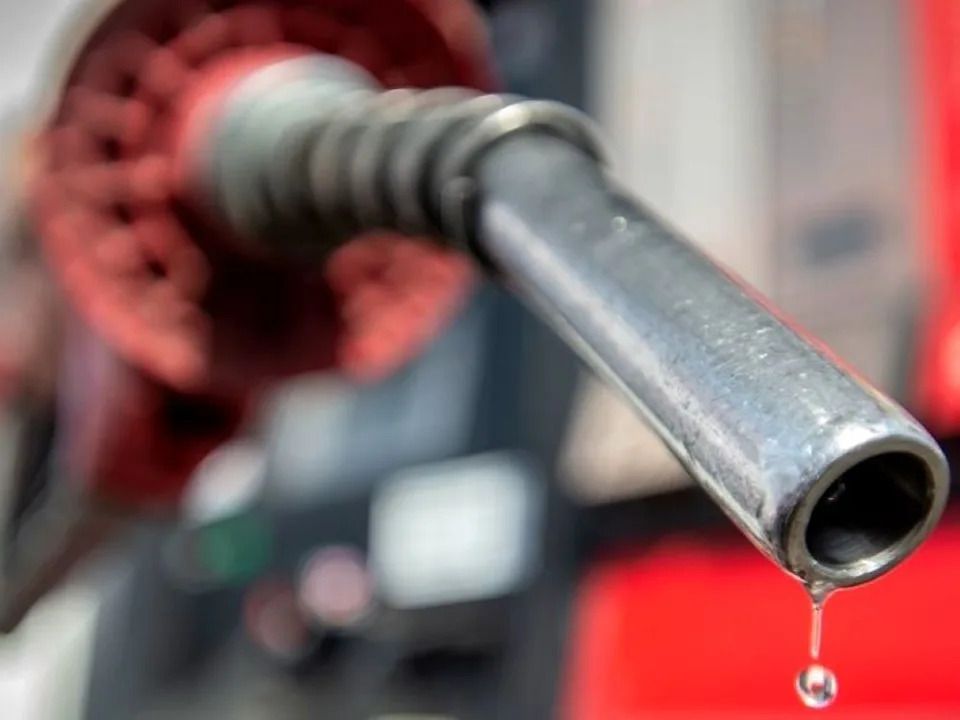
The impact of Canada’s carbon tax isn’t just felt at the point of purchase; it increases prices throughout the supply chain.
And since we’re on the subject, Carney’s recent pipeline MOU with Alberta could also be seen as a reversal of then prime minister Justin Trudeau’s 2016 cancellation of the Northern Gateway pipeline — a project that had received Harper approval just two years prior.
Advertisement
Advertisement
Advertisement
Advertisement
Although the MOU does not mention a route, it pledges to build a second bitumen pipeline from Alberta to the Pacific Coast, and to do it with heavy Indigenous buy-in and participation; conditions that all roughly describe the Northern Gateway project.
Home mail delivery is unsustainable again
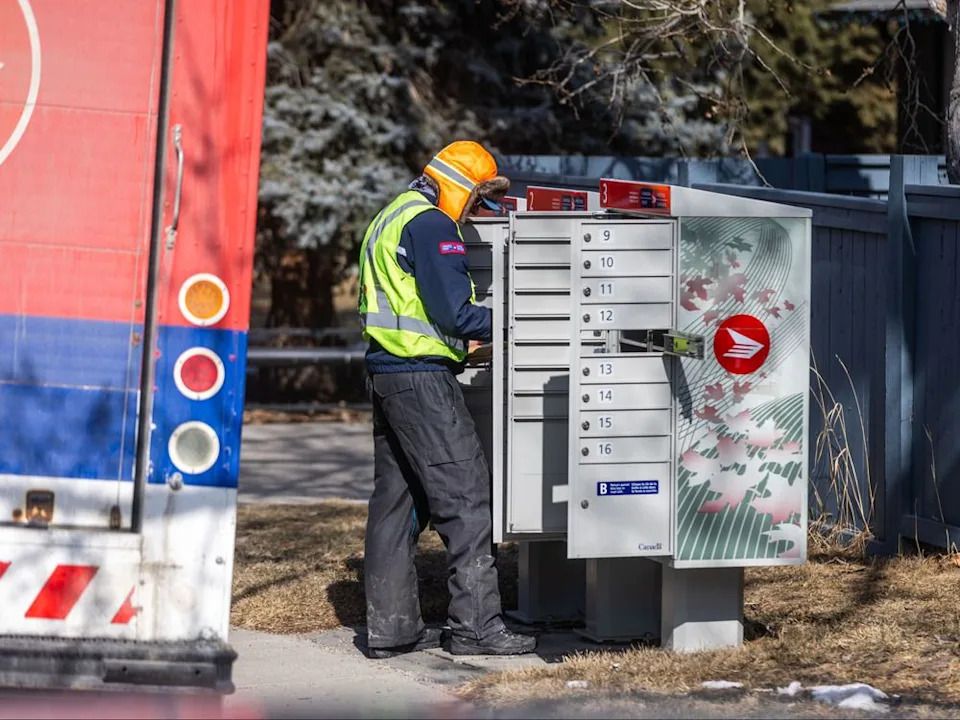
In 2014, the Harper government gave the go-ahead for Canada Post to begin phasing out home mail delivery. Mail volumes and revenue were going down, so the change was justified as a means to cut costs and keep the Crown corporation in the black. Canadians who had once received their mail through the front mail slot would instead have it delivered to a community mailbox; similar to the system already in place in rural areas and apartment buildings.

A Canada Post mail carrier delivers to a community mailbox in Calgary on Tuesday, March 18, 2025.
The Liberals made it a campaign promise in 2015 to “stop Harper’s end to home mail delivery.” Upon their taking office, Canada Post was ordered to halt the conversion to community mailboxes.
Advertisement
Advertisement
Advertisement
Advertisement
At the time, Canada Post’s finances were in decline, but it was still turning a profit. Ten years later the Crown corporation is a flaming fiscal disaster. Since 2018, Canada Post has racked up $4.5 billion in operational losses, and the corporation places much of the blame for this on its federally mandated “outdated delivery model.”
It’s why, when Liberals talk about Canada Post these days, they sound a lot like Conservatives from 2014. As Carney said in October, “Canada Post is no longer viable.” That was right around the time that the Liberals finally allowed Canada Post to go back to phasing out home delivery.
Slapping visas on abuse-prone countries is cool again
Canada under Harper had about the same asylum system as it does now. Any foreign national could show up, claim to be a refugee, and then immediately be granted temporary status, work permits and even health benefits until their claim was reviewed.
Advertisement
Advertisement
Advertisement
Advertisement
It’s a process that has obvious vulnerabilities to abuse, but asylum claims were kept within sustainable parameters largely by slapping visas on countries that were yielding high rates of bogus refugee claims.
In 2009, for instance, the Harper government started requiring visas for visiting Mexican nationals following a noticeable spike of Mexicans taking direct flights to Canadian airports, only to immediately claim to be refugees after deplaning.
The Liberals removed the visa requirement in 2016, saying that it “needlessly embarrassed the Mexicans.”
But only eight years later, the visa would be reimposed, and for the same reason. Mexican asylum claims had once again soared, reaching 25,236 in 2023 alone — an average of 70 Mexican asylum claims per day. In a Feb. 24 statement announcing the reimposed visas, the Trudeau government would write “asylum claims made by Mexican citizens reached a record high in 2023 at a time when Canada’s asylum system, housing and social services were already under significant pressure.”
Advertisement
Advertisement
Advertisement
Advertisement
And that was just the beginning of a series of Liberal proposals to return to the idea of smothering hotspots of bogus refugee claims. Currently before the House of Commons, Bill C-2 would, among other things, ban refugee claims from foreign nationals who have been in the country for longer than a year. The likely spur for this was thousands of foreign students suddenly claiming to be refugees just as the terms of their student visas ran out.

Mark Carney and Stephen Harper in Harper’s office on Parliament Hill in Ottawa on Jan. 31, 2008.
Mandatory minimums and tougher bail are coming back
A recurrent theme of the 2015 election was that the Conservatives had become obsessed with their “tough on crime” agenda, and that Liberals were needed to restore a “modern” approach to criminal justice.
During the campaign, Trudeau criticized the increase in mandatory minimum sentences passed into law under the Conservatives, saying they were “clogging up our jails for longer periods of time and not necessarily making our communities any safer.”
Advertisement
Advertisement
Advertisement
Advertisement
Once elected, the Liberals would also pledge to “streamline” the bail system, saying it had become too onerous under the Harper government.

The Liberals’ term in government just happened to correlate almost perfectly with a steady year-on-year increase in virtually all categories of Canadian crime. This is part of why they are now entertaining both tighter bail terms, and a suite of increases to mandatory minimum sentences.
Legislation tabled in October would introduce a “reverse onus” for bail, which a backgrounder described as “meaning the starting point is detention and the accused would have to prove why they should be released on bail.”
And although the legislation doesn’t use the term “mandatory minimum,” it pledges to “toughen sentencing laws for repeat and violent crime, including car theft and extortion, meaning those found guilty can spend more time in prison.”
Canada is (probably) buying F-35s again
In the long, ignominious history of Canadian military procurement, the saga of the F-35 is probably the most ridiculous of any of them. While the Department of National Defence will routinely spend decades replacing equipment that is already dangerously outdated, the F-35 is the first example of a government rejecting a specific piece of military hardware, only to spend nearly a decade in lengthy government reviews to end up buying that same piece of military hardware.

A U.S. Air Force F-35A conducts flight training on May 8, 2025.
If Canada had stuck to the initial fighter replacement plan introduced under Harper, there would have been F-35s in the RCAF fleet as early as 2016.
Advertisement
Advertisement
Advertisement
Advertisement
Instead, it became a 2015 Liberal election promise that Canada “will not buy the F-35.” The new Trudeau government cancelled the purchase and began an “open, fair and transparent” process to find another fighter. A process that, seven years later, ended with the decision to buy F-35s after all.
Although even that reversal might now be reversed again, with Carney government officials musing on whether they should cancel the F-35 order in favour of the Saab Gripen. This is despite the fact that the aforementioned process to find a replacement fighter has already reviewed the Gripen, and found that it lagged the F-35 in almost every way.
تم ادراج الخبر والعهده على المصدر، الرجاء الكتابة الينا لاي توضبح - برجاء اخبارنا بريديا عن خروقات لحقوق النشر للغير


