



اخبار العرب-كندا 24: الخميس 1 يناير 2026 05:20 صباحاً
Happy new year!
As we roll into 2026, we can look back on all the great things that happened in space in the last 12 months, from getting our third-known interstellar visitor — 3I/ATLAS — to seeing beautiful displays of the northern lights, to the opening of the Vera C. Rubin Observatory that could change our views on the universe in ways we have yet to understand.
And now, we look ahead to some of the very cool things skywatchers might want to keep an eye on in the coming year.
Meteors, meteors, meteors!
First, let’s start with meteor showers, since they are the most accessible for everyone.
Advertisement
Advertisement
Advertisement
Advertisement
The year starts with the Quadrantids, a shower that runs from Dec. 28 to Jan. 12. The peak occurs on the night of Jan. 2, running into the wee hours of Jan 3.
This shower can produce upwards of 120 meteors per hour under ideal conditions — but it’s also kind of a tricky one compared to other meteor showers, because the peak only lasts a few hours.
“You know, it's one of those showers where, if you get it at the right time and the conditions are right, you actually see the ramp up in activity, because it's such a fast-rising and fast shower,” said Peter Brown, Canada research chair in meteor astronomy and a professor at Western University in London, Ont.
But this year’s spectacle will be even trickier to catch.
Advertisement
Advertisement
Advertisement
Advertisement
“The sad part of the Quadrantids this year is it's right on a full moon,” Brown said, with the bright sky making it tougher to spot meteors.
He also noted that the typically cloudy winter weather could make it even more difficult.
Now, if you have patience, and are willing to wait eight months for the chance to see an amazing meteor shower, buckle up. Because there could be quite a show.
The 2026 Perseid meteor shower runs from July 17 to Aug. 24, but the peak night falls on Aug. 12-13, with roughly 150 meteors per hour under ideal conditions.

(Malcolm Park)
But there’s something else that makes this shower one of the most anticipated of the year.
Advertisement
Advertisement
Advertisement
Advertisement
“For the Perseids, it's all about the moon, and we [have a] good moon for next year. Actually, it's literally a new moon,” Brown said.
So, with no moonlight, that means even faint meteors will be visible, particularly if you’re in a dark location.
Finally, coming back around will be the Geminid meteor shower in December. It runs from Dec. 4 to 17, and peaks on the night of Dec. 13-14. This shower also produces upwards of 150 meteors per hour under ideal conditions. And for peak night, the moon will be a waxing crescent, meaning it will not interfere with viewing.
A Canadian goes to the moon
It’s been a long time coming, but finally, NASA’s Artemis II mission is ready to blast off to the moon.
Advertisement
Advertisement
Advertisement
Advertisement
Unlike the uncrewed mission in 2022 where the Space Launch System (SLS) rocket blasted off from Cape Canaveral, Fla., on its inaugural mission, and the Orion capsule orbited the moon and returned safely to Earth, this time there are astronauts on board: NASA’s Reid Wiseman, Christina Koch, Victor Glover and the Canadian Space Agency’s own Jeremy Hansen.
The exact launch date is unknown, but as of publication, the launch window opens on Feb. 5 for a nearly 10-day mission. The astronauts will blast off and then orbit Earth a few times before heading toward the moon, where they will make one orbit of the moon, while testing systems and conducting lunar research from orbit, after which they will return home.
The orbit of this mission will take the four astronauts the farthest any human has ever gone, even beating out Apollo 13 in 1970.
Eclipses
For Canadians, 2025 didn’t have much in the way of eclipses, but 2026 changes that.
Advertisement
Advertisement
Advertisement
Advertisement
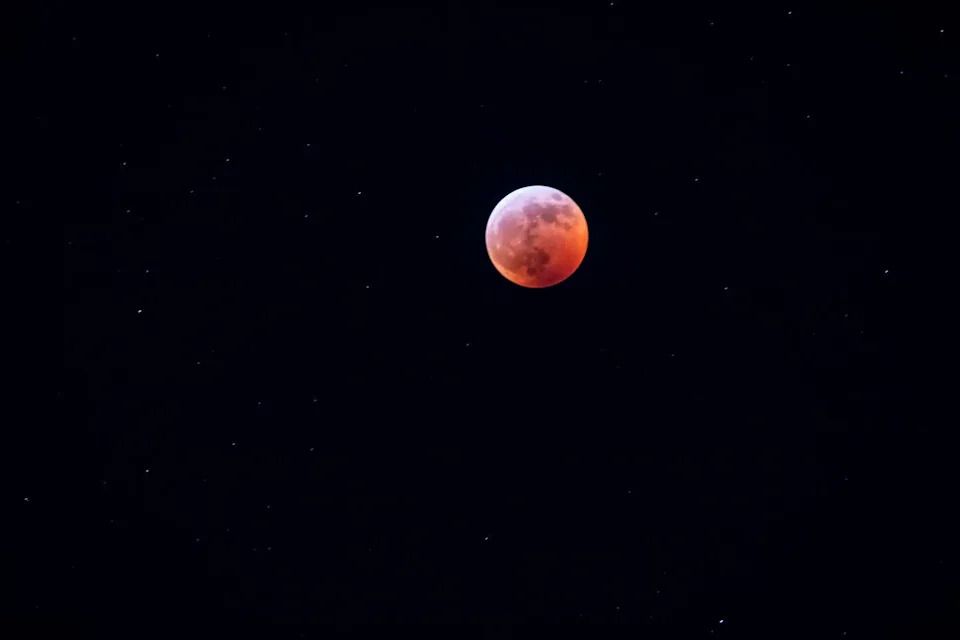
On March 3, there will be a total lunar eclipse that will be visible across the country. The best place will be along the West Coast and into the Northwest Territories where the entire eclipse will be visible. East of that, the eclipse will be visible at moonset, the moment the moon disappears above Earth’s horizon.
Remember the Perseids as discussed above, and how it’s a new moon? Well, what else do we sometimes get during a new moon? That’s right: a solar eclipse.
(Nicole Mortillaro)
Now, that doesn’t mean that every month that there’s a new moon there’s a solar eclipse somewhere around the world. The mechanics of the orbits of Earth and the moon have to be just right. And, it just so happens that in August, those mechanics work in our favour.
On Aug. 12, there will be a total solar eclipse across the Arctic, Greenland, Iceland and Spain. But for Canada, we’ll get a partial solar eclipse. The best place for viewing will be in the central and eastern parts of the country, where it will look like something has taken a small bite out of the sun.
Advertisement
Advertisement
Advertisement
Advertisement
Then, two weeks later, there’s a partial lunar eclipse.
On Aug. 28, most of the moon will pass through Earth’s shadow. All but a tiny fraction of the moon will turn an orangey-reddish colour, depending on what’s in the atmosphere. The eclipse will be visible across the country.
Space missions
Aside from Artemis II heading to the moon, there are quite a few other space missions to look forward to in 2026.
Scheduled in the summer of 2026 is Rocket Lab's ambitious mission to Venus, one of several planned for Earth's sister planet.
Following the 2020 study where authors claimed to have found phosphine — a chemical signature produced by organisms on Earth — in the clouds of Venus, several missions have been proposed as followups.

(NASA/Kevin M. Gill)
For this mission, a probe will be dropped into the planet's atmosphere to search for the presence of organic material.
Advertisement
Advertisement
Advertisement
Advertisement
Life in the clouds of Venus? We may find out soon.
Then there's Japan'sMartian Moon Exploration. This mission is slated to launch some time in 2026, where it will study the two moons of Mars, Phobos and Deimos. What makes this mission particularly exciting is it will collect a sample from Phobos and bring it to Earth.
Finally, there's the big one: the Nancy Grace Roman Space Telescope. But, as with all planned missions, the launch date could shift.
Its launch could happen as early as fall 2026, though it could slip into 2027.
This space telescope has been waiting in the wings for a long time. Its goal? To search for elusivedark matter and dark energy, both of which are invisible to the human eye but are believed to make up roughly 75 per cent of the universe.
Advertisement
Advertisement
Advertisement
Advertisement
These are just some of the things to look forward to in 2026, but who knows what surprises await? Perhaps another interstellar visitor or a comet that lights up the night?
You'll just have to keep your eyes on the sky.
تم ادراج الخبر والعهده على المصدر، الرجاء الكتابة الينا لاي توضبح - برجاء اخبارنا بريديا عن خروقات لحقوق النشر للغير


