


اخبار العرب-كندا 24: السبت 27 ديسمبر 2025 03:44 مساءً
Oleksiy Sychuk and Yana Volosianko are getting ready for their third Christmas in Canada; but, they’re also preparing for the fact this might be there last here.
They came to Canada in 2023 after fleeing Russia, where they were living at the time. They are both of Ukrainian descent, but have different passports. His is Russian, and he fears he might be sent back if his visa is not extended.
“We (are) just like two young people, two teenagers, with no understanding of the immigration processes,” says Sychuk.
Advertisement
Advertisement
Advertisement
Advertisement
The couple was just 19 when Russia invaded Ukraine, but that didn’t stop them from throwing themselves into protesting the Russian government and its war on Ukraine. Day and night they organized their own protests to convince their neighbours of Russia’s wrongdoings.
But now, Sychuk fears those actions may cost him his life if he is forced to return to his birthplace.
He says he’ll either be forced to join the military or imprisoned, “because I got these military draft notices and I did lots of antiwar (protesting); and, it’s crime offense in Russia.”
His parents moved from Ukraine to Siberia after the Soviet Union fell. They married quickly and had Sychuk and his brother soon after.
Advertisement
Advertisement
Advertisement
Advertisement
“(They) decided it’s a great idea to born a baby in Russia when all your family stay in Ukraine,” said Sychuk.
Sychuk always felt out of place in Russia. His parents never properly learned the language, instead speaking a Russified version of Ukrainian. His clunky Russian gave him away in an instant once he started school.
“It became kind of a problem,” said Sychuk.
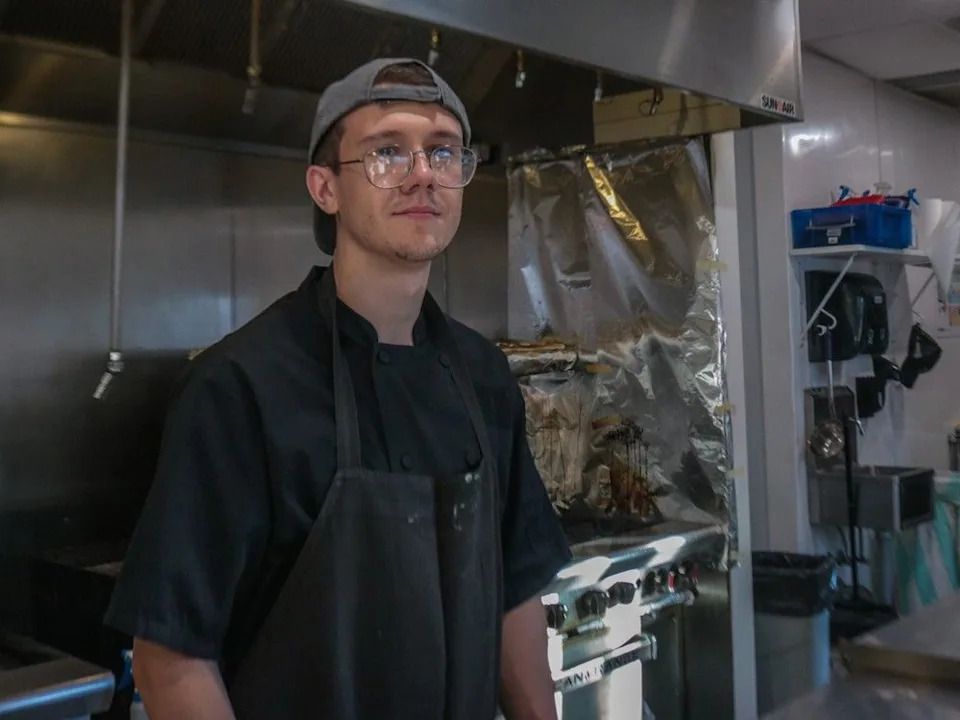
Oleksiy Sychuk is working as a line cook at two different restaurants, while hoping for good news that he can stay in Canada. For story by Payton Delisle-Miller
He learned to live in Russia, but never softened to its oppressive government or the people that supported it. Starting in high school, he used his frustrations to fuel his first steps into political protesting.
“I (have) always been very anti-Putin and I wrote some songs very, very against him,” said Sychuk. “(But) I never posted them.”
Advertisement
Advertisement
Advertisement
Advertisement
In the fall of 2020, Sychuk started at Herzen University in St. Petersburg to pursue a bachelor’s degree in history training. But he quickly realized that he was learning about history through Russia’s perspective.
“They just reject the existence of Ukrainians and Belarusians,” said Sychuk.
He’d grown up spending summers in Staryi Lysets, the Ukrainian village where his mother is from. During his first year of university, he decided to immigrate to Ukraine.
“It’s the only place on the earth where I really feel like it’s mine,” said Sychuk.
He also had a girlfriend in Ukraine, Yana Volosianko. They’d met for the first time in the summer of 2018 because their grandparents knew each other. In 2021, they started dating.
Advertisement
Advertisement
Advertisement
Advertisement
“She kissed me first,” said Sychuk.
Volosianko came to visit Sychuk in St. Petersburg that following October for his birthday. And she never left.
“We just decided we can get married,” said Sychuk. “Like if we have the same plan for life, why not?”
Two months later, on Volosianko’s birthday, the couple had a courthouse wedding. It was simple, but the marriage was all they cared about. They planned to have a large-scale ceremony in Ukraine the following summer. He had already filed his documents to immigrate to Ukraine, but it is a long process.
The war on Ukraine starts a protest campaign in Russia
They were still waiting for his papers when, on Feb. 24, 2022, they awoke to blaring alarms and buzzing phones. Volosianko opened her phone and saw videos of her village being bombed. As Sychuk was still trying to shake the haze of sleep, Volosianko’s panic clued him into the severity of the situation.
Advertisement
Advertisement
Advertisement
Advertisement
“She just jumping on the bed saying, ‘The war started’,” recalled Sychuk.
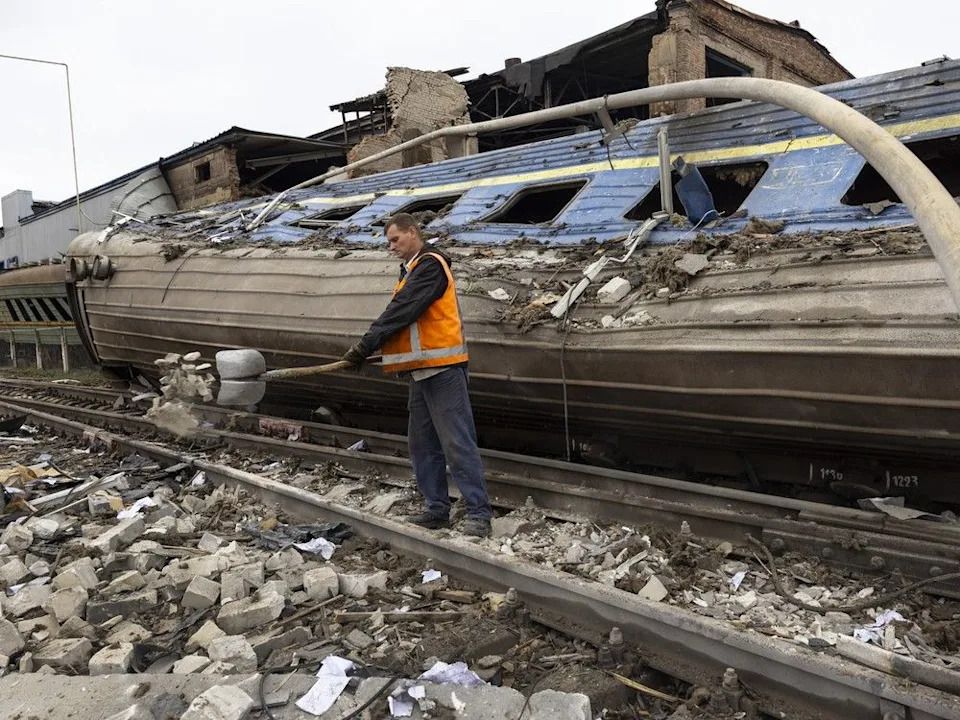
Workers clear debris from a train depot that was hit by missiles overnight on September 28 2022 in Kharkiv, Ukraine.The attack also hit a power plant knocking out electricity to 18,000 residents of Kharkiv.
In an instant, their lives split into two — the before and the after.
“You open your eyes and you know your life will never be again like before,” said Volosianko, holding Sychuk’s hand.
They worried for their loved ones in Ukraine and for their own safety in Russia. But they quickly got involved in protesting Russia’s authoritarian regime, joining a large-scale protest the day after the invasion.
“We had some hope that, maybe (after) two or three days (of) protesting, they will stop it,” said Sychuk. “Maybe the revolution will start in Russia, who knows?”
Advertisement
Advertisement
Advertisement
Advertisement
A month after Ukraine was invaded, the Russian government implemented new censorship laws that targeted critics of the war. According to Amnesty International, even calling the invasion a “war” in Russia is considered a crime that comes with a maximum prison sentence of 15 years.
The organized protests became smaller and fewer, as police enforcement became more brutal.
But Sychuk and Volosianko weren’t ready to give up. They found their own ways to make people pay attention. They distributed flyers comparing the imagery on Russian tanks to swastikas and played Ukrainian folk songs in the streets.
They faced some close calls, but they just learned to be faster than those who would try to silence them, Sychuk said.
Advertisement
Advertisement
Advertisement
Advertisement
Sychuk recalls a time they were playing music across the street from a busy market by their home in St. Petersburg. Someone quickly called the police on them, but because of the street was so busy, they were able to evade arrest.
“They tried to park and we just fled away back to house,” said Sychuk, laughing slightly. “It was pretty simple to be honest.”
At the same time, they were trying to figure out how they could flee. But as they researched where they could go, their options dwindled.
Finland was close, but crossing the land border was too dangerous. Sychuk’s grandmother in Bulgaria wouldn’t take them after she realized they opposed Russia. And travel sanctions and prices made the European Union too high to consider.
The start of a long journey to safety
In July of 2022, the couple learned about the Canada-Ukraine Authorization for Emergency Travel (CUAET) visa. According to the Government of Canada website, this visa gave Ukrainians and their family the ability to come to Canada for three years. Once here, they could also use this visa to apply for work or study permits.
Advertisement
Advertisement
Advertisement
Advertisement
But Sychuk and Volosianko didn’t have to wait for their approvals in Russia. And they didn’t want to.
“Me and Yana, we had an agreement that September (2022), we will leave for sure,” said Sychuk.
They turned to Georgia, their neighbour to the south.
That country’s lack of visa requirements and ease of travel gave Russians a chance to start over. According to a briefing paper from the Finnish Institute of International Affairs, Georgia accepted 60,000 Russian migrants.
The couple only had enough money for Volosianko to fly the whole way, so Sychuk opted for a bus. At Vladikavkaz, a city one hour from the Georgian border, he felt he had to disembark. Police blockades were causing massive line-ups and Sychuk feared the borders could close at any moment.
Advertisement
Advertisement
Advertisement
Advertisement
He found a taxi willing to drive him to the border for $400 CDN. The driver dropped Sychuk in a field and he walked across the border.
“I didn’t sleep for two days, always walking,” said Sychuk.
The whole trip took him three days to make it to Tbilisi, the capital of Georgia. There, he rented a hotel room to catch up on sleep and wait for Volosianko.
The couple bounced around small towns in Georgia for four months, hoping that their visa approvals would come any day. At first, only Volosianko’s did.
The longer they waited for Sychuk’s, the more fearful they became.
“It’s never safe if you are a neighbour of Russia,” said Sychuk.
Advertisement
Advertisement
Advertisement
Advertisement
Since the invasion of Ukraine, Georgia has been backsliding from democracy to authoritarianism. According to the Journal of Democracy, the changes have ranged from limiting journalistic freedoms to enacting laws that give police more power and further criminalize protesting.
A new start in Canada but future still uncertain
Finally, in September 2023, Sychuk’s visa came through. With a few bags, a thousand dollars to their names and their cat Kiki, they arrived in Canada in November of 2023.
They felt like they finally got to enjoy acting their own age again.
“Mostly we just try to travel, like at least around the city,” said Sychuk. “We are trying to discover every like of the city.”
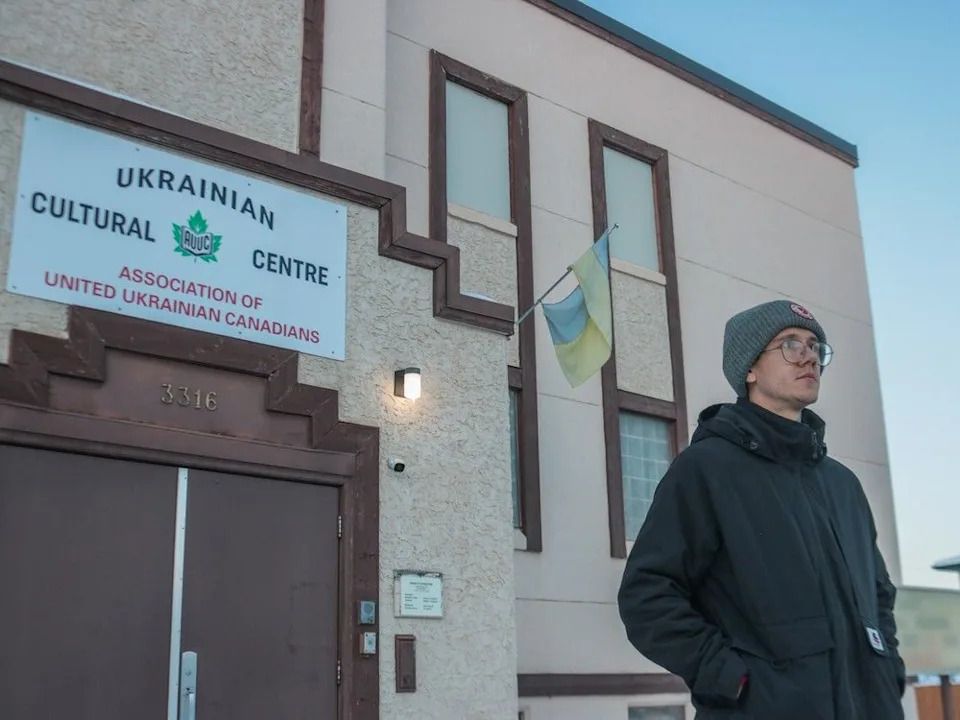
Oleksiy Sychuk.
Sychuk has been playing guitar again, after Volosianko gifted him one, and she’s been experimenting with origami and painting.
Advertisement
Advertisement
Advertisement
Advertisement
But they don’t know how long this freedom will last. Sychuk and Volosianko’s work permits are valid until 2027 and 2026, respectively, but there’s no guarantee that the Canadian government will extend their visas.
“Canada is closing the immigration door more and more tightly,” said Anna Kuranicheva, an immigration lawyer at the Edmonton Community Legal Centre. “Theoretically, there are all these options to apply for permanent residence, but practically the Ukrainians don’t really have viable, realistic options right now.”
They fear that they will be separated and that Sychuk will be forced back to Russia.
“We have nowhere to go,” said Sychuk. “Returning to Russia is death; returning to Ukraine is impossible.”
Advertisement
Advertisement
Advertisement
Advertisement
The pair is closely watching the war and news of a possible peace deal from here. But even if the war were to end tomorrow, it will not stitch Sychuk’s life back together, he said.
Family members and friends lost in the war will still be dead, and Ukraine might never accept him back. He may be forced to return to Russia.
He believes Canada is his last hope for ongoing freedom. Sanctions against Russians are still widespread across Europe, and he doesn’t have the money to afford an immigration lawyer, let alone another international move.
So, he waits and gets ready for a new year while living in limbo over what his future will look like.
“We are really (hoping) that we can get something in Canada, maybe even claim refugee,” said Sychuk. “I’m not sure yet because we are afraid of los(ing) everything and we don’t know what to do.”
تم ادراج الخبر والعهده على المصدر، الرجاء الكتابة الينا لاي توضبح - برجاء اخبارنا بريديا عن خروقات لحقوق النشر للغير


