


اخبار العرب-كندا 24: السبت 20 ديسمبر 2025 05:32 صباحاً
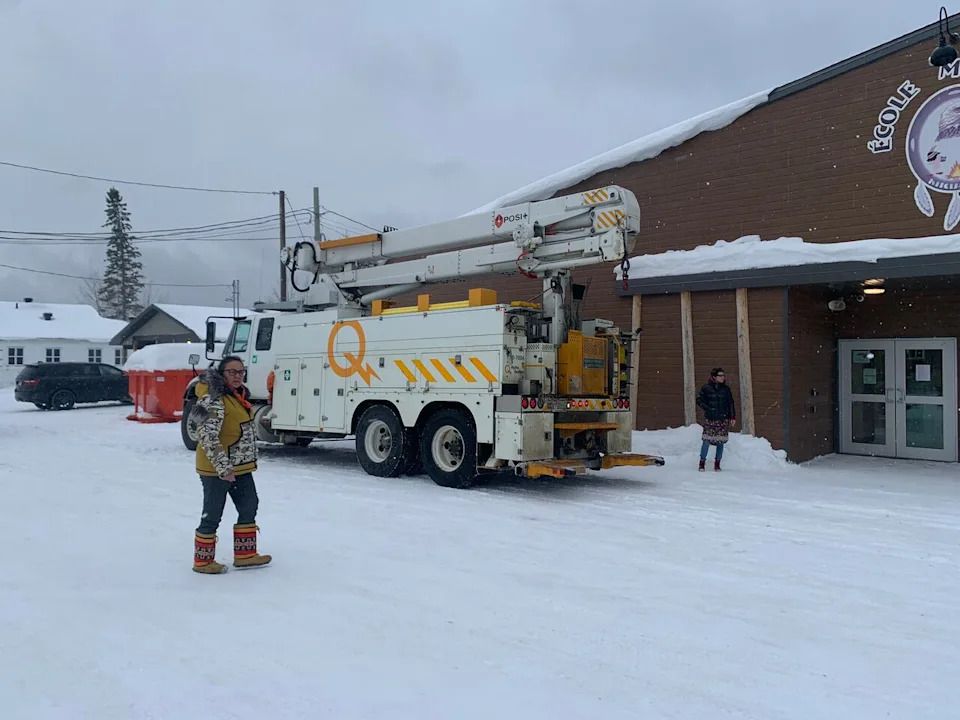
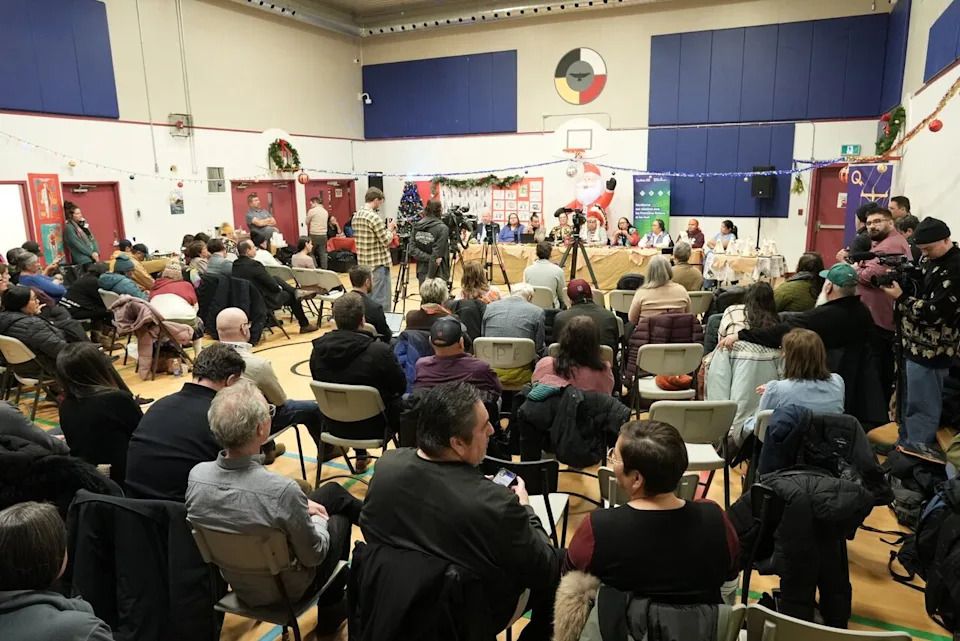
Residents clapped, danced, sang and cried in the Anishinaabe community of Kitcisakik this week when the lights were finally turned on for the first time.
The community of about 400 people, located 450 kilometres northwest of Montreal, has been waiting to connect to Hydro-Québec's grid for about 60 years.
Resident Jimmy Papatie called it the “electric Messiah.”
“It’s a big step. It's going to bring us an opportunity,” he said.
Advertisement
Advertisement
Advertisement
Advertisement
Papatie calls himself the generation of the generator. In all his years, he’s never before had electricity in his home and previously used firewood and spent tens of thousands of dollars on fuel for a generator for heat.
Now, children in the Anishinaabe community will know a different reality, he says.
“It's the gift for their generations and the generation that’s going to come after them,” he said, calling this a historic moment.
"Quebecers, they take the power for granted and us, we've been excluded," he said. "It's like a bit of justice."
‘We're not in a state of survival anymore,’ says resident
The absence of power in the community had real consequences on some residents, says Papatie — pointing to an example of a mother who was afraid of wasting milk for her baby without proper refrigeration.
Advertisement
Advertisement
Advertisement
Advertisement
With no power comes less food and access to cooking, he says.
“Yesterday after the announcement when they turn on the power, we just started living our life now. We're not in a state of survival anymore," Papatie said.
LISTEN | Kitcisakik residents count down to electrification of community:
For several decades, Papatie says leaders have been meeting with Hydro-Québec twice a year, promoting projects and systems, without success.
But when Sophie Brochu was appointed president of Hydro-Québec in 2020, things started to change, he says.
It took until May 2022 for the Quebec government to announce the construction of a power line between the community and Val-d'Or, Que. — about 90 kilometres north.
Advertisement
Advertisement
Advertisement
Advertisement
On Nov. 14, 2023, representatives of Hydro-Québec, the Quebec government and the Kitcisakik council gathered to mark the official start of work. At the time, Hydro-Québec said it was financing the investment which would comprise 2,000 poles across 70 kilometres.
Ian Lafrenière, Quebec's Indigenous affairs minister, spoke this week of the great moment made possible thanks to everyone’s efforts and a $35-million investment.
“We underestimate what this truly means, but it is a major life change for these people; many told me that from now on, they are sleeping better. Why? Because they’re guaranteed to have heat when they wake up in the morning, less noise from generators, and the ability to have dreams,” he said.
(Gabriel Poirier/Radio-Canada)
Francis Verreault-Paul, the chief of the Assembly of First Nations Québec-Labrador (AFNQL), says there were mixed emotions with the electrification of the community.
Advertisement
Advertisement
Advertisement
Advertisement
As much as this makes life safer and easier for future generations, he says it was emotional to hear stories about hardship.
"I really admire the resilience, the determination and the courage from all of the members of the community," said Verreault-Paul.
"They've been living in very difficult experiences having no electricity, no water, but still they're still there, proud of their community, proud of who they are."
This step forward means the community can take time "to dream about what they want to accomplish individually, but collectively as well," he said.
Community hopes to get potable water next
The next big project for the community is access to potable water, says Papatie. Currently, water for residents is only available in town.
Advertisement
Advertisement
Advertisement
Advertisement
“They have to get their water with the pail,” said Papatie, adding that the council also provides big five-gallon water bottles.
“There's no other way,” he said.
(Clara Fortin/Radio-Canada)
In an ideal world, he says the community would move and set up a new village nearby in order to get every house proper access to water and sewage.
About 15 kilometres away, there’s a clear water source that could be pumped and brought into a new village, he says. In that scenario, he says the plan with Hydro-Québec would be to extend the power to them.
“We need to find water,” he said. “We have to plan our future.”
تم ادراج الخبر والعهده على المصدر، الرجاء الكتابة الينا لاي توضبح - برجاء اخبارنا بريديا عن خروقات لحقوق النشر للغير


