



اخبار العرب-كندا 24: الجمعة 19 ديسمبر 2025 05:44 صباحاً
Municipal councils in New Brunswick are violating provincial law if they meet in private to discuss complaints against their members, according to New Brunswick’s Local Governance Commission.
The commission released an advisory against the practice after it came to light that many municipal councils were discussing code of conduct or conflict of interest complaints behind closed doors.
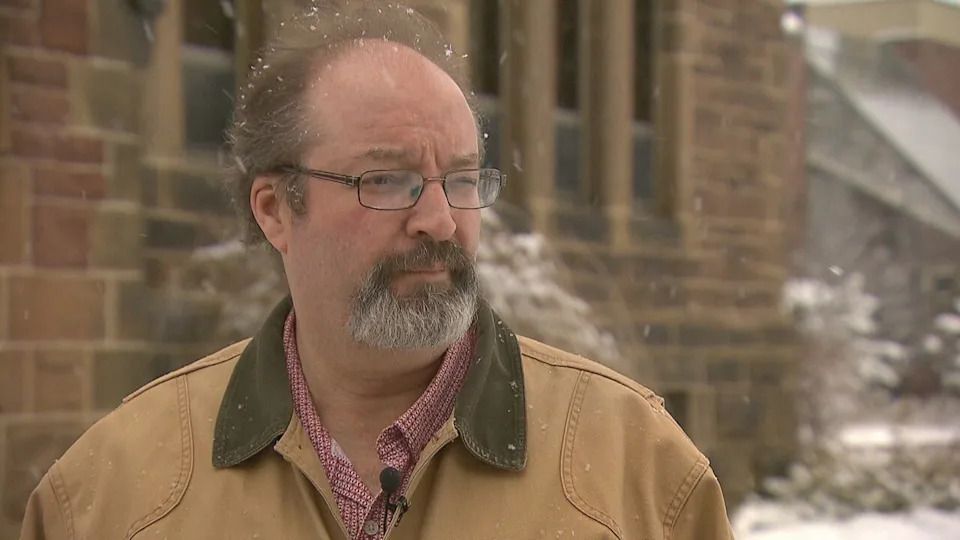
Mount Allison lecturer Geoff Martin said the commission's advisory bucks a trend in municipal politics away from transparency and openness. (CBC)
The advisory says the practice is in violation of the Local Governance Act and also “denies public accountability and transparency” to complainants and the broader public.
Advertisement
Advertisement
Advertisement
Advertisement
Municipal politics expert Geoff Martin said the advice is “somewhat disruptive and almost courageous,” as it bucks a trend toward more private meetings and a more "corporate" style of governance. “
The Commission on Local Governance is putting the brakes on that,” said Martin, who teaches political science at Mount Allison University and has served two terms as a municipal councillor.
“I feel positive about what appears to be the commitment of the commission to these principles of democracy, openness, transparency,” Martin said.
The commission’s advisory says that municipal councils have been treating elected mayors and councillors as employees, and applying confidentiality rules to “labour and employment matters.”
Advertisement
Advertisement
Advertisement
Advertisement
But mayors and councillors are by definition not employees, says the advisory, and so complaints against them are not protected and should be discussed in open meetings.
Councillor couldn't share report with her lawyer
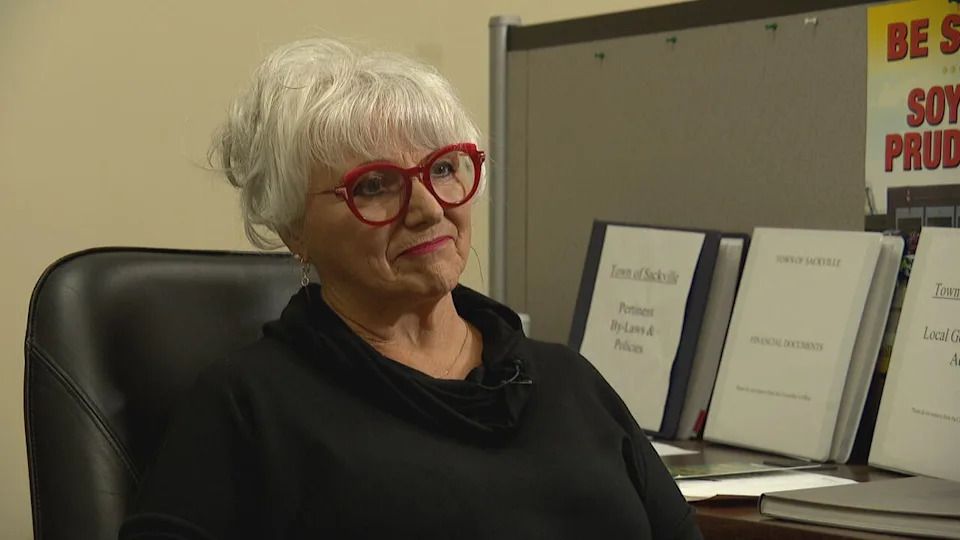
Tantramar Deputy Mayor Debbie Wiggins-Colwell welcomes the new advisory.
Wiggins-Colwell was the object of a code of conduct complaint shortly after she was sworn in to Tantramar council in January 2023 and says the public would have been better served if the process had been open.
“You shouldn't have to go behind closed doors,” Wiggins-Colwell said. “I think with more openness, it could have been done more fairly.”
Tantramar Deputy Mayor Debbie Wiggins-Colwell welcomes an advisory calling for public discussion of complaints against elected officials. (Pierre Fournier/CBC)
All discussions about the complaint against Wiggins-Colwell were held in closed session, including the decision to hire an investigator to look into the matter at a cost of $15,000.
Advertisement
Advertisement
Advertisement
Advertisement
Wiggins-Colwell said she was not permitted to talk about the complaint or even to share a copy of the investigator’s report with her own lawyer.
A redacted version was later released, after a local reporter filed a complaint with the provincial ombud’s office.
Wiggins-Colwell said the secrecy made “gagged” when it came to communicating with her constituents.
‘I was shocked’
Commission director Mary Oley said via email that media reports, the commission’s own work, and a discussion at a recent session on local governance brought the problem to light.
Tantramar Mayor Andrew Black told his fellow councillors that at a session on harassment of municipal officials in November, he wondered aloud if there might be fewer code of conduct complaints if the process were open to the public.
Advertisement
Advertisement
Advertisement
Advertisement
This prompted a representative from the Local Governance Commission to get up and say that in fact, “municipalities have to do this all in the public,” Black recounted at a November council meeting.
“I was shocked by that,” Black said. “And I think that pretty much every other single person in the room was shocked by that.”
Black did not respond to a CBC News request for an interview.
Appeal process and training needed
Andy MacGregor said he suspected the Local Governance Act was being violated after he became the object of a complaint shortly after attending his first meeting as a councillor in Strait Shores.
Advertisement
Advertisement
Advertisement
Advertisement
“Everything was done, you know, behind closed doors,” MacGregor said. “Even when they notified me that there was a special closed session. … I went to the meeting, I didn't even know it was about me.”
Former Strait Shores councillor Andy MacGregor said he believes public scrutiny can help prevent inappropriate use of code of conduct bylaws. (Erica Butler / CBC)
MacGregor said he asked the province’s Department of Environment and Local Government and the Local Governance Commission for help but was told there was no appeal process.
Later, MacGregor filed his own complaint with the commission, which found that no formal complaint was ever filed against him, and that other members of the council had acted inappropriately.
Shortly thereafter, resignations caused the dissolution of the Strait Shores council, and the appointment of a paid supervisor to take its place.
Advertisement
Advertisement
Advertisement
Advertisement
“If it was done in a public forum, this never would have happened,” MacGregor said.
“When there's people watching, people have to be transparent, have to be accountable, and they're just held to a higher standard."
MacGregor also believes there should be some sort of appeal process through either the commission or the Department of Environment and Local Government to give municipal officials a way to ensure rules are being followed.
Moncton takes step toward bylaw change
The commission's advisory asks that all local governments in the province review their mandatory code of conduct bylaws to ensure they don’t require closed meetings.
Advertisement
Advertisement
Advertisement
Advertisement
The City of Moncton took the first step toward changing its bylaw this week.
On Monday, staff presented a report noting that “upon further review and based on the direction of the Commission,” the current bylaw “does not meet our legislated requirements.”
Councillors voted unanimously to start the process to remove the current requirement for private meetings to discuss complaints.
In its annual report released in September, the commission recommended mandatory training for both elected officials and municipal staff to help ensure the laws around local government are understood and followed.
Both MacGregor and Wiggins-Colwell support the idea and said the training should be offered by the province.
The provincial ombud’s office receives complaints about administrative fairness and access to information issues, among other things. The office says it received 59 complaints about fairness in the past five years, and about 10 in the past two years about lack of access to information related to closed meetings.
تم ادراج الخبر والعهده على المصدر، الرجاء الكتابة الينا لاي توضبح - برجاء اخبارنا بريديا عن خروقات لحقوق النشر للغير


