


اخبار العرب-كندا 24: الاثنين 15 ديسمبر 2025 06:56 صباحاً
Cancer patients may soon be able to avoid or receive chemotherapy more precisely thanks to artificial intelligence (AI).
For decades, doctors have examined cancer biopsies under a microscope, but this approach can miss subtle patterns that reveal how dangerous a tumour might be.
A Norwegian start-up is using AI to change the way colorectal cancer is examined to provide better assessments while reducing potentially unnecessary and harmful treatment.
Advertisement
Advertisement
Advertisement
Advertisement
DoMore Diagnostics is developing AI technology that analyses tissue samples in far greater detail than the human eye can manage.
“We personalise cancer treatment by utilising the power of AI,” Torbjørn Furuseth, Domore Diagnostics CEO, told Euronews Health.
“While there have been great improvements in cancer care over the last years, there are still a lot of patients that receive toxic treatment with no benefits,” Furuseth added.
Colon cancer is the third most common and second most deadly cancer worldwide, according to the World Health Organisation.
In 2022, 2.74 million new cancer cases were registered in Europe, according to the European Commission’s estimates published in the European Cancer Information System (ECIS).
Advertisement
Advertisement
Advertisement
Advertisement
“With AI and large data, thousands of slides, we have super-specialised an algorithm,” Furuseth said.
More accurate than human pathologists
The company is a spin-out from a research collaboration between Oxford University, Oslo University Hospital in Norway, and University College London (UCL). This partnership developed the foundational research behind its AI-based prognostic technology.
Domore Diagnostics claims its tool has proven to be more accurate in predicting the outcome of the patient than human pathologists.
Advertisement
Advertisement
Advertisement
Advertisement
“We don't really know what the AI is looking for. But we have afterwards correlated [AI outcomes] with pathologist evaluation and seeing that it makes sense,” Andreas Kleppe, a research director at Oslo University Hospital Research, told Euronews Health.
“It [the AI] picks up many of the features that pathologists also look at, but it of course also combines this and looks at things that pathologists may not know,” Kleppe added.
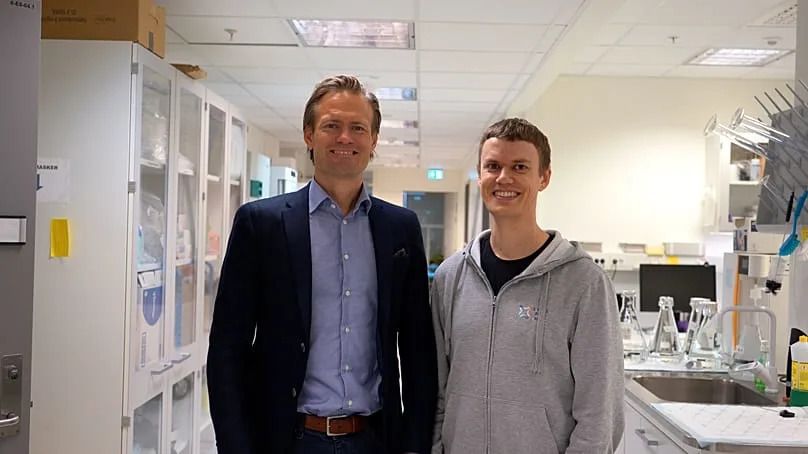
Torbjørn Furuseth, Domore Diagnostics CEO (Left) and Andreas Kleppe, Research Director at Oslo University Hospital Research (Right) - Roselyne Min/Euronews
This improved accuracy can help doctors decide which patients actually need strong treatments such as chemotherapy and which patients can safely avoid them.
Prognostic analysis is an important step after surgery, where the tumour has been removed, as some patients may still harbour small metastases, secondary cancer growths that spread from the original tumour.
Advertisement
Advertisement
Advertisement
Advertisement
Most colorectal cancer patients are cured by surgery alone, however, chemotherapy often follows surgery as a “one-size-fits-all approach,” with “no benefit to the majority of patients, only exposing them to short- and long-term side effects,” the company said.
Between 96 and 98 per cent of stage two patients and 80 per cent of stage three patients are exposed to short and long-term side effects without gaining improved outcomes, the company added.
“Exactly understanding what represents high risk of metastasis and low risk is difficult for a human to judge because it's so complex,” Furuseth said.
Advertisement
Advertisement
Advertisement
Advertisement
How does it work?
DoMore Diagnostics’ system is trained on thousands of images.
According to Kleppe, this gives it far better judgment in identifying the high-risk features that are linked to recurrence and death from the cancer.
The tool scans digital images of the same cancer tissue samples that pathologists use to look at and can tell how fast the cancer is likely to grow and how risky it is.
“When we develop the AI solutions, we feed in these images directly, and then the outcome of the patients several years after surgery,” Kleppe said.
Advertisement
Advertisement
Advertisement
Advertisement
“And then we make the computer see the relationship between those. So we don't rely on the pathologist's evaluation directly, we just rely on the outcome,” he added.
This process gives doctors a more precise understanding of how aggressive a patient’s cancer is, the Norwegian medical start-up said.
Domore Diagnostics’ colorectal-cancer test is currently used to validate prognostic analyses at hospitals in Europe, the United States, Japan, and Mexico.
For more on this story, watch the video in the media player above.
تم ادراج الخبر والعهده على المصدر، الرجاء الكتابة الينا لاي توضبح - برجاء اخبارنا بريديا عن خروقات لحقوق النشر للغير


