


اخبار العرب-كندا 24: الأحد 14 ديسمبر 2025 06:08 صباحاً
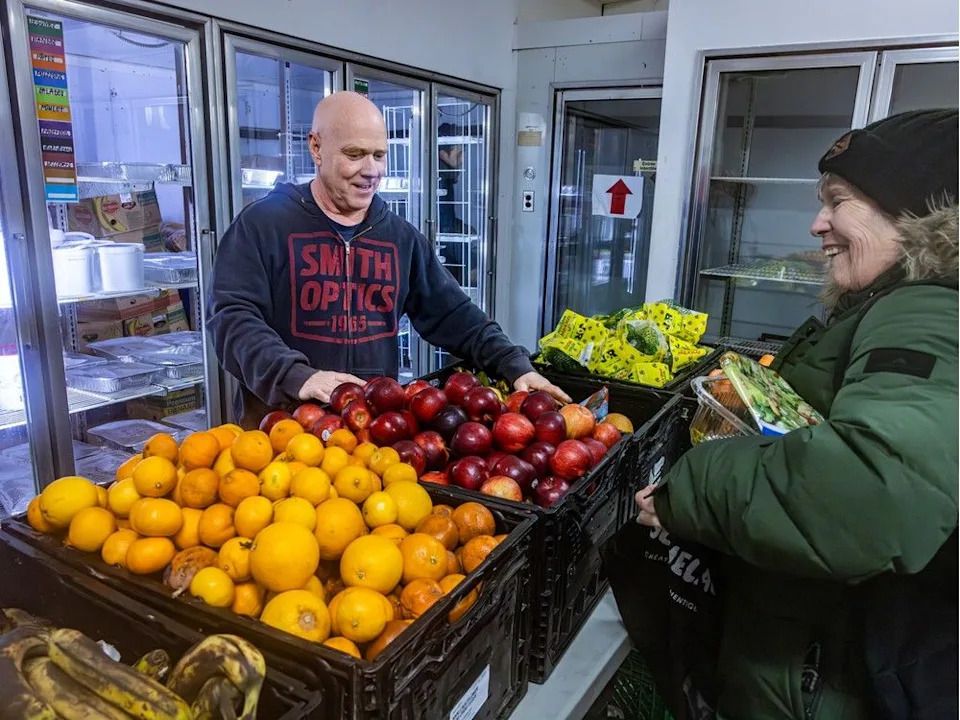
Habes Jalboush, a 55-year-old computer engineer who recently lost his job, returned to the food bank at Welcome Hall Mission in the St-Henri neighbourhood for the first time in nearly four years.
“I think there’s a lot of people, they need that more than me. But right now, because I’m not working … I need to come. There is no food in the house,” he said after collecting his grocery allotment for the week.
He’s been job hunting, but says it’s been difficult because he’s “not a young guy,” which he says is not something the job market or the engineering industry is looking for. Having moved to Montreal from Jordan 18 years ago, he also says his French could be better, which adds another layer of difficulty in finding work in Quebec.
Advertisement
Advertisement
Advertisement
Advertisement
Welcome Hall Mission CEO Sam Watts said that until recently, “almost everybody who came here was not working,” but that is no longer the case.
A record number of working-age and employed Canadians relied on food banks in 2025. The 2025 Hunger Count from Food Banks Canada, released in October, shows that more than 19 per cent of food-bank users were employed in March, up from 12 per cent five years ago. The proportion of 31-to-44-year-olds accessing food banks rose from 20 per cent in 2019 to 22.4 per cent this year.
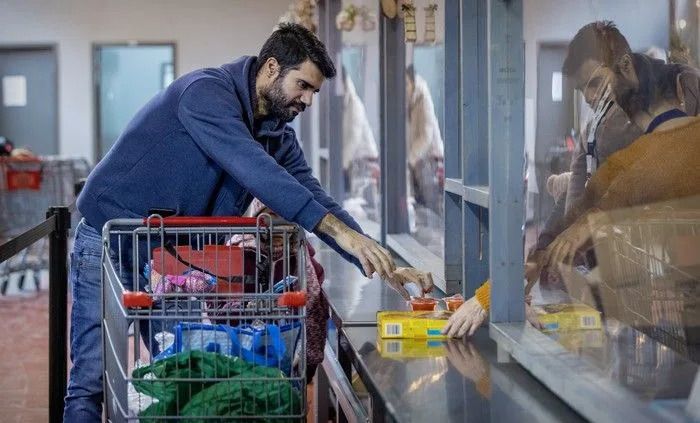
Yonatan José Yaney Franco and his daughter fill their shopping cart during food distribution at the Welcome Hall Mission in Montreal.
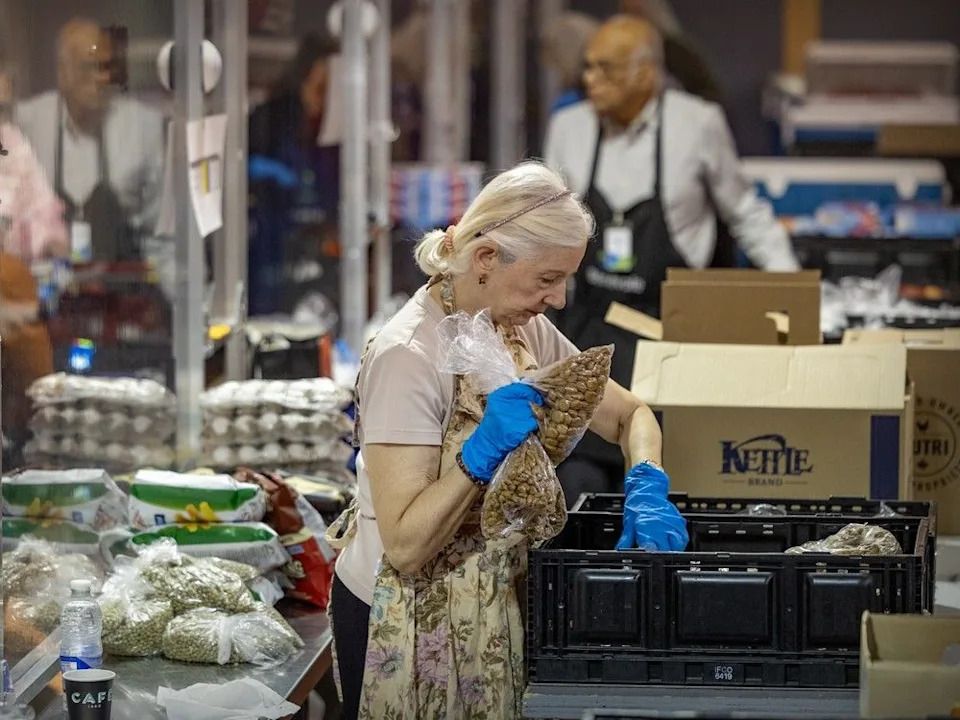
Charlotte Marcella, who has volunteered at Welcome Hall Mission for the last six years during her retirement, said, “In the past, it was people who might be down on their luck or out of work for a while” who came to the food bank. “Now, it’s professionals.”
Across the city at Les Pirates Verts in Hochelaga, a grass-roots food bank run out of a former dépanneur, another volunteer used to be a client. Frédérick Jackob Dupuis is a social worker at Notre-Dame Hospital, and said there was a time in his life when he would sometimes need extra help to feed his son, even while he was working.
Advertisement
Advertisement
Advertisement
Advertisement
“It saved me money for things I couldn’t afford for my son’s needs. Like making lunches and stuff,” he explained, rushing through the kitchen to prepare a salad as a line of people snaked around the block to get their weekly groceries or a fresh meal.
Once Dupuis was able to support himself financially, he said he wanted to give back to the organization by returning as a volunteer.
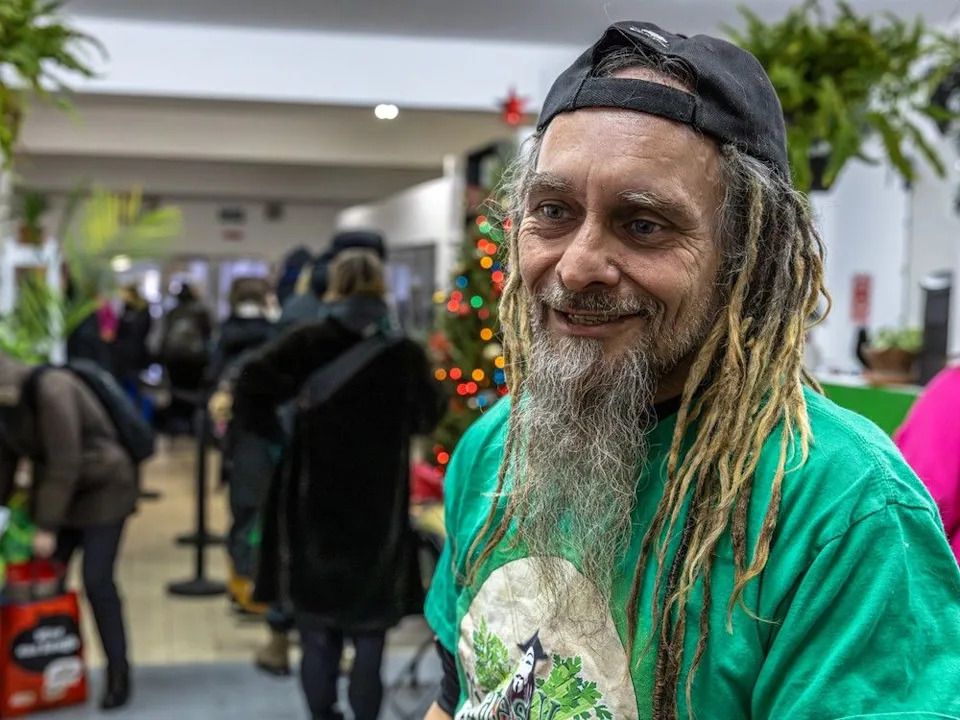
Raïs Zaidi founded Pirates Verts in 2011, running it out of his Hochelaga apartment until leasing a dépanneur this summer.
Before Pirates Verts founder Raïs Zaidi signed a lease for the dépanneur on Ste-Catherine St. in June, the organization had been operating out of his Hochelaga apartment. When the organization started in 2011, Zaidi sourced food by dumpster diving behind grocery stores where nearly expired but still edible food was thrown away.
“My living room was where we stored all our tables, all the equipment, everything we needed to do our distributions,” Zaidi said. He said every day, volunteers would come to his house, take everything outside and set it up to hand out food. Now, Pirates Verts gets donations from grocery stores across the island of Montreal.
Advertisement
Advertisement
Advertisement
Advertisement
While many food banks require a proof of address and income, Pirates Verts is open to anyone and no documentation is required.
“I don’t want proof of poverty from anybody. I don’t care where you live or what. I want to save the food from the garbage and who eats it is sort of irrelevant,” he said, noting that many of the clients come from a homeless encampment nearby.
Donations shrink as demand rises

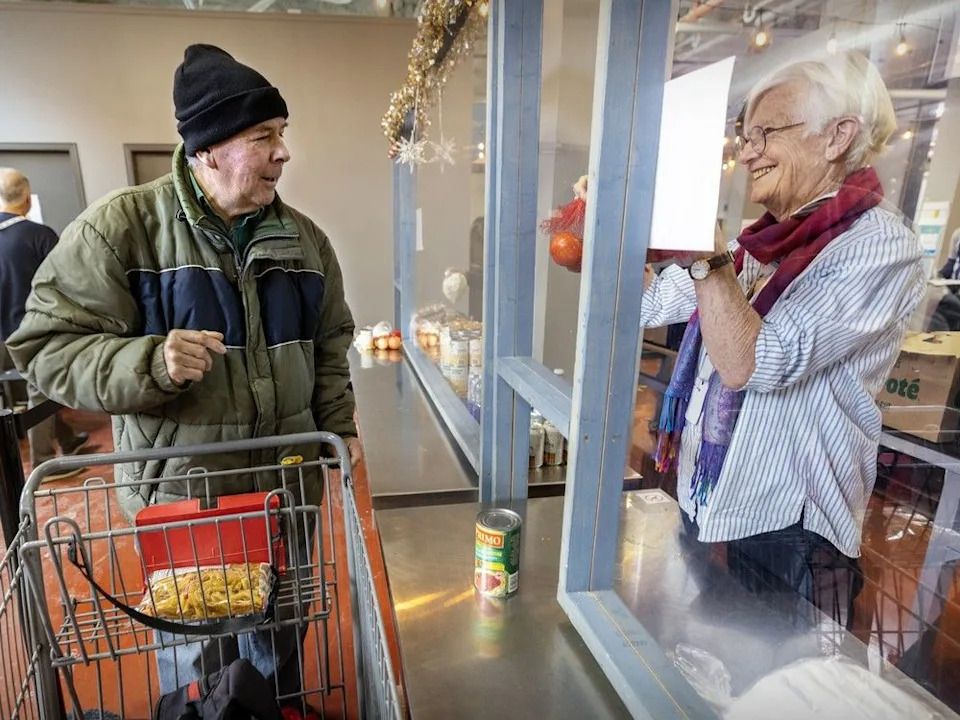
Volunteer Francoise Moreira offers Rudy Dorand tomatoes during food distribution at the Welcome Hall Mission in Montreal. According to Food Banks Canada, food bank usage has doubled since March 2019.
One main change Zaidi has noticed in recent years is the type of food requested by clients.
“Primary schools are contacting us asking for help with snacks and fruit. They’re apparently not getting enough, or not as much as they used to, and we don’t have enough,” he said.
Advertisement
Advertisement
Advertisement
Advertisement
Some food banks are managing to scale up to match demand. Moisson Montréal spokesperson Éliane Larouche said they’re handing out 42,000 food baskets this holiday season, compared with 25,000 in 2023 and 20,000 the year before that.
At Welcome Hall Mission, Watts agreed that food donations overall are on the decline.
“That’s partly because the grocery stores have become much more efficient in the way they manage their product,” he said. “You’ve probably even seen in your grocery store. They’re selling stale, dated stuff and they put stuff into a package (saying), ‘It’s not so good, but here, you can buy it at a lower price.’”
Marcella added that while the donors are generous, it hasn’t always been enough to meet demand, which she said has steadily grown since the COVID-19 pandemic. According to Food Banks Canada, food bank usage has doubled since March 2019, and is 5.2 per cent higher than it was in 2024.
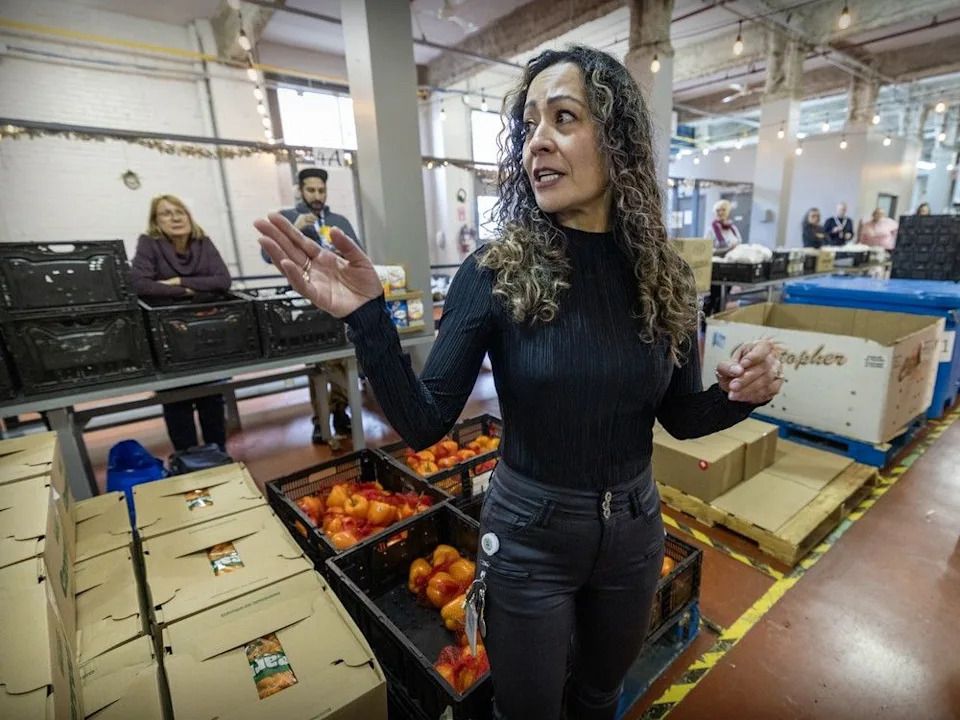
Milena Perdomo briefs volunteers at the Welcome Hall Mission in Montreal before they begin to distribute food.
“There were times when we only had, like, a package of hot dogs. And it would be one package for a family of six people. You only get food here once every two weeks. So, you know, it’s hard when you wait in line and you wait your turn and it’s two weeks and you get one package of 12 hot dogs,” she said.
Advertisement
Advertisement
Advertisement
Advertisement
The food bank is seeing an influx of donations and volunteers now that the holiday season has arrived. Marcella is sometimes frustrated by the focused attention around Christmas, pointing out that people are hungry all year long.
“What about the rest of the year? I’ve been here six years. This place is hopping all the time,” she said.
Other times, the food that comes in doesn’t align with the clients’ dietary restrictions. Marcella said there is a need for more Halal meat, since “we have a very large population of people who don’t eat pork.”
While many food banks require a proof of address and income, Pirates Verts is open to anyone and no documentation is required. Only volunteers, like Andre Bordeleau, handle the food for recipients like Christianne Emond.
Watts said the first large-scale food bank in Canada opened in 1981 in Edmonton, and was supposed to be temporary. Now, Food Banks Canada supports more than 5,500 food banks and community organizations. He believes food banks should not be a long-term solution.
Advertisement
Advertisement
Advertisement
Advertisement
“The problem isn’t hunger. The problem is poverty. And so we’ve built up this infrastructure (of food banks), because essentially, we have enough food in Canada to feed everybody,” he said.
“A lot of people can’t afford to buy the food that they need. Because in a person’s budget, if they’re struggling to make ends meet, the one element that is elastic is food. You can spend a little or you can spend a lot. And so the challenge is, could we get people to a point where that isn’t a problem anymore?”
lschertzer@postmedia.com

Kali Sakell prepares her station for food distribution at the Welcome Hall Mission. Welcome Hall Mission CEO Sam Watts said that until recently, “almost everybody who came here was not working,” but that is no longer the case.
Related
تم ادراج الخبر والعهده على المصدر، الرجاء الكتابة الينا لاي توضبح - برجاء اخبارنا بريديا عن خروقات لحقوق النشر للغير


