


اخبار العرب-كندا 24: السبت 13 ديسمبر 2025 10:44 مساءً
The closure of a supervised injection site at Sheldon Chumir Health Centre in Calgary has triggered a range of reactions, from relief among nearby residents and businesses to concerns about more open drug use.
Some also brace for a strain on the public purse as individuals struggling with addiction move from cheaper community interventions to emergency rooms, which are already bursting at the seams.
“It’s no surprise that this announcement has come,” Mayor Jeromy Farkas told Postmedia at a holiday event hosted by Calgary police’s YouthLink on Saturday, adding he was optimistic about the news.
Advertisement
Advertisement
Advertisement
Advertisement
“We’re looking forward to working collaboratively with the provincial government across sectors, especially our nonprofit and police service, to understand what their plans are, as well as to collaborate on future deployments of alternative schools.”
The announcement Farkas was referring to was an admission by Premier Danielle Smith during a Postmedia year-end interview that her government will pull the plug on the supervised injection site, which has been at the centre of a running debate on burgeoning addiction problems in the city and how to solve them.
“We are going to shut down the drug consumption site,” Smith said on Thursday. “It was an experiment. It didn’t work.”
The government hasn’t said when it will shutter the facility.
Advertisement
Advertisement
Advertisement
Advertisement
The site, operated by a provincial health department called Safeworks, was opened in fall 2017 in response to the rising opioid crisis responsible for the lives of tens of thousands of people across the country. It’s a medically supervised facility for people experiencing addiction to inject or consume drugs to reduce overdose deaths.
Smith’s announcement is a sharp turn from the government’s earlier rhetoric of urging the city to opine on the site before it decided its fate. The move drew a strong rebuke from city council, a majority of which maintained the issue falls under the province’s jurisdiction.
“In this case, the decision is pretty clear — we don’t want to weigh in on something that does not belong to us,” said then-mayor Jyoti Gondek in October of last year.
What’s the plan?
Farkas welcomed the announcement Saturday, saying it provides certainty.
Advertisement
Advertisement
Advertisement
Advertisement
“If the services aren’t to be provided at the Sheldon Chumir, then we would like to be at the table to better understand what their plans are going forward,” Farkas said.
Farkas added the province hadn’t formally notified the city of its decision to close the space. However, “during the Alberta Municipalities Convention, various ministers, as well as the premier herself, had telegraphed and signalled their intent on this — I don’t think a formal letter was necessary, given the amount of public commentary that the provincial government has been providing over the past months,” he added.
“That said, we’re looking for much more detail in terms of how they see these services being deployed at other sites, what the timeline for closure may be.”
The announcement was received well by nearby residents, who have expressed frustration with the site for attracting more drug-users to the area. They have complained homeless people addicted to drugs dwell below their buildings and use substances, altering the character of their neighbourhood and causing them to fear for their safety.
Advertisement
Advertisement
Advertisement
Advertisement
One resident appeared relieved when told of the latest development. The woman, who didn’t wish to be identified, said she feels the supervised injection site isn’t an appropriate solution, and that she would like to see more treatment-based approaches.
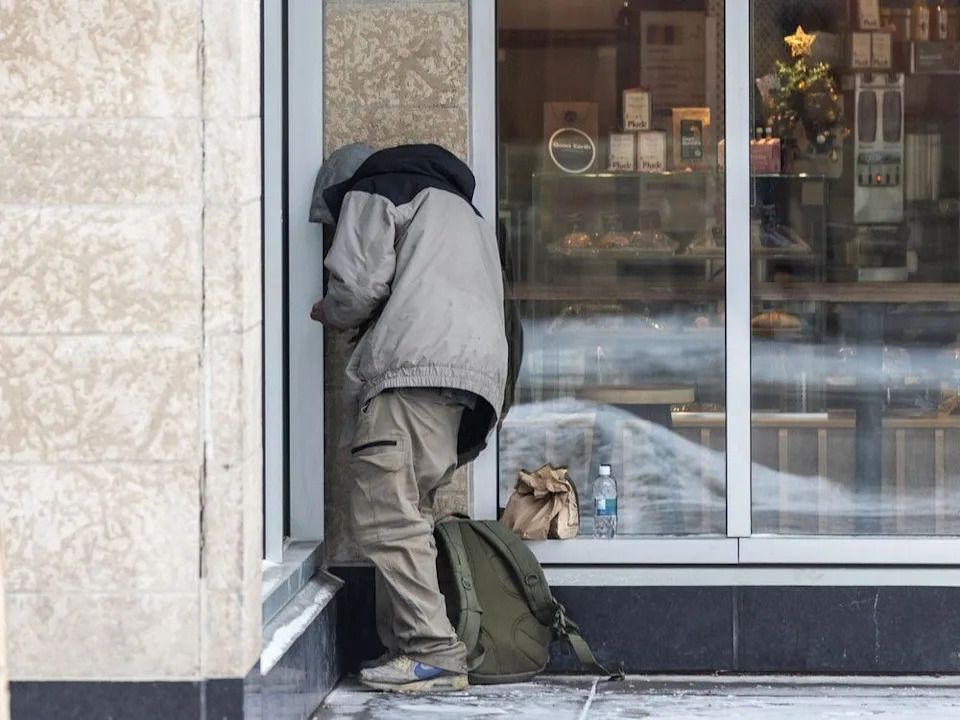
A man huddles in a corner to smoke drugs outside the safe-consumption site at the Sheldon M. Chumir Health Centre in Calgary.
Nadid, a hairdresser at London Barbers, kitty-corner to the Chumir, said the site had brought several problems, including social disorder in Memorial Park. He mentioned an instance when a homeless man, unprompted, verbally assaulted his female colleague. He said he has also seen a homeless man pepper-spraying another individual.
“Doesn’t happen every day, but it happens sometimes,” he said.
Nadid said he hopes the closure will put an end to such instances. However, researchers studying the issue said the problem will only worsen if the site is closed without a replacement. So far, the province hasn’t provided details on a plan to address the issue after the facility is closed.
Advertisement
Advertisement
Advertisement
Advertisement
“I’m worried that what we will see is the worsening of not only overdoses, which is the key thing, but we will see an increase in public consumption use, and potentially more dispersion of public consumption across the city,” said Dr. Monty Ghosh, an addictions specialist at the University of Calgary.
Alberta Health Services’ statistics indicate the site received more than 305,000 client visits between October 2017 and March 2024, responding to a total of 7,730 overdoses. In March of last year, it welcomed 572 unique individuals who visited a combined 3,520 times, resulting in an average of 113 visits per day.
The site is not just where people come to consume drugs; it is also a hub that connects people to various wrap-around services that would have been otherwise inaccessible or expensive for the taxpayer. The site’s staff made 449 referrals to clients for other AHS programs or external partner programs in March 2024 alone.
“We found that 10 per cent of the visits to the supervised consumption site are not to consume drugs,” said Dr. Jennifer Jackson, a nursing professor at the University of Calgary. “They’re for other reasons. They’re to apply for housing and speak to the social worker there, to get some food, to get a warm winter coat, to see someone about, you know, a scar on their leg.”
Advertisement
Advertisement
Advertisement
Advertisement
She also said her research finds many people have “taken steps towards recovery because of those services.”
One of those individuals is a server at Pho Daddy, a restaurant a few steps from the health centre. The woman, who didn’t wish to be named, said the consumption site, which she had used years ago, allowed her to get off drugs and start a new life.
She said the counselling she received there motivated her to make changes slowly as she came to trust the public system. She is concerned about whether individuals will ever receive that kind of support if the site closes.
Ghosh said the site is helpful for those who are marginalized and distrust the public system.
Advertisement
Advertisement
Advertisement
Advertisement
“If they’re gonna shut that down, they can’t get help anywhere else, there’s gonna be a lot of deaths,” the server said. “If Chumir can help them, why shut that down?”
Ghosh said the concerns residents feel are legitimate, and solving that problem could mean moving the site elsewhere without throwing away a system that helps save lives.
“It would be even better if we were able to have it at the Calgary Drop-In Centre or at Alpha House, because the population is already using drugs there,” he said. “Whenever I walk past the Drop-In Centre, there are people around and also along the river, who are using substances.”
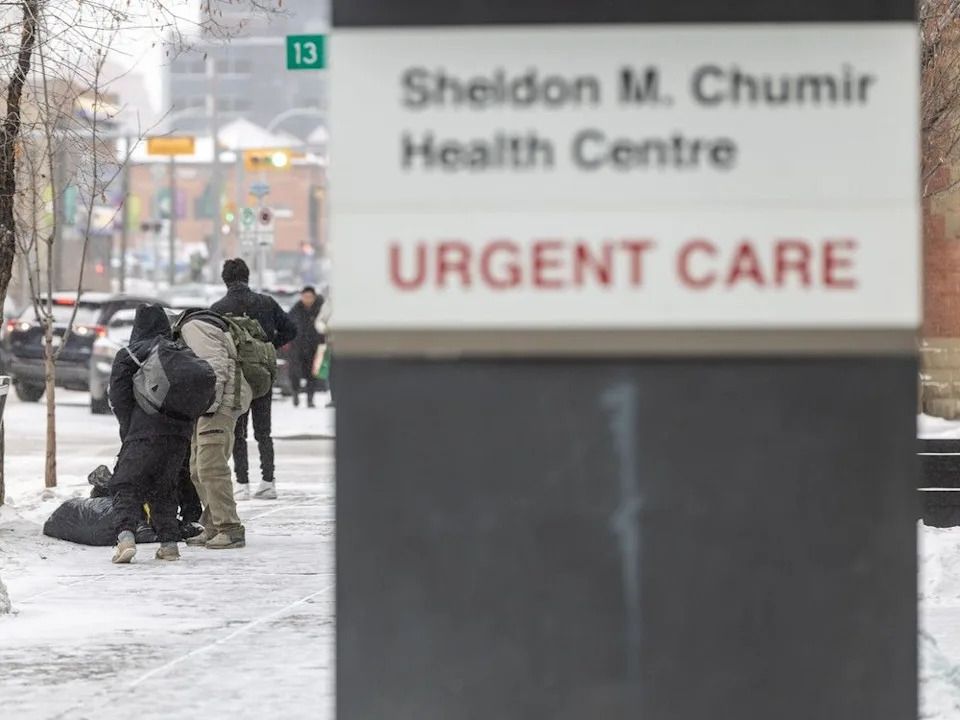
The provincial decision to shutter the supervised-consumption site at the Sheldon M. Chumir Health Centre has drawn a range of reactions.
In need of facilities
The UCP government has often emphasized a recovery-based approach to addressing addiction. However, the city only has one public detox centre with 40 beds that, Jackson said, routinely turns away people who want to get clean. The supervised site often acts as a bridge between their addiction and recovery.
Advertisement
Advertisement
Advertisement
Advertisement
If the current site closes, they will use drugs openly, Jackson said. Worse, they’ll die en masse.
“I agree that we need more beds and that we need to build more infrastructure,” Jackson said. “But what we need is a lot of everything; we don’t want to cherry-pick that we’re going to build new facilities that aren’t going to be ready till 2029, when we have a crisis today.”
And as they use drugs openly and suffer overdoses, instead of being treated at a supervised facility, they would end up in emergency rooms, which are currently overflowing and exponentially more expensive for the taxpayer. A study co-authored by Jackson found each overdose managed at a supervised site produces approximately $1,600 in cost savings. Jackson said a visit to the site “is ballpark $50.” Meanwhile, a visit to the emergency room roughly costs $1,200.
“Putting more pressure on emergency services, adding more work to the judicial system that is already very overwhelmed — these are not conservative principles,” Jackson said. “And this government is not going to achieve the goals that it’s reaching for. We have lots of other options that we could implement now.”
hmansukhani@postmedia.com
تم ادراج الخبر والعهده على المصدر، الرجاء الكتابة الينا لاي توضبح - برجاء اخبارنا بريديا عن خروقات لحقوق النشر للغير


