



اخبار العرب-كندا 24: الجمعة 12 ديسمبر 2025 03:44 مساءً
The weak La Niña that began in October will stick around through the end of the year, forecasters announced this week.
We’ve already seen hints of the pattern in the strong start to winter across North America, with plenty of rain out west and doses of cold back east.
Despite this La Niña’s persistence, a change is likely to arrive later this season.
CANADA’S WINTER OUTLOOK: La Niña and the polar vortex set to deliver a truly Canadian winter
La Niña continues for another month or two
Water temperatures around the equator in the eastern Pacific Ocean continue to run about 0.5°C below seasonal, which qualifies as a weak La Niña event.
Advertisement
Advertisement
Advertisement
Advertisement
These colder-than-normal water temperatures don’t seem like much, but it’s just enough to affect changes in the atmosphere that have ripple effects on weather patterns around the world.

ENSO Probabilities December 2025
RELATED: What happens when El Niño and La Niña disappear?
Forecasters with the U.S. Climate Prediction Center (CPC) expect this weak La Niña event to persist into the new year before waning through the second half of the winter season.
Experts say there’s a 68 per cent chance that we’ll return to ENSO-Neutral conditions by early next year, meaning that water temperatures will return toward seasonal levels.
“La Niña may still have some lingering influence through the early Northern Hemisphere spring 2026,” the CPC noted in its latest monthly outlook.
La Niña casts its shadow on North America’s start to winter
While this year’s winter weather is under the influence of numerous factors, the beginning of this season has resembled what we'd expect to see during a classic La Niña winter.
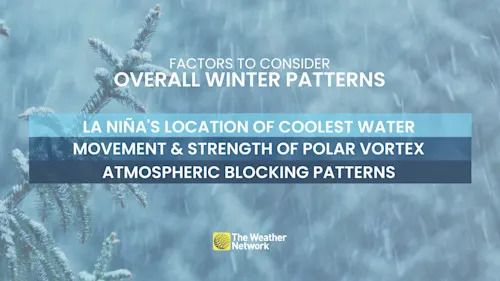
Winter 2025 Factors
During a typical La Niña winter, we would expect to see wet conditions along the West Coast while below-seasonal temperatures sweep from the Rockies toward the Great Lakes.
Advertisement
Advertisement
Advertisement
Advertisement
A string of atmospheric rivers have brought extensive rains to the West Coast, while intrusions of Arctic air have sent frigid temperatures plunging across the Prairies into Eastern Canada at times.
Header image created using graphics and imagery from Canva and Copernicus/European Union.
WATCH: What is La Niña?
Click here to view the video
تم ادراج الخبر والعهده على المصدر، الرجاء الكتابة الينا لاي توضبح - برجاء اخبارنا بريديا عن خروقات لحقوق النشر للغير


