



اخبار العرب-كندا 24: الأحد 7 ديسمبر 2025 12:20 مساءً
Metro Vancouver residents may have noticed lawns across the region are more of a chewed-up eyesore than usual this fall.
As in past years, the raccoons, skunks and birds are digging for tasty grubs, in this case mainly the invasive European chafer beetle. While not a new phenomenon, it does seem worse this year.
That’s likely because of a beetle boom this summer and last, says Douglas Justice, associate director of UBC Botanical Gardens.
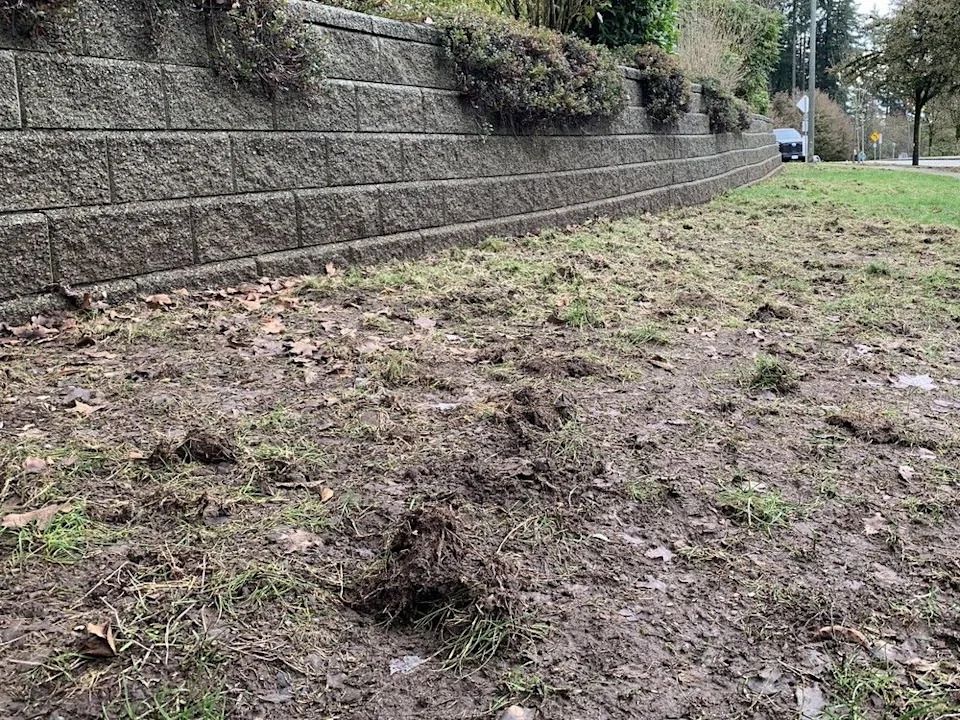
Torn up lawn at a townhouse complex in Port Moody B.C., on Dec. 6, 2025.
What’s going on?
Justice said chafer beetles fly in June and look for places to lay eggs at night where there’s light, so under a full moon or a place near street lamps. They also look for the right substrate, particularly mowed grass, where larvae can feed on supple roots.
Advertisement
Advertisement
Advertisement
Advertisement
The grubs have a strong scent so when they are closer to the surface, it’s a festive fall buffet for birds, skunks and raccoons looking to fatten up for the winter.
“The combination of the light and the surface will invite the female taper to lay her eggs,” he said.
“If we have a wet year, like a wet fall, then the soil becomes very saturated. And then the chaffer larvae tend to migrate toward the surface of the soil. And so when we have a lot of wet weather, it’s much easier for the raccoons and skunks and the crows and European starlings and maybe even coyotes to flip the turf over.”
Why does it seem worse this year?
“Insects tend to work in cycles,” said Justice, adding that last year was not as bad as this year, so the region might be experience a peak chaffer season.
Advertisement
Advertisement
Advertisement
Advertisement
“I think what’s happening is that we have a lot of chafers, and they’re close to the surface, and so there are a lot of different predators that are going for them, and this is what’s making a mess,” said Justice.
“This is all based on the fact that we probably had a very, very good June for chaffer flight.”
According to Daniel Forrest, a PhD candidate at UBC’s Institute for Resources, Environment, and Sustainability, it could be worse, because another invasive bug has been thrown into the mix.
He said Japanese beetles have similar habits when it comes to laying eggs in lawn substrate.
“I’ve seen signs out for Japanese beetles in the last three seasons, where homeowners or property managers are hiring these pest control companies to control for the Japanese beetle, in addition to the chafer beetle,” said Forrest.
Advertisement
Advertisement
Advertisement
Advertisement
There’s also a feedback loop happening. Experts say the more the grubs eat the roots of the grass, the weaker the grass becomes, making it easier for critters to dig it up.
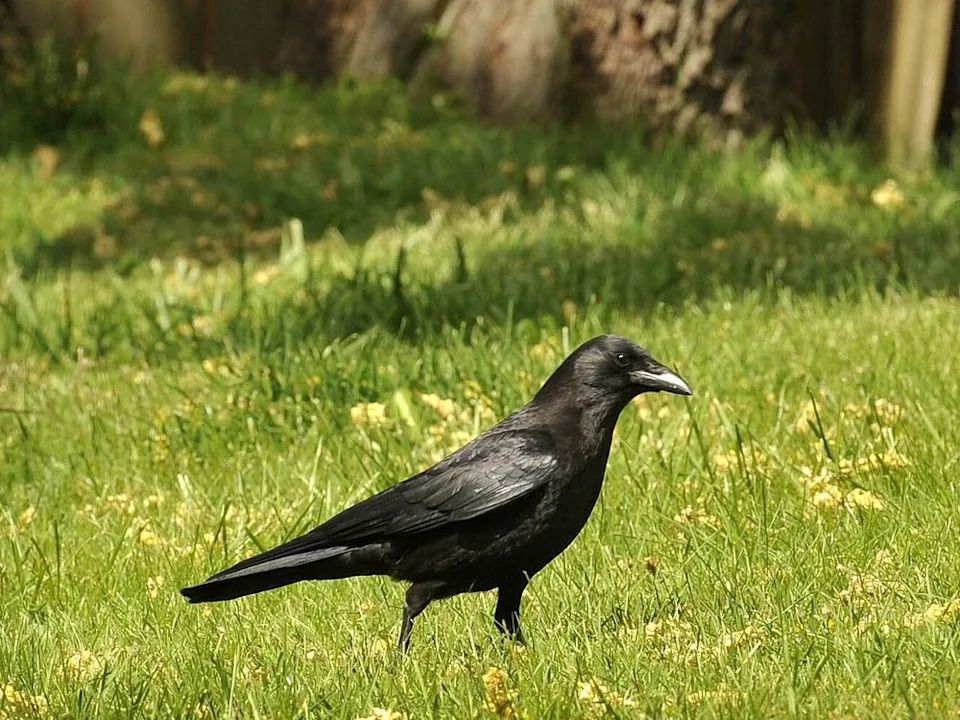
A crow walks on a lawn in east Vancouver.
Is this issue attracting more crows?
You may have noticed an increase in crows pecking away at the messed up turf. Justice said they are scavenging for the scraps the nocturnal mammals leave behind.
“The crows are working the day shift, and the raccoons and the skunks the night shift,” he said.
What can residents and municipalities do to prevent this mess?
The best way to battle the beetle is to cut the lawn really high, said Justice.
“Keep the turf nice and healthy. But cut it high, like more than five centimetres tall. A lot of people don’t like that because it looks kind of bushy, but it really does prevent the chafer. It’s not optimal for the chafer to lay her eggs — what she wants is a really close cut lawn.”
Advertisement
Advertisement
Advertisement
Advertisement
The other thing municipalities can do is turn off any bright lights on turf at night during the time the beetles are known to lay eggs.
Justice said this typically occurs mid-to-end of June, depending on the temperature.
Residents can also throw a tarp over their lawns during June’s full moon to prevent chaffers laying eggs, and then take it off during the day so the grass can grow, Justice added.
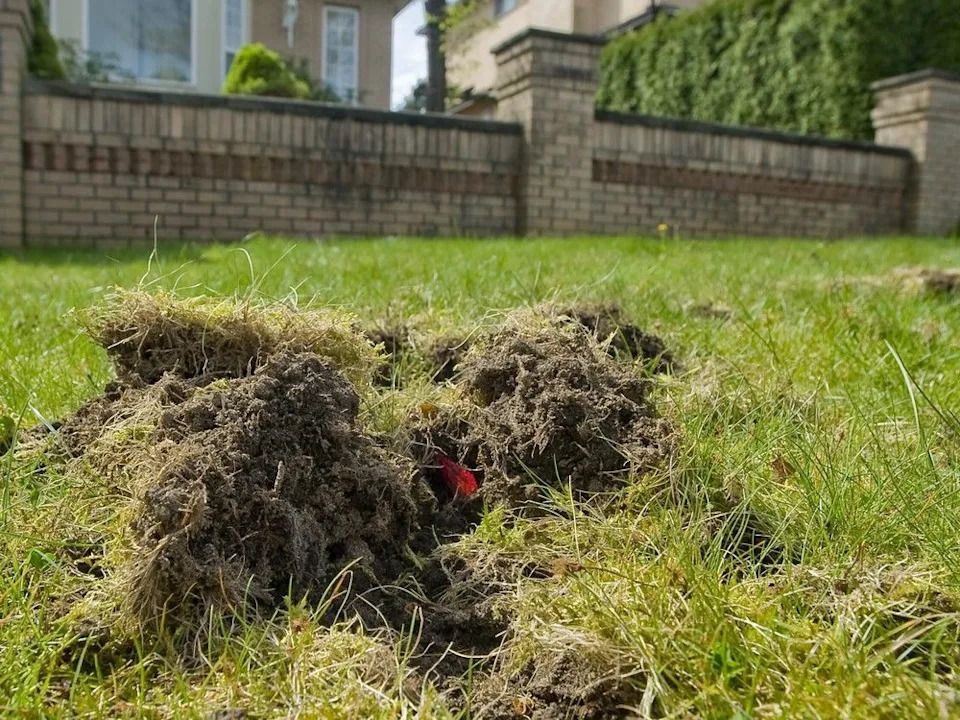
File photo of damaged lawns along Vancouver’s West 27th & Cambie due to the European chafer beetle.
Is there anything I can put on my lawn to kill the grubs?
Justice said the garden centre may recommend nematodes, which are microscopic worms known to parasitize the grubs. But that’s not always the best solution.
“So you think, that’s great and buy a package of these things, and you apply it. And they say, ‘Make sure you water well’ but, of course, if we have water restrictions, you may not be able to get enough water on the lawn to allow the nematodes to swim,” he said.
Advertisement
Advertisement
Advertisement
Advertisement
As well, if the soil temperature is not warm enough, then the nematodes are not active.
“The combination of warmth and water usually corresponds with when water restrictions are happening. So it’s often not successful.”

File photo of European chafer beetle grubs.
How long have the two invasive species been here in B. C.?
The European chafer beetle was first recorded in B.C. in 2001 in lawns and turf along boulevards in New Westminster, according to Metro Vancouver. It has since spread to many communities in the region.
These beetles have damaged turf grass lawns and sports fields throughout the Metro Vancouver region.
The Japanese beetle was first found in downtown Vancouver in July 2017, according to the Invasive Species Council of B.C. Adult beetles damage plants while the beetle larvae live underground and damage the roots of turf and grasses.
Is climate change playing a role?
Climate modellers predict that the Metro Vancouver region will experience warmer temperatures, a decrease in snowpack, longer dry spells in summer months and more precipitation in autumn, winter and spring, according to a report on the Chafer beetle.
Advertisement
Advertisement
Advertisement
Advertisement
These changes will stress many sensitive ecosystems, increasing their vulnerability to invasive species. While there’s no specific information on how European chafer beetle will adapt to climate change, researchers have noted that warmer weather has caused other white grub species to adapt well.
The Chafer beetle will likely adapt to drought and warmer climates, possibly thriving in the warming climate, the report said.
Is it time to rethink lawns?
Forrest said many residents are already switching up their lawns in favour of wild grasses, gardens, shrubs and flowers that attract more biodiversity.
He said while sports turfs are an important part of communities, many residents are leaning into the idea that they don’t need lawns in their backyard.
Advertisement
Advertisement
Advertisement
Advertisement
The lawn esthetic is rooted in homeowners wanting lawns like the British aristocracy. It later became standard for developers when designing detached homes, he said.
But that idea is shifting as the climate warms, residences are subject to more watering restrictions, and folks turn to drought-resistant shrubs and trees.
“For a long time people were locked in to the idea of the lawn but it’s changing,” said Forrest. “There was this idea of having to maintain this perfect lawn, and then the lawn ultimately became seen to be a representation of being a good citizen and good neighbour.”
With that, residents began associating overgrown or unkempt lawns with the idea that there was something wrong with the resident.
Advertisement
Advertisement
Advertisement
Advertisement
So now, some of the Vancouverites who are letting their gardens grow wild will put up signs explaining to passersby that they are encouraging biodiversity, said Forrest.
Forrest said it’s important to bring back bees, birds and other creatures in the urban environment because the planet is experiencing a biodiversity crisis, with a million species on the brink of extinction worldwide.
ticrawford@postmedia.com
Related
تم ادراج الخبر والعهده على المصدر، الرجاء الكتابة الينا لاي توضبح - برجاء اخبارنا بريديا عن خروقات لحقوق النشر للغير


