

اخبار العرب-كندا 24: الأحد 7 ديسمبر 2025 06:08 صباحاً
A Saskatchewan veteran is being considered as a possible recipient of the highest honour in the Canadian Armed Forces.
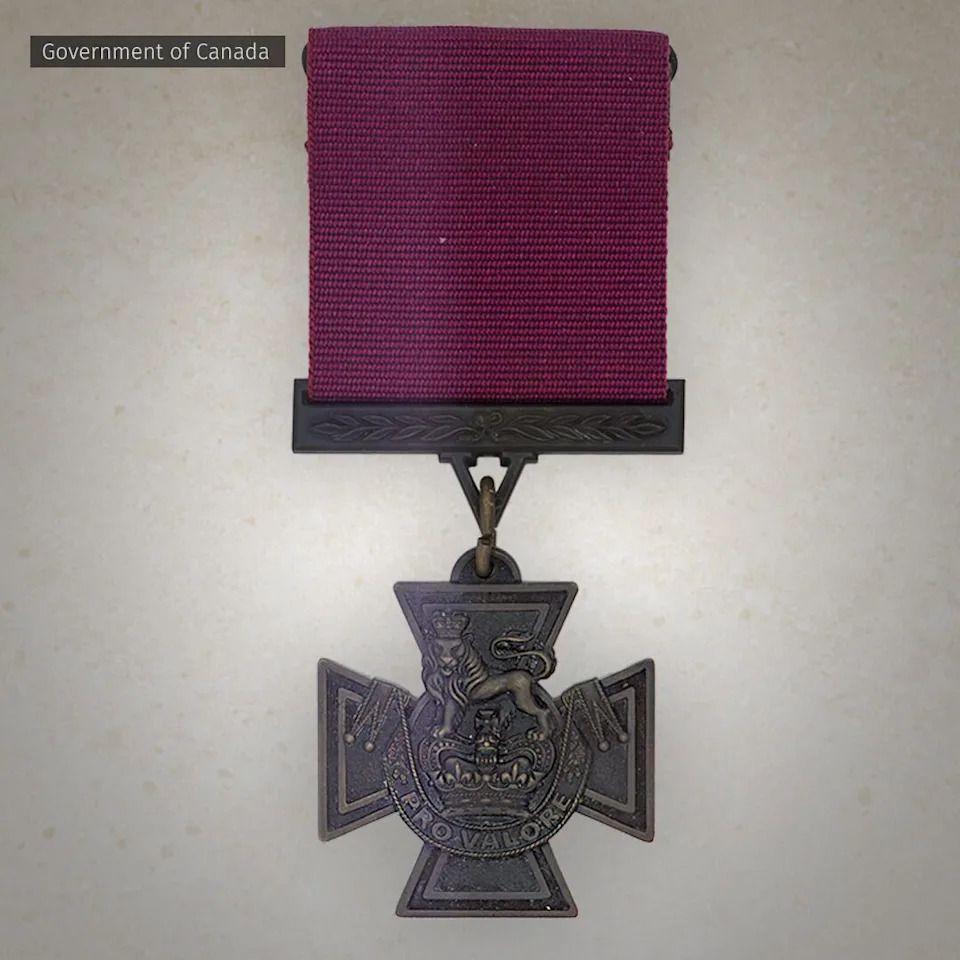
The Canadian version of the Victoria Cross was first created in 1993, to honour veterans in the same way the original Victoria Cross did during the two world wars.
Since then, every country in the Commonwealth, except Canada, has awarded the decoration for exceptional valour in an armed conflict.
Advertisement
Advertisement
Advertisement
Advertisement
Now, 25 of Canada’s most highly-decorated veterans are being considered as potential recipients of the award.
Lumsden-Morse MLA Blaine McLeod, who serves as the provincial military liaison, said the legislature carried a unanimous motion on Dec. 4 supporting the efforts of a committee pressing for a review of the files of people who have been nominated by peers and superior officers.
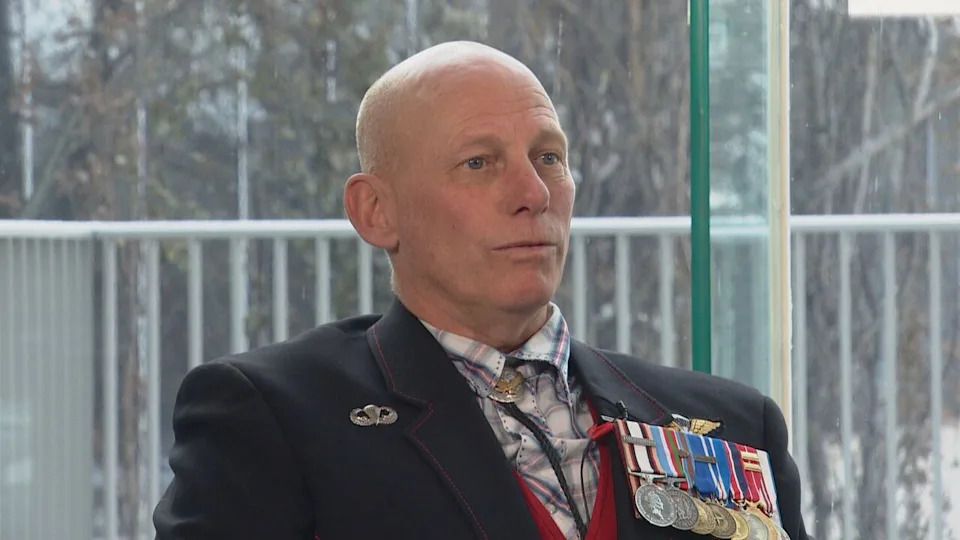
One of them is William MacDonald of Regina, who retired as a master warrant officer in 2015.
Born in North Bay, Ont. in 1973, MacDonald moved to Regina with his family before he was a year old and joined the Royal Regina Rifles while still in high school. He stayed with the regiment until 1994, graduating from Sheldon Williams Collegiate.
Advertisement
Advertisement
Advertisement
Advertisement
“My mom was a single parent and didn't have a lot of money, and she was kind of harassing me to get a job,” MacDonald recalled in an interview with CBC Saskatchewan.
The Canadian Victoria Cross was created in 1993 and is different from the British Victoria Cross. The Canadian gallantry award has yet to be issued. (Government of Canada )
“I didn't know anything about [the military], like nothing. And I thought, well, it sounds pretty cool. You get to be outside and shoot guns and they give you money for it. So why the hell not, right?”
From the reserves, MacDonald transferred to the regular army's Princess Patricia's Canadian Light Infantry (PPCLI).
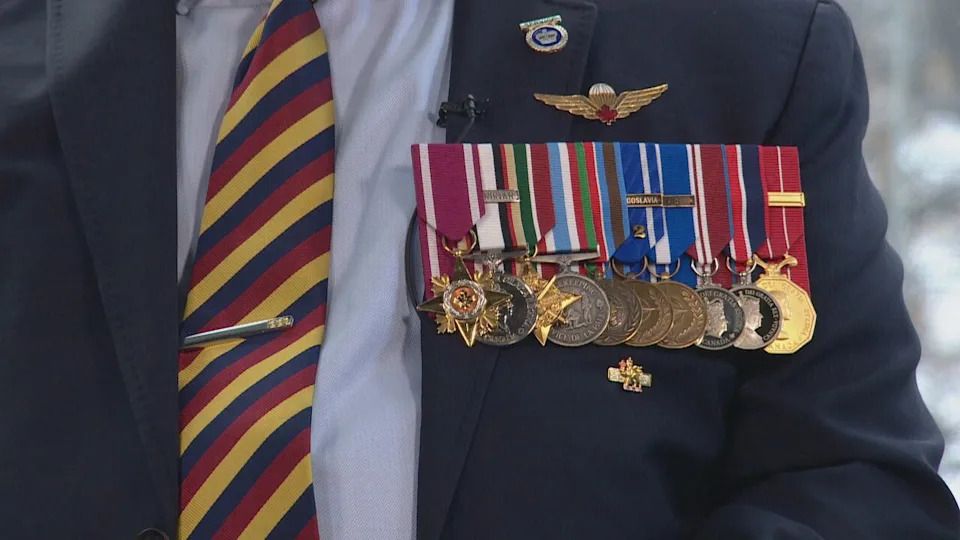
He served with the regiment for more than 20 years, deploying multiple times and receiving the Star of Military Valour, which is the second-highest decoration in the Canadian system of honours, for his service in Afghanistan.
William MacDonald previously received the Star of Military Valour (left), the second-highest decoration for a member of the Canadian Armed Forces. (Will Draper/CBC)
On Sept. 3, 2006, he found himself in the midst of what would be later called the Battle of Panjwaii, attached to a platoon at the last minute as a part of Operation Medusa, one of the deadliest operations in recent Canadian military history.
Advertisement
Advertisement
Advertisement
Advertisement
Prior to engagement, a soldier driving an armoured vehicle was killed by a roadside bomb, leaving MacDonald’s platoon to complete the assault on foot.
“What essentially happened was there were 14 Canadians," he recalled. "I was one of them and we did a dismounted assault on an enemy stronghold, not really expecting the volume of enemy fighters that we ran into, and it turned out there were between 200 and 250 of them.”
The stronghold was referred to as "the white school," a Taliban position surrounded by marijuana fields.
“They had us basically surrounded on three sides and our only way out was back the way we came, which was about 300 meters of flat, open terrain. So there was no way to escape,” MacDonald said.
Advertisement
Advertisement
Advertisement
Advertisement
In the ensuing battle, three Canadian soldiers died and another seven were wounded. MacDonald said only four of them were left in fighting condition, and the midday heat reached 60 C.
“I did what sort of came naturally and what my training led me into, which was to shoot, move, communicate and medicate,” he said.
“I wanted to quit. It was overwhelming. It was a really challenging scenario … They looked at me and they were like, ‘Everybody else is wounded. You have to be in charge now.’ I couldn't allow myself to quit and to let those soldiers down," he said.
"It's one of those moments that you look back on time and time again, if you're fortunate enough, as I was, to survive that experience, and ask yourself: what could you do differently? Did you do the right things?”
Advertisement
Advertisement
Advertisement
Advertisement
James Sinclair, a retired corporal now farming near Regina Beach, said he met MacDonald on MacDonald's first day of service and they became close friends.
Retired corporal James Sinclair also served in Afghanistan, and is an advocate for awarding the Canadian Victoria Cross. (Will Draper/CBC)
“My whole reason for trying to get this initiative going forward is that our nation was paid for with blood," Sinclair said of the effort to award the Canadian Victoria Cross for the first time.
“Those values, they're not just words. They mean something. As a soldier, you’ve got to really honour those values. If we're not going to reward the highest weight of the nation and say, ‘Thank you for what you've done to give us our ability to be a sovereign nation,’ then everything else kind of slips away.”
His friend is a humble man, Sinclair said.
Advertisement
Advertisement
Advertisement
Advertisement
“He's not going to brag about himself, but he'll carry that honour and he will do the right things with it … Whoever gets awarded the Victoria Cross, and I hope it's Willy, as long as somebody out there gets it, it's a win for Canada.”
Ontario MP Pauline Rochefort will introduce a petition to create an independent review committee in the House of Commons in March, advancing the possibility of awarding the honour to one or more exceptional veterans.
“If it does happen and they go, ‘Hey, Willy, you're going to be awarded the Victoria Cross,’ what do I do then?” MacDonald said.
“I don't think there's a playbook for that. So it's humbling and it's a little bit scary at the same time … For me, it's about making sure that those memories don't get lost to time, and that those names don't get forgotten.”
تم ادراج الخبر والعهده على المصدر، الرجاء الكتابة الينا لاي توضبح - برجاء اخبارنا بريديا عن خروقات لحقوق النشر للغير


